.
A pet wellness exam is a preventive visit that typically includes a health-history review, a nose-to-tail physical examination. Weight and body-condition assessment, and a conversation about vaccines, parasite prevention, nutrition, dental care, behavior, and lifestyle. The exact plan depends on your pet’s age, health, and daily routine. This guide explains what does a pet wellness exam include for dogs and cats so you can arrive with useful information and questions.
Ready to plan preventive care? Book Appointment or call Animal Hospital of Rolling Meadows at 847-873-8996.
Quick answer: During a wellness exam, a veterinarian reviews your pet’s history and habits. The veterinarian checks the body from nose to tail, assesses weight and overall condition, reviews preventive care, and recommends next steps suited to the individual pet. Testing, vaccines, and follow-up are discussed when they fit your pet’s age, lifestyle, health status, and exposure risks.
An annual wellness visit is not a one-size-fits-all checklist. A kitten or puppy may need guidance about growth and early preventive care. An adult pet may need ongoing monitoring, while a senior pet may benefit from closer attention to comfort, mobility, or chronic conditions. Regular visits also give your veterinarian a baseline for recognizing changes over time. For related background, read what to expect from a dog wellness exam.
What Does a Pet Wellness Exam Include for Dogs and Cats?
A routine wellness appointment usually combines conversation, observation, hands-on examination, and preventive-care planning. Your veterinary team may adjust the order or depth of each step based on how your pet is feeling and what you share at the start of the visit.
The goal is not simply to confirm that your pet looks well on one day. The visit creates a current health snapshot and gives you time to discuss prevention, daily habits, and small changes that may be easy to overlook. It also gives the veterinarian a reference point for future visits, which can make gradual changes easier to recognize.
1. The team reviews your pet’s health history
The appointment often begins with questions about your pet’s normal routine and any recent changes. Be prepared to discuss:
- Appetite, thirst, digestion, urination, and bowel movements.
- Energy, sleep, exercise, mobility, and behavior.
- Diet, treats, weight changes, and feeding habits.
- Current medications, supplements, and parasite preventives.
- Vaccination records, previous illnesses, surgeries, and allergies.
- Travel, boarding, grooming, daycare, outdoor access, and contact with other animals.
Small details can matter. A cat that hides more often, a dog that hesitates on stairs, or a pet that drinks noticeably more water may be showing a change worth discussing. These observations do not establish a diagnosis, but they help the veterinarian decide what deserves closer attention.
2. The veterinarian performs a nose-to-tail physical exam
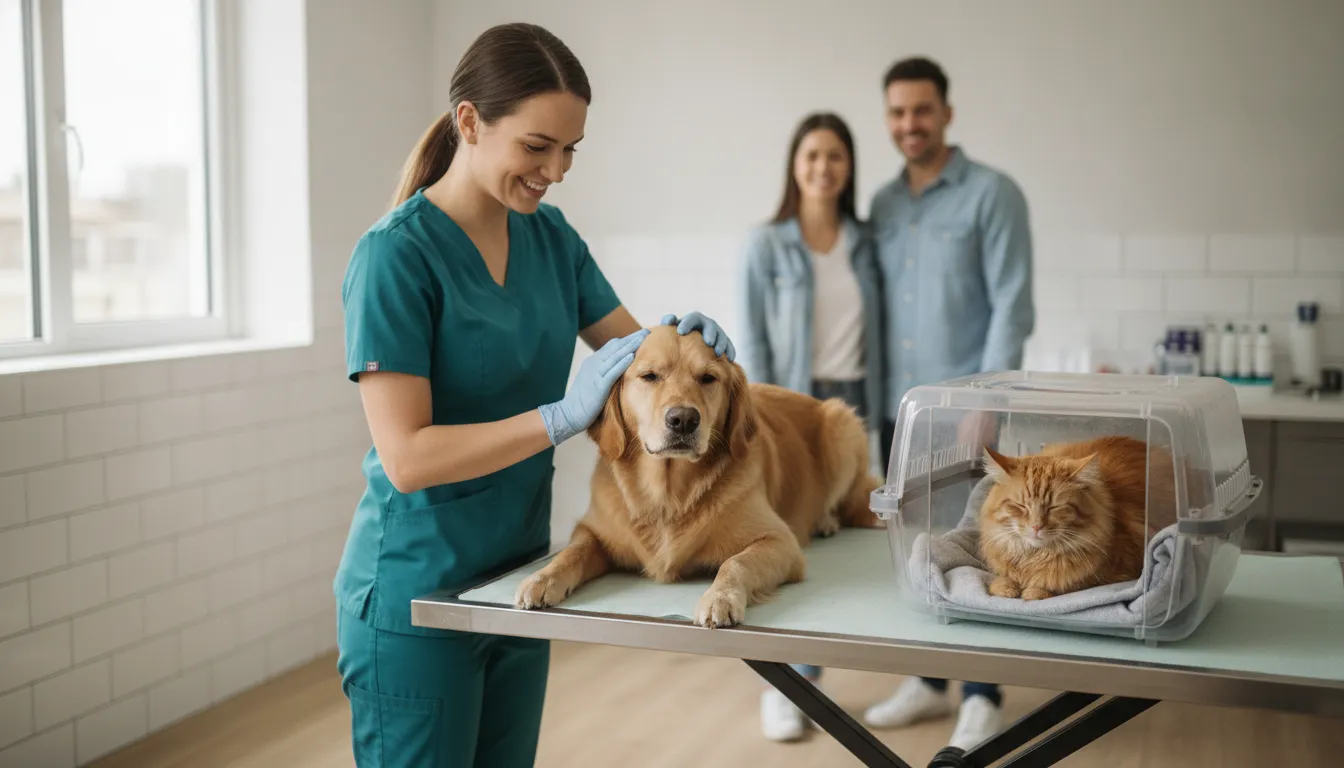
The physical examination may include looking at the eyes and ears, examining the mouth and teeth, and evaluating the skin and coat. The veterinarian may feel the lymph nodes and abdomen, listen to the heart and lungs, check joints and movement, and assess weight, temperature, and overall body condition. The exact focus varies by species, age, breed, medical history, and comfort level.
For cats, the veterinarian may pay particular attention to subtle changes in body condition, grooming, dental health, mobility, and behavior because cats often hide signs of illness. For dogs, the exam may include discussion of activity, exercise tolerance, skin and ear concerns, mobility, and exposure to other animals. Any concern you have noticed at home is appropriate to mention, even if it seems minor.
At Animal Hospital of Rolling Meadows, a calm and compassionate approach helps the team consider your pet’s comfort during care. Tell the team if your pet becomes fearful, reactive, or stressed during veterinary visits, or if a previous experience was difficult. That context can help the staff plan a more supportive visit.
3. The team checks weight and body condition
Weight is only one part of a pet’s health assessment. Your veterinarian may also evaluate body condition, muscle tone, growth, and changes since the last visit. A gradual change can be easy to miss at home, especially when a pet’s appetite seems normal.
If your pet needs a nutrition or weight-management plan, ask what amount, food type, treat routine, and activity level are appropriate. Recommendations should be tailored to the pet rather than copied from a general chart.
4. You discuss preventive care and next steps
After the history and examination, the veterinarian can explain which preventive services are due or worth considering. The visit may include a discussion of vaccines, parasite prevention, dental care, nutrition, behavior, diagnostic screening, and follow-up timing. If the exam reveals a concern, the team can explain whether monitoring, testing, or a separate appointment is appropriate.
Testing is not automatically needed for every pet at every visit. A recommendation may depend on age, symptoms, medical history, medications, risk factors, and the veterinarian’s assessment. Asking why a test is recommended can help you understand the plan and make informed decisions.
What vaccines are typically updated at a wellness exam?
Vaccines are commonly reviewed during wellness care, but not every pet needs the same vaccines at the same time. Your veterinarian considers species, age, health history, lifestyle, travel, outdoor access, and contact with other animals before recommending an individualized plan.
Wellness care also changes as a pet moves through life. The table below is a general planning guide, not a substitute for an examination or an individualized recommendation.
| Life stage | Common wellness discussion | What may affect the plan |
|---|---|---|
| Puppy or kitten. | Growth, early vaccines, parasite prevention, nutrition, behavior, and safe socialization. | Age, previous records, development, and exposure to other animals. |
| Adult dog or cat. | Physical exam, vaccine review, weight, dental health, lifestyle risks, and routine prevention. | Species, activity, travel, outdoor access, and medical history. |
| Senior pet. | Comfort, mobility, body condition, chronic-condition monitoring, and screening discussions. | Age, symptoms, medications, previous findings, and quality-of-life changes. |
- Dogs: Vaccination discussions may include rabies and other core protections. As well as lifestyle-related vaccines that may be relevant for dogs who visit boarding facilities, daycares, groomers, training classes, or dog parks.
- Cats: The discussion may include rabies, FVRCP, and whether feline leukemia virus vaccination is appropriate based on outdoor access and other exposure risks.
Bring available vaccination records to the appointment. If records are incomplete, tell the team rather than trying to recreate a schedule from memory. You can review the hospital’s vaccination services to learn more about personalized vaccine planning. The veterinarian can explain what is due, what may be deferred, and how your pet’s health affects the recommendation.
Vaccination is only one part of preventive planning. Depending on your pet’s needs, the conversation may also include parasite control, dental care, nutrition, exercise, behavior, and screening. Ask how each recommendation relates to your pet’s daily life. A dog who visits a daycare has different exposure considerations from a cat who stays indoors. Both still benefit from routine review.
How often should pets have a wellness visit?
Many healthy adult pets have a wellness visit at least once a year, but the appropriate schedule depends on the individual animal. Puppies and kittens are developing quickly and may need a series of visits. Senior pets or pets with ongoing health concerns may benefit from more frequent monitoring. Your veterinarian can recommend timing based on age, species, breed, lifestyle, and health status.
Do not wait for a scheduled wellness visit if you notice a persistent or concerning change. Contact a veterinary team about changes in appetite, thirst, weight, energy, breathing, elimination, mobility, behavior, or comfort. These signs can have many possible causes, so online information cannot diagnose your pet. A veterinarian can help determine whether your pet should be examined sooner.
Have questions about the right visit schedule for your dog or cat? Call 847-873-8996 to speak with the team at Rolling Meadows Animal Hospital.
What your veterinarian checks that you might not notice at home
Pets can compensate for discomfort, and gradual changes may blend into everyday routines. A wellness exam gives the veterinarian an opportunity to compare current findings with previous visits and with what is normal for your pet.
- Teeth and gums: Early dental changes may be difficult to see without a careful examination.
- Heart and lungs: Listening with a stethoscope can identify findings that are not obvious during normal activity.
- Body condition and muscle: Weight may look stable even when muscle tone or body condition is changing.
- Joints and mobility: Mild stiffness, reduced range of motion, or discomfort may appear during movement or handling.
- Skin, coat, and ears: Changes may be linked with allergies, parasites, infection, grooming, or another health concern.
- Abdominal and lymph-node findings: Hands-on examination can provide information that is not available from observing behavior alone.
A finding does not automatically mean that your pet is seriously ill. It is a reason to ask questions and follow the veterinarian’s guidance. When additional care is appropriate, Animal Hospital of Rolling Meadows services include preventive care, medicine, vaccinations, diagnostics, surgery, orthopedics, and other veterinary support.
How to prepare for your pet’s wellness appointment
You do not need to prepare perfectly. A few practical details can make the visit more productive and help your veterinarian understand your pet’s health outside the exam room.
- Bring medical and vaccination records. Include records from a previous veterinarian, shelter, breeder, or rescue organization when available.
- Make a medication and supplement list. Include prescription medicines, over-the-counter products, vitamins, supplements, and parasite preventives. Bring containers or clear photos of labels when practical.
- Write down recent changes. Note changes in appetite, thirst, weight, energy, sleep, mobility, breathing, elimination, grooming, or behavior. A short timeline or video can help with intermittent concerns.
- Prepare your questions. Consider asking about nutrition, weight, dental care, vaccines, parasite prevention, exercise, behavior, travel, boarding, or anything that has changed at home.
- Use secure transport. Keep dogs on a sturdy leash and cats in a secure carrier. A familiar blanket or small comfort item may help your pet settle.
- Share fear or illness concerns before the visit. If your pet is especially anxious or develops concerning symptoms, call the hospital so the team can advise you about the appointment.
Follow any fasting or other instructions provided for a specific appointment. Do not give medication or supplements for a new symptom unless a veterinarian directs you to do so.
If your pet becomes nervous in the car, carrier, or waiting room, mention that when scheduling. The team can tell you what information to bring and whether any appointment-specific preparation is needed. Bringing a short video of an intermittent cough, limp, unusual behavior, or breathing change can also help explain what you have seen at home. Do not delay care for a video if your pet appears seriously unwell.
Frequently asked questions about pet wellness exams
Is a wellness exam only for sick pets?
No. Wellness exams are preventive visits for pets that appear healthy as well as pets with ongoing concerns. They help establish a baseline, review preventive care, and create an opportunity to discuss subtle changes before they become more disruptive. A wellness visit does not guarantee that every condition will be found, but it supports ongoing monitoring and informed care.
Does my pet need bloodwork at every annual exam?
Not necessarily. The need for bloodwork depends on factors such as age, symptoms, medications, medical history, and the veterinarian’s examination. Some pets may benefit from screening or monitoring, while others may not need testing at that visit. Ask the veterinarian what a recommended test is intended to evaluate and how the result would guide care.
Can I ask about behavior or nutrition during a wellness visit?
Yes. Wellness visits are a good time to discuss nutrition, weight, exercise, behavior, dental care, travel, boarding, and other routine concerns. Sharing details about your pet’s daily life helps the veterinary team make recommendations that fit your household and your pet’s needs.
When should I schedule a visit instead of waiting for the annual exam?
Contact a veterinary team sooner if your pet has a persistent, worsening, or unusual change in appetite, thirst, breathing, energy, elimination, mobility, behavior, or comfort. Sudden collapse, severe breathing difficulty, uncontrolled bleeding, seizures, or other signs of a serious emergency require prompt veterinary attention. If you are unsure what to do, call for guidance rather than waiting for the next routine visit.
Want to keep your pet’s preventive care on track? Book Appointment with Rolling Meadows Animal Hospital or call 847-873-8996. The hospital is located at 3995 W Algonquin Road, Rolling Meadows, IL 60008.