Dog Orthopedic Surgery in Rolling Meadows, IL
Orthopedic Surgery Services at Animal Hospital of Rolling Meadows
Animal Hospital of Rolling Meadows provides veterinary evaluation and orthopedic surgical care for dogs in Rolling Meadows and nearby northwest Chicago suburbs. If your dog is limping, reluctant to jump, or recovering from an injury, our team can examine your dog, discuss diagnostic findings, and explain treatment options that fit the case. Orthopedic surgery is not appropriate for every patient, so a veterinarian should determine the next step after an examination.
When Your Pet May Need an Orthopedic Evaluation
Limping, holding up a leg, hesitating on stairs, difficulty jumping, stiffness after rest, or a change in activity can have many possible causes. These signs do not identify a specific condition on their own. A veterinary examination is the right next step when a dog's movement or comfort changes.
Diagnosis and Treatment Planning
Orthopedic care begins with a veterinary examination and, when indicated, diagnostic imaging.
The veterinarian will explain the findings and discuss treatment options, expected responsibilities at home, and whether referral or surgery should be considered for the individual dog.
Treatment options may include monitoring, medical management, referral, or surgery, depending on the individual dog's findings.
Orthopedic Procedures We May Discuss
TPLO for Cranial Cruciate Ligament (CCL) Injury
TPLO is one surgical option veterinarians may consider for some dogs with cranial cruciate ligament disease. A veterinarian evaluates the injury, patient factors, imaging, and treatment options before recommending a plan.
Fracture Evaluation and Repair
Fracture repair may involve stabilization techniques selected according to the bone, fracture pattern, soft-tissue condition, and the dog's overall health. An examination and diagnostic imaging are needed to guide the plan.
Patellar Luxation Evaluation and Repair
Patellar luxation is kneecap instability. Depending on the severity, symptoms, and veterinary assessment, care may range from monitoring and medical management to surgery. Learn more about patellar luxation surgery in dogs.
FHO (Femoral Head Ostectomy)
FHO removes the femoral head in selected cases involving hip pain or disease. A veterinarian determines whether this procedure is appropriate for the individual dog.
The veterinary team will explain the expected responsibilities and follow-up needs for the individual dog.
A veterinarian will determine whether monitoring, medical management, or surgery is appropriate for the individual dog.
The need for surgery depends on diagnostic findings, symptoms, and overall health.
Frequently Asked Questions
What orthopedic problems can a veterinarian evaluate in a dog?
A veterinarian can evaluate movement changes, joint or bone concerns, injuries, and other orthopedic problems through an examination and, when indicated, diagnostic imaging. The appropriate treatment depends on the individual dog.
What is TPLO surgery for dogs?
TPLO, or tibial plateau leveling osteotomy, is a surgical option that may be considered for some dogs with cranial cruciate ligament disease. A veterinarian must evaluate the dog before discussing whether it is appropriate.
How is a CCL injury evaluated?
The veterinarian may consider the dog’s history, movement, physical examination, and diagnostic imaging when evaluating a possible CCL injury. These findings help guide the discussion of treatment options.
Does every dog fracture or patellar luxation require surgery?
No. The need for surgery depends on the type and severity of the condition, the dog’s symptoms and health, diagnostic findings, and the veterinarian’s assessment. Contact the hospital to discuss the next step for your dog.
Book an Appointment for Orthopedic Care
If your dog is having trouble walking, jumping, or using a limb, request an appointment so a veterinarian can evaluate the concern and discuss next steps.
Learn more about our veterinary surgery services.
Recovery and Follow-Up Care
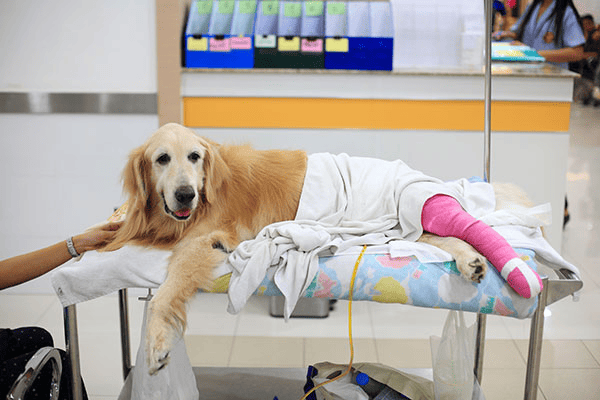
Recovery plans vary by procedure and dog. Before surgery, the veterinary team should review pain management, activity restrictions, incision monitoring, medication instructions, and follow-up timing. For a practical checklist, read how to prepare a dog for surgery. Call the hospital if you have concerns during recovery.
Any laser therapy, rehabilitation support, or other adjunctive care should be described only if the practice confirms that the service is available for the relevant dog and procedure.
Our team provides all pre- and post-operative instructions, ensuring every family has the tools they need for a successful recovery.