When a dog is moving stiffly, healing after surgery, or coping with a painful injury. Families often want supportive care that is gentle and fits the larger treatment plan. Therapeutic laser may be one option your veterinarian considers after examining your dog and identifying the source of the problem.
Book Appointment or call 847-873-8996 to discuss your dog’s laser therapy needs.
At Animal Hospital of Rolling Meadows, laser therapy for dogs rolling meadows refers to noninvasive Class IV therapeutic laser treatment, also called photobiomodulation. Carefully selected light wavelengths may support circulation, cellular repair, inflammation control, and comfort, but laser therapy does not replace diagnostics, medication, surgery, or follow-up care.
This guide explains what therapeutic laser does, where it may fit in recovery, and how it differs from the laser technology used during soft-tissue surgery. Understanding those distinctions can help you have a more informed conversation with your veterinary team.
What Is Laser Therapy for Dogs in Rolling Meadows?
Therapeutic laser uses carefully selected light to support the body’s response in targeted tissues. This approach is often called photobiomodulation, a broad term for light-based methods intended to stimulate healing. Laser and LED treatments are both included within photobiomodulation, although the equipment and treatment protocols can differ. Research has explored light therapy for conditions involving musculoskeletal injuries, neurological concerns, wounds, and pain, while also noting that protocols and evidence quality vary.
At Animal Hospital of Rolling Meadows, noninvasive Class IV laser therapy may be considered as part of an individualized care plan for a dog. The practice describes the therapy as potentially supporting circulation and cellular repair, with possible effects on inflammation and discomfort. Depending on a veterinarian’s assessment, applications may include arthritis or joint pain, recovery after surgery, wounds, and tendon or ligament injuries. A dog may receive laser therapy alongside other recommended care rather than in place of an examination, medication, rehabilitation, or surgery.
How photobiomodulation differs from surgical laser
These terms can be confusing because the same hospital may use laser technology in more than one way. Therapeutic Class IV laser sessions are noninvasive: the treatment head is used on selected areas without making an incision. Surgical laser, by contrast, is used during certain soft-tissue procedures. It is part of an operation, not the same service as a noninvasive recovery or comfort-focused session.
Many sessions are described as lasting about 20 to 30 minutes and typically do not require sedation or anesthesia, although the plan depends on the individual dog. Specialized veterinary technicians at the hospital receive training in Class IV laser protocols. To learn more about the equipment and local approach, visit the Class IV laser therapy service page and discuss whether it fits your dog’s diagnosis and overall treatment plan with your veterinarian.
How Can Laser Therapy Support a Dog’s Recovery?
Therapeutic laser treatment is commonly described as photobiomodulation, a term for using selected light wavelengths to encourage responses within tissue. In practical terms, the light is directed at a treatment area with the goal of supporting the body’s own repair processes. At Animal Hospital of Rolling Meadows, noninvasive Class IV laser therapy may be considered as one part of a recovery plan for an individual dog.
What may happen in the treated tissue?
The practice describes possible effects that include supporting circulation and cellular repair, while helping manage inflammation and discomfort. Better local circulation may help bring oxygen and nutrients to an area, and cellular responses may support the normal healing process. These potential effects are relevant when a dog is recovering from a procedure, coping with joint or soft-tissue discomfort, or receiving care for a wound.
Laser therapy is supportive care, not a replacement for finding the cause of a problem. A veterinarian may recommend an examination, imaging, medication, surgery, rehabilitation, wound care, or other treatment alongside it. The appropriate plan depends on the diagnosis, the location and severity of the condition, and how the dog responds over time.
What does the evidence show?
Research provides useful context, but it does not support a guaranteed result for every dog. A 2023 systematic review of light therapy in horses, dogs, and cats reported some beneficial effects. While also finding conflicting results, gaps in the scientific literature, and limited study quality. The authors noted that wavelength, laser class, dose, treatment frequency, and duration varied across studies, and there is no consensus on one optimal protocol. Read the systematic review in the National Center for Biotechnology Information’s archive.
One randomized clinical trial involving 21 client-owned dogs with chronic wounds reported greater wound-area reduction in photobiomodulation groups than in a saline-care control group during the study period. That finding is encouraging, but it represents one study of a specific condition and protocol. It should not be treated as a promise about another dog’s recovery or as evidence that laser can replace standard wound care.
For families considering laser therapy for dogs in Rolling Meadows, the most useful question is how it may fit a veterinarian-guided plan for their particular pet. The team can assess the condition, explain realistic goals, and monitor whether this adjunctive treatment is appropriate as recovery progresses.
Which Conditions May Benefit From Therapeutic Laser?
Therapeutic laser may be considered when a dog has discomfort, inflammation, tissue damage, or a recovery plan that could benefit from supportive care. At Animal Hospital of Rolling Meadows, the decision is based on an examination and the suspected cause of the problem, not on a diagnosis made from symptoms alone. Laser therapy is an adjunct to veterinary care. It does not replace diagnostic work, medication, surgery, rehabilitation, or follow-up recommendations.
Arthritis and joint pain
Dogs with arthritis or other sources of joint pain may be evaluated for noninvasive Class IV laser therapy. The treatment may support circulation, cellular repair, and a reduction in inflammation or discomfort. It may be one part of a broader orthopedic plan that can include weight management, medication, exercise changes, or other therapies. Your veterinarian can help determine whether laser is appropriate for your dog’s specific joint condition.
Post-surgical healing and wounds
Laser therapy may be included in post-surgical recovery care for dogs when the veterinary team believes it could support comfort or tissue healing. It can also be considered for selected wounds as part of standard wound management. The underlying cause, wound condition, infection risk, and need for bandaging or other treatment still require professional assessment. Learn more about post-surgical recovery care for dogs and how it may fit into a complete plan.
Tendon, ligament, spinal, and nerve concerns
Tendon and ligament injuries, along with some spinal or nerve concerns, may prompt a discussion about therapeutic laser. These problems can vary substantially in severity and may require imaging, restricted activity, medication, surgery, or rehabilitation. Laser should be selected only after the veterinarian considers the full clinical picture. When a dog needs advanced evaluation or treatment, orthopedic care may be part of that conversation.
Research on photobiomodulation is encouraging in some applications, but protocols and evidence quality vary. A veterinarian can explain what the treatment is intended to support, how it fits with other care, and whether it is a reasonable option for your dog.
What Happens During a Laser Therapy Session?
A therapeutic laser visit is designed to be calm, individualized, and easy for you and your dog to understand. The exact plan depends on your dog’s condition, comfort, and broader veterinary care. Here is what a typical visit may include:
- Veterinary assessment. The veterinarian reviews your dog’s history, examines the area of concern, and considers whether laser therapy is appropriate. This evaluation helps distinguish situations that may benefit from supportive photobiomodulation from problems that need diagnostics, medication, surgery, or another treatment first.
- An individualized treatment plan. If laser therapy is recommended, the veterinary team selects the treatment area and protocol based on your dog’s needs. The goal is not to use the same settings for every patient. Laser class, dose, wavelength, treatment frequency, and duration can vary, and research has not established one universal protocol for every condition. Class IV laser therapy is one part of a complete care plan.
- Positioning and safety preparation. Your dog is positioned comfortably so the trained team can reach the target area. Eye protection and other safety measures are used as appropriate for the equipment and treatment location. Fear-Free handling helps the team adapt to your dog’s comfort level rather than forcing a stressful position.
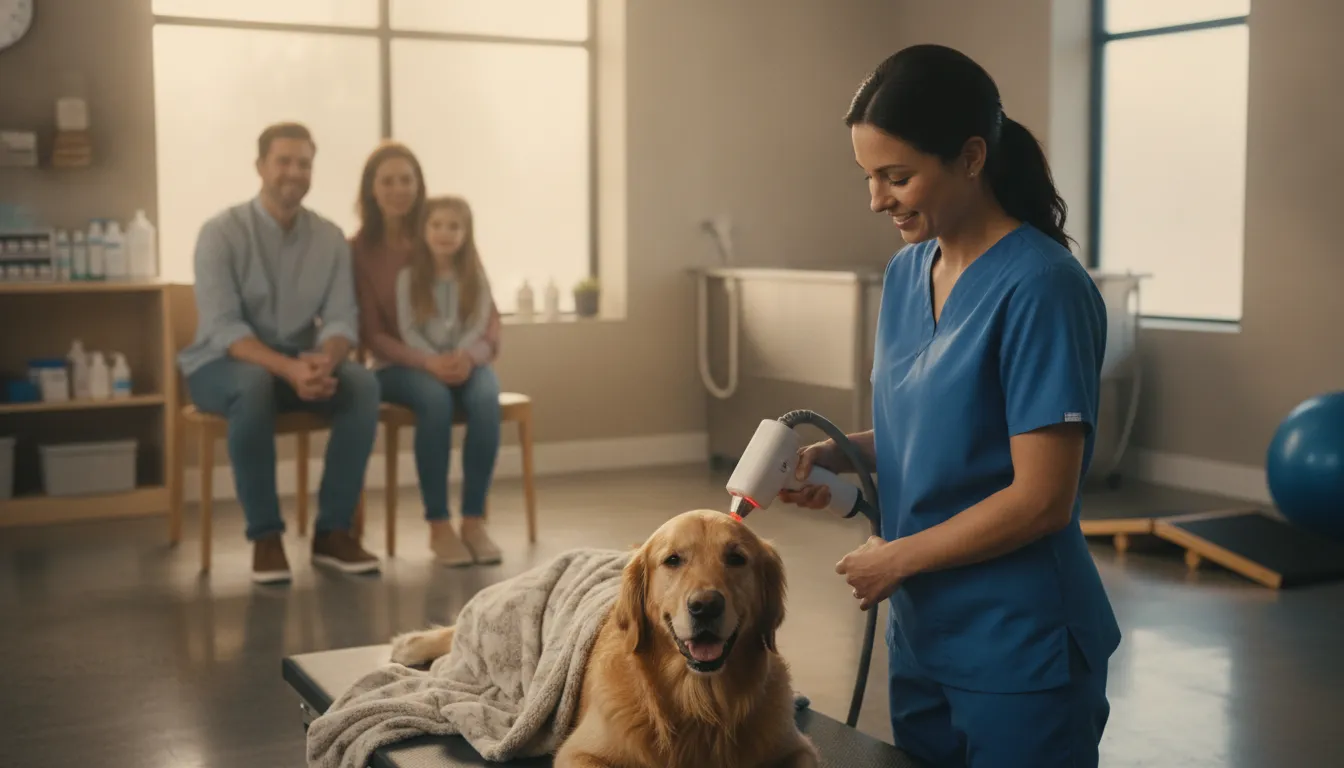
- The treatment itself. The technician applies the therapeutic laser over the prescribed area while monitoring your dog’s response. Sessions are typically described as lasting about 20 to 30 minutes and often do not require sedation or anesthesia. But this is general practice context, not a promise for every dog or condition. Some dogs find the experience soothing, while others may need extra reassurance or adjustments.
- Monitoring and follow-up. The team observes your dog’s comfort during and after the session, records the response, and explains what to watch for at home. Follow-up visits may be recommended based on the condition and overall plan. Laser therapy should complement, not replace, examinations and other prescribed care. If your dog’s mobility, pain, wound, or behavior changes unexpectedly, contact the veterinary team rather than waiting for the next session.
Is Laser Therapy Safe for Every Dog?
Laser therapy can be a helpful part of care for some dogs, but no treatment is automatically right for every patient. A veterinarian should first examine your dog, understand the underlying concern, and decide whether therapeutic laser fits the broader plan. That assessment helps distinguish a situation that may benefit from photobiomodulation from one that needs different or more urgent diagnostics and treatment.
Candidacy is individualized. Your veterinarian may consider your dog’s condition, comfort, history, current medications, and any planned procedures when developing a treatment approach. The team should also screen for circumstances in which laser treatment may need to be postponed, modified, or avoided. Rather than relying on a general online checklist, discuss your dog’s complete medical history directly with the veterinary team.
Why the treatment plan matters
Light-based therapy involves choices about the equipment, treatment area, and session parameters. A systematic review found no consensus on optimal veterinary light-therapy protocols, with published studies using different wavelengths, laser classes, doses, frequencies, and treatment durations. The review also noted gaps and limitations in the available evidence. These findings reinforce why a veterinarian-directed plan is more appropriate than attempting to select settings or use a device without professional guidance.
During a session, trained team members should monitor your dog’s response and comfort. At Animal Hospital of Rolling Meadows, specialized veterinary technicians receive training in Class IV laser protocols. And care is approached with Fear-Free handling and individualized pain management in mind. Many dogs find therapeutic sessions comfortable, but your dog’s behavior remains important information. Tell the team if your dog seems anxious, uncomfortable, unusually tired, or different after treatment so the plan can be reassessed.
Owners should also report worsening pain, sudden weakness, breathing difficulty, a rapidly changing wound, or any other urgent change promptly instead of trying to treat it at home. Laser therapy should not replace an examination, prescribed medication, surgery, wound care, or follow-up when those are needed. If you are considering Class IV laser therapy for your dog in Rolling Meadows, ask your veterinarian whether it is appropriate and how it fits your dog’s complete care plan.
How Does Laser Therapy Fit With Other Veterinary Treatments?
Therapeutic laser is usually one part of a broader plan, not a stand-alone answer to every source of pain or reduced mobility. For a dog in Rolling Meadows, your veterinarian may first assess the underlying problem, then decide whether photobiomodulation, medication, surgery, rehabilitation, or a combination makes sense. The plan can change as your dog responds and new information becomes available.
For example, a dog with a joint or tendon concern may need orthopedic care to understand the injury and protect the affected area. Laser therapy may be considered as supportive care for discomfort or healing, while prescribed medication addresses pain or inflammation in a way your veterinarian can monitor. If a structural problem requires correction, laser sessions should not be presented as a replacement for surgical care.
| Treatment component | Possible role | Important limitation |
|---|---|---|
| Therapeutic laser | May support circulation, cellular repair, inflammation control, and comfort as part of a monitored plan. | Does not diagnose the cause of a problem or replace prescribed treatment. |
| Medication | May help manage pain, inflammation, infection, or another diagnosed condition. | Requires veterinary selection, dosing, and monitoring for the individual dog. |
| Surgery | May address a structural injury or disease when a procedure is clinically indicated. | Therapeutic laser cannot substitute for a needed operation or follow-up care. |
| Rehabilitation and supportive care | May include activity guidance, therapeutic exercises, home care, and reassessment. | Progress depends on the diagnosis, healing, comfort, and ability to participate safely. |
Medication and laser therapy can sometimes be coordinated with rehabilitation or recovery after a procedure. The appropriate combination depends on the diagnosis, examination findings, and your dog’s overall health. Animal Hospital of Rolling Meadows can also coordinate medical care for dogs when diagnostics or medical management are needed. Ask what each part of the plan is intended to do, how progress will be monitored, and when the plan should be reassessed.
Choosing Laser Therapy for Your Dog in Rolling Meadows
A thoughtful conversation with your veterinarian can help you decide whether therapeutic laser belongs in your dog’s care plan. Start by asking what problem the treatment is intended to address. The answer may relate to joint discomfort, a wound, a tendon or ligament injury, recovery after surgery, or a spinal or nerve concern. Laser therapy should follow an appropriate examination and diagnosis, not replace them.
Questions to ask before starting
- What are the goals of treatment for my dog, and how will we monitor progress?
- How does the recommended schedule fit my dog’s condition, comfort, and other care?
- Should laser therapy be coordinated with medication, rehabilitation, orthopedic care, or surgical follow-up?
- What changes at home should I report, including increased discomfort or a change in mobility?
It is also reasonable to ask who will deliver the sessions and how the protocol is selected. At Animal Hospital of Rolling Meadows, specialized veterinary technicians receive training in Class IV laser protocols. While the veterinary team considers laser as one part of individualized, multimodal care. That approach matters because research has not established one optimal protocol for every patient, and treatment parameters can vary.
For families in Rolling Meadows and nearby northwest Chicago suburbs, a full-service hospital can make coordination more practical. Laser therapy may be considered alongside orthopedic care, surgical follow-up, or medical and diagnostic evaluation when those services are appropriate. Learn more about Class IV laser therapy, then use Book Appointment to discuss your dog’s needs with the team.
Book Appointment or call 847-873-8996 to discuss whether laser therapy may fit your dog’s care plan.
Frequently Asked Questions
Does laser therapy on dogs really work?
Laser therapy may support comfort, circulation, and tissue repair for some dogs, but results depend on the condition, treatment plan, and the individual patient. A 2023 systematic review found reported benefits but also inconsistent protocols and variable evidence quality, so your veterinarian should present it as an adjunct, not a guaranteed cure. For example, one randomized study of 21 dogs found greater chronic wound-area reduction when photobiomodulation was added to standard care. But that result does not predict every dog’s outcome.
How often should a dog have laser therapy?
There is no universal schedule. Your veterinarian will recommend frequency based on your dog’s diagnosis, treatment goals, response, and other care. Some plans begin with more frequent sessions and adjust as healing or comfort changes. Keep follow-up visits even if your dog appears better, because the treatment plan may need to change.
What does a laser therapy session feel like for a dog?
Therapeutic laser sessions are noninvasive and typically last about 20 to 30 minutes at this hospital. Sedation or anesthesia is not typically needed, although every dog is assessed individually. Many pets find the process calming, and trained veterinary technicians monitor your dog throughout the session.
Is laser therapy safe for every dog?
Laser therapy is not automatically appropriate for every patient or every condition. A veterinarian should examine your dog, review the diagnosis and medical history, and determine whether therapeutic laser belongs in the overall plan. Ask about eye protection, treatment goals, and how laser therapy fits with medication, wound care, rehabilitation, or surgery.
How much does laser therapy for dogs cost?
Cost depends on the condition, number of sessions, and the rest of your dog’s care plan, so a single general price would be misleading. During an appointment, the veterinary team can explain the recommended treatment and any associated services before care begins.
Ready to Discuss Laser Therapy for Your Dog?
Every dog has different needs, so an individualized evaluation can help determine whether laser therapy belongs in a broader care plan. The team at Animal Hospital of Rolling Meadows can discuss your dog’s comfort, recovery goals, and available treatment options. Book an appointment to talk with the veterinary team about whether laser therapy may be appropriate for your dog.