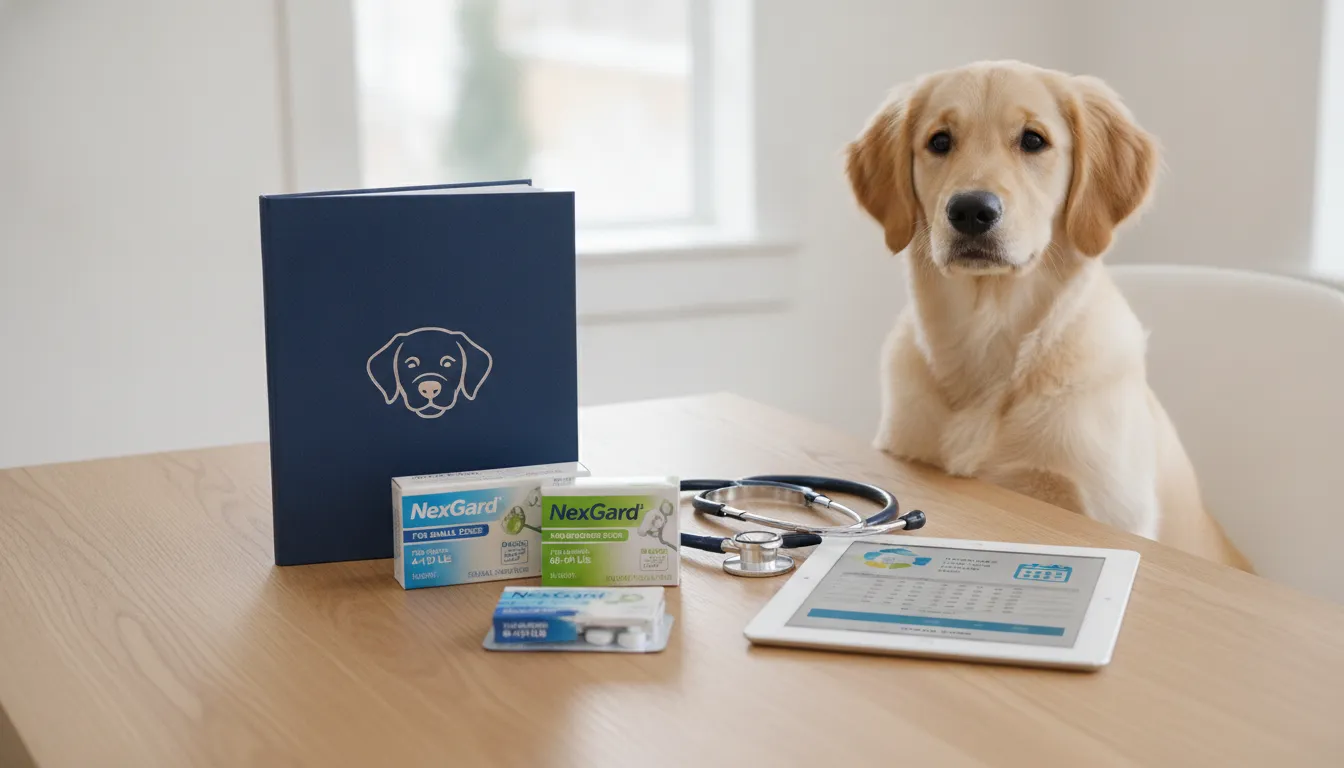
Choosing flea and tick prevention involves more than picking the most familiar product. NexGard for dogs may be a good fit for pets that need a monthly oral chew, but your veterinarian should consider your dog’s weight, age, medical history, seizure history, and daily routine first. The medication works systemically, so parasites must bite your dog before they are exposed to afoxolaner. It does not create a repellent barrier, and it will not eliminate fleas already developing in your home. This guide covers NexGard’s benefits, limitations, dosing, possible side effects, and the questions to ask before starting treatment.
Key Takeaways
- NexGard targets fleas and labeled ticks: It works after parasites bite, so continue checking your dog after outdoor activities and address flea stages in the home.
- Choose prevention with veterinary guidance: Your dog’s weight, age, health history, seizure history, medications, and parasite exposure help determine whether NexGard or NexGard PLUS is appropriate.
- Follow the monthly dosing instructions: Give the complete chew matched to your dog’s current weight, never combine parasite products without approval, and contact your veterinarian about missed doses or unusual symptoms.
What Is NexGard for Dogs and How Does It Work?
NexGard is a prescription chewable medication for dogs that treats flea infestations and controls several types of ticks. Its active ingredient, afoxolaner, belongs to a group of medications called isoxazolines. Your veterinarian may recommend NexGard as part of a parasite prevention plan, particularly if your dog spends time outdoors or lives in an area where fleas and ticks are common.
NexGard is not a vaccine, and it does not protect against every parasite. For example, it does not prevent heartworm disease or treat intestinal worms. Your dog’s age, weight, health history, lifestyle, and exposure risk all matter when choosing parasite prevention. Review the official NexGard product information, then ask your veterinarian whether it is an appropriate option for your dog.
NexGard also works differently from products that repel pests before they bite. Understanding how it works can help you use it correctly, recognize its limits, and know when your dog may need additional protection or environmental flea control.
Afoxolaner and the isoxazoline class
Afoxolaner is the active ingredient in NexGard. It belongs to the isoxazoline class, a group of medications used to control flea and tick infestations in dogs. After your dog swallows the chew, afoxolaner enters the bloodstream. Fleas and ticks are exposed to the medication when they bite and feed on the dog.
Isoxazoline products are widely used, but they are not suitable for every dog. The FDA reports that some dogs and cats receiving medications in this class have experienced neurological reactions, including tremors, poor coordination, and seizures. These reactions can occur in animals without a previous seizure history. Share your dog’s complete medical history with your veterinarian before starting treatment, and review the FDA’s isoxazoline safety information.
How fleas and ticks receive the treatment
NexGard works systemically, which means the medication circulates through your dog’s bloodstream. When a flea or tick bites your dog and feeds, it takes in afoxolaner. The medication then interferes with the parasite’s nervous system, causing overstimulation that leads to its death.
Because NexGard works after a parasite bites, it does not form a repellent barrier that prevents every flea or tick from landing on your dog. You may still see a tick attached briefly, especially after walks through grass, brush, or wooded areas. Check your dog’s skin, ears, collar area, and toes after outdoor activities, and remove attached ticks promptly. Contact your veterinarian if you find a large number of parasites or notice signs of illness after a bite.
How quickly NexGard works
NexGard begins killing fleas within about four hours of administration, according to the product information. Killing adult fleas quickly can reduce the number of eggs they lay, but it does not remove every flea stage immediately. Eggs, larvae, and pupae may remain in bedding, carpets, furniture, or outdoor areas.
Ticks may also take time to die after attaching and feeding. Daily checks remain helpful during periods of high tick activity and after outdoor adventures. Watch for scratching, irritated skin, hair loss, or small dark particles in your dog’s coat, which may indicate flea activity. If these signs continue after treatment, ask your veterinary team whether your dog needs environmental control or a different prevention plan.
Chewable form, palatability, and monthly use
NexGard comes as a flavored chew that many dogs accept as a treat. Give one complete chew by mouth once a month, using the strength prescribed for your dog’s current weight. NexGard can be given with or without food, which makes it easier to include in your regular routine.
Stay with your dog when you give the medication to confirm that the entire chew was swallowed. If your dog spits it out, vomits soon afterward, or refuses it, contact your veterinarian before giving another dose. Puppies grow quickly, so their weight and dosage may need regular review. Setting a recurring reminder based on the recommended monthly dosing schedule can help prevent missed treatments.
NexGard vs. topical flea and tick treatments
NexGard provides an oral option for families who prefer not to apply medication directly to a dog’s skin. It does not leave a wet or greasy spot on the coat, and bathing or swimming does not remove the chew in the way water may affect some topical products. This can be convenient for dogs that swim often, dislike skin applications, or live with children who handle them regularly.
Topical and oral products work differently, and neither option is best for every dog. A topical medication may suit a dog that cannot take an oral product, while a chew may be easier for a household that struggles with skin applications. Do not combine NexGard with another flea or tick product unless your veterinarian recommends it. The Companion Animal Parasite Council’s parasite guidance offers general information, but your veterinarian can match prevention to your dog’s health and lifestyle.
Why NexGard does not repel pests or treat the environment
NexGard kills fleas and ticks after they bite your dog, but it does not repel them before contact. It also does not treat fleas or ticks living in your home or yard. If your dog has an established flea infestation, treating only the pet may not solve the problem because immature flea stages can continue developing in carpets, bedding, furniture, and shaded outdoor areas.
Wash pet bedding when possible, vacuum frequently, and empty the vacuum promptly. Your veterinarian can recommend safe environmental products or tell you when professional pest control may be appropriate. Never apply household insecticides directly to your dog unless a veterinarian has approved the product. If flea activity continues despite consistent monthly dosing, schedule an examination so the veterinary team can check for reinfestation, administration problems, or another cause of itching.
What Does NexGard Protect Dogs Against?
NexGard protects dogs from adult fleas and several common tick species. Its active ingredient, afoxolaner, works after fleas or ticks bite and ingest the medication. This can help reduce flea infestations and the risk of certain tick-borne illnesses, but NexGard does not cover every parasite.
Understanding what NexGard does and does not protect against makes it easier to create a complete prevention plan. Your dog’s age, health, lifestyle, travel habits, and exposure to wildlife all matter. The veterinary team at Rolling Meadows Animal Hospital can help you choose the right combination of flea, tick, heartworm, and intestinal parasite prevention.
Adult fleas and new infestations
NexGard kills adult fleas before they can continue reproducing. This helps interrupt the flea life cycle and may reduce the number of eggs entering your home. Fleas can lay eggs in your dog’s coat, bedding, carpet, furniture, and other areas, so an infestation can spread quickly.
An existing flea problem may not disappear immediately after your dog receives NexGard. Flea eggs and pupae can remain in the environment and develop later, even after adult fleas on your dog have been killed. Treating every pet in the household with an appropriate product can help reduce reinfestation. Regular vacuuming, washing pet bedding, and using a veterinarian-approved household treatment may also be necessary. Pet VM’s NexGard overview explains how the medication helps control adult fleas.
American dog, black-legged, Lone Star, and brown dog ticks
NexGard is labeled to kill American dog ticks, black-legged ticks, Lone Star ticks, and brown dog ticks. Dogs may encounter these parasites in wooded areas, tall grass, leaf litter, parks, yards, and places where wildlife travels. Brown dog ticks can also survive indoors, so even dogs that spend little time outside may need regular protection.
NexGard does not repel ticks or stop them from attaching. Instead, a tick must bite the dog and ingest the medication before it is killed. Continue checking your dog after walks, hikes, and outdoor play, paying close attention to the ears, neck, toes, belly, and area beneath the collar. The NexGard product information provides details about the tick species covered and the product’s use.
Lyme disease risk and black-legged tick control
Black-legged ticks, also called deer ticks, can transmit the bacteria that cause Lyme disease. Because NexGard kills black-legged ticks, it may reduce the risk of Lyme infection. However, it is not a Lyme disease vaccine and cannot guarantee that an exposed dog will remain infection-free.
Check your dog after outdoor activities and remove attached ticks promptly with fine-tipped tweezers. Grasp the tick close to the skin, then pull upward with steady pressure. Contact your veterinarian if your dog develops fever, unusual tiredness, shifting leg lameness, or swollen joints. Depending on your dog’s lifestyle and local exposure risk, your veterinarian may also discuss Lyme vaccination and other preventive steps.
Year-round prevention and Illinois tick checks
Ticks can remain active throughout the year, including during periods of mild winter weather. Freezing temperatures and snow may limit activity, but they do not eliminate the risk. In Illinois, dogs can encounter ticks in wooded areas, tall grass, leaf litter, parks, and residential yards.
For this reason, stopping prevention during colder months can leave your dog unprotected when conditions change. The NexGard manufacturer’s guidance notes that ticks have been reported in all 50 states and may be active year-round. Give each monthly dose on schedule and check your dog’s coat and skin after outdoor time. Consistent protection is particularly important for dogs that hike, visit dog parks, camp, or spend time near wildlife.
What NexGard does not cover: heartworms and intestinal worms
Regular NexGard protects against adult fleas and the tick species listed on its label. It does not prevent heartworm disease or treat intestinal parasites such as roundworms and hookworms. It also does not cover every parasite, including tapeworms. Your dog may need additional testing or medication based on age, lifestyle, travel, and exposure risks.
NexGard PLUS combines afoxolaner with moxidectin and pyrantel. It kills fleas and ticks, prevents heartworm disease, and treats and controls roundworms and hookworms. However, NexGard PLUS cannot treat adult heartworm disease. Dogs should receive appropriate heartworm testing before starting or switching to a heartworm-prevention product. Review the NexGard PLUS product information with your veterinarian before choosing between these options.
When to add environmental flea control or other prevention
Treating your dog alone may not resolve a flea infestation. Flea eggs, larvae, and pupae can remain in rugs, upholstery, bedding, cracks, and shaded outdoor spaces. Wash pet bedding according to the care instructions, vacuum floors and furniture regularly, and empty the vacuum outside. Ask your veterinarian which environmental treatments are safe for your pets and household.
Additional parasite protection may be appropriate if your dog has frequent outdoor exposure, travels, lives with other animals, or spends time near wildlife. Do not combine flea, tick, heartworm, or deworming products without veterinary guidance. A veterinarian can review your dog’s health history and recommend a prevention plan that addresses the parasites most likely to affect your pet.
Is NexGard Right for Your Dog?
NexGard can be a convenient monthly option for flea and tick protection, but it is not automatically the right choice for every dog. Your veterinarian will consider your dog’s age, current weight, health history, lifestyle, and risk of parasite exposure before recommending it.
That review is especially important when comparing NexGard with NexGard PLUS. NexGard is designed to protect against fleas and certain tick species, while NexGard PLUS combines flea and tick protection with heartworm prevention and treatment for roundworms and hookworms. Neither product covers every parasite, so your dog may need additional testing or treatment depending on their risk.
Your veterinarian may also ask about outdoor activities, travel, boarding, grooming visits, and contact with other animals. These details help determine how likely your dog is to encounter fleas, ticks, heartworms, or intestinal parasites. Dogs in Illinois can encounter ticks during much of the year, so prevention and routine tick checks remain important, even for pets that spend limited time outside.
A complete medical history also helps identify situations that require extra caution. Tell the veterinary team about seizures, neurological conditions, pregnancy, nursing, allergies, chronic illness, and every medication or supplement your dog receives. If your dog has had a reaction to a parasite preventive in the past, share what happened and when it occurred.
The right choice is the product that matches your dog’s needs without leaving important parasite risks unaddressed. A veterinary exam can help you compare options and establish a prevention schedule that is safe and practical for your household.
Minimum requirements: 8 weeks old and 4 pounds
NexGard is labeled for dogs and puppies that are at least 8 weeks old and weigh 4 pounds or more. Puppies can gain weight quickly, so regular weigh-ins may be necessary to ensure they receive the correct product strength.
Do not select a puppy’s dose based on age alone. NexGard is prescribed according to current body weight, and using the wrong strength may result in inadequate protection or unnecessary medication exposure. Never give part of a chew to create a custom dose unless your veterinarian specifically instructs you to do so.
The manufacturer’s NexGard product information lists the minimum age and weight requirements. Your veterinarian can confirm whether NexGard is appropriate for your puppy and recommend how often to recheck their weight as they grow.
Choose the right product for growing puppies
Growing puppies may need a different strength as their body weight changes. NexGard provides flea and tick protection, while NexGard PLUS combines afoxolaner with moxidectin and pyrantel for broader monthly coverage, including heartworms, roundworms, and hookworms.
Broader coverage may be helpful for some puppies, but it is not automatically needed for every dog. Your veterinarian can consider your puppy’s age, lifestyle, travel history, medical background, and parasite exposure before choosing a product. NexGard PLUS is available by prescription, and the dose should be selected using your puppy’s current weight and health status.
Ask whether your puppy needs heartworm testing, fecal testing, or another preventive measure before starting treatment. Rolling Meadows Animal Hospital offers wellness and preventive care services to help support puppies as their health needs change.
Seizure history, neurological conditions, and isoxazoline risks
NexGard belongs to the isoxazoline class of parasite medications. Many dogs tolerate these products well when they receive the labeled dose, but the safety information advises caution for dogs with a history of seizures or other neurological conditions.
Tell your veterinarian if your dog has ever had a seizure, tremor, unusual balance problems, or a diagnosed neurological disorder. Mention unexplained episodes as well, even if they have not yet received a formal diagnosis. This information helps your veterinarian decide whether NexGard is appropriate or whether another option should be considered.
Reported reactions may include vomiting, diarrhea, lethargy, and itching. Tremors, loss of coordination, or seizures require prompt veterinary attention. Review the manufacturer’s NexGard PLUS safety information, then discuss any concerns with your veterinarian before giving the medication.
Pregnancy, breeding, nursing, and allergy concerns
The safe use of NexGard in pregnant, breeding, or lactating dogs has not been evaluated. If your dog is pregnant, nursing puppies, or part of a breeding program, speak with your veterinarian before giving NexGard or changing any preventive medication.
Tell the veterinary team about known allergies and any previous reactions to medications, food, vaccines, or parasite products. NexGard should not be given to a dog known to be allergic to its ingredients. Your veterinarian can help identify an alternative if the medication is not suitable.
After the first dose, watch for unusual symptoms. Repeated vomiting, facial swelling, hives, trouble breathing, severe weakness, or other serious changes warrant prompt veterinary attention. Keep a record of what your dog received and when, so the veterinary team has accurate information if a reaction occurs. Rolling Meadows Animal Hospital provides medicine and preventive care for dogs at different life stages.
Existing illness, medications, and parasite exposure
Before prescribing NexGard, your veterinarian should know about every medication, supplement, and preventive product your dog receives. Share details about chronic conditions, recent illness, previous medication reactions, and changes in appetite, energy, digestion, or behavior.
Your dog’s daily routine also matters. Pets that hike, spend time in wooded areas, visit dog parks, attend boarding or daycare, or travel may face different parasite risks than dogs that stay mostly indoors. Regular tick checks remain useful in Illinois, even when your dog receives monthly prevention.
Dogs should be tested for heartworm infection before starting a heartworm prevention program. NexGard alone does not prevent heartworm disease, so your veterinarian may recommend a separate heartworm preventive or discuss NexGard PLUS if it fits your dog’s needs. If your dog requires additional diagnostic evaluation, ultrasound services may be part of the care plan.
Match parasite protection to your dog’s needs with a veterinarian
The best preventive plan depends on more than convenience. Your veterinarian can review your dog’s age, weight, lifestyle, medical history, parasite test results, and current medications before recommending NexGard, NexGard PLUS, or another option.
Bring a list of everything your dog uses to the appointment, including flea collars, topical treatments, supplements, and prescription medications. Ask which parasites the recommended product covers, whether testing is needed first, how often your dog should be reweighed, and which symptoms should prompt a call.
Do not combine NexGard with another flea, tick, or heartworm product unless your veterinarian tells you to do so. Using multiple products without guidance may create unnecessary medication exposure or leave gaps in protection.
The team at Rolling Meadows Animal Hospital can help you create a prevention plan based on your dog’s health, routine, and parasite risks.
How Much NexGard Should Your Dog Get?
NexGard dosing is based on your dog’s current body weight. The usual recommendation is 2.5 mg of afoxolaner per kilogram of body weight, given by mouth once each month. Since NexGard is available in several strengths, your dog should receive one complete chew from the correct weight category. Never estimate a dose by cutting a chew or using a strength prescribed for another pet.
Your veterinarian should confirm the right product, especially if your dog is growing, close to a weight cutoff, has a health condition, or takes other medication. You can review general dosing information in this NexGard dosage guide from GoodRx, then contact Rolling Meadows Animal Hospital with questions about your dog’s specific needs.
Give one complete chew monthly based on current weight
Give one complete NexGard chew once every month, using your dog’s current weight to select the strength. Try to give each dose on the same date monthly. A calendar reminder or medication log can help you stay on schedule.
Check your dog’s weight before refilling the prescription, particularly if they are young, have recently gained or lost weight, or are close to the edge of a dosing range. If you are uncertain which chew to give, ask your veterinary team to verify it before dosing.
4–10 pounds: 11.3 mg of afoxolaner
Dogs weighing 4 to 10 pounds should receive one chew containing 11.3 mg of afoxolaner once per month. This strength is intended for dogs within that weight range who also meet the product’s minimum age and weight requirements.
Weigh your dog carefully if they are close to 4 or 10 pounds. A small change may place them in a different category, especially while they are growing. Do not cut the chew or combine part of it with another chew. If you are unsure whether this strength is appropriate, contact your veterinarian before giving the dose.
10.1–24 pounds: 28.3 mg of afoxolaner
Dogs weighing 10.1 to 24 pounds should receive one 28.3 mg afoxolaner chew each month. This range may include puppies whose weight changes quickly, so an old weight record may not be reliable for the next dose.
Keep the medication in its original packaging so you can confirm the strength and expiration date. Do not use a chew prescribed for another dog, even if that pet is similar in size. If your dog is close to 10.1 or 24 pounds, have your veterinary team confirm the correct product.
24.1–60 pounds: 68 mg of afoxolaner
Dogs weighing 24.1 to 60 pounds should receive one chew containing 68 mg of afoxolaner once monthly. This category covers many medium-sized dogs, and regular weigh-ins can help you choose the correct strength as your pet’s weight changes.
Weight may shift with age, activity, diet, or illness. If your dog moves above 60 pounds, check the product instructions and contact your veterinarian before continuing with the same strength. The manufacturer’s parasite protection guidance recommends reweighing growing dogs before selecting their monthly chew.
60.1–121 pounds: 136 mg of afoxolaner
Dogs weighing 60.1 to 121 pounds should receive one 136 mg afoxolaner chew each month. Large dogs can still move between weight categories, particularly after changes in diet, activity, or health, so periodic weigh-ins remain useful.
Do not assume a larger dog needs two chews. The correct amount depends on the dog’s weight and the available labeled strengths. If your dog is near 60 or 121 pounds, ask a veterinarian to confirm the appropriate chew before giving it. Store medications separately when dogs in the same household receive different strengths.
Ask your veterinarian about combinations for dogs over 121 pounds
Dogs weighing more than 121 pounds may need a combination of chews to provide the appropriate monthly amount. A veterinarian should select that combination using your dog’s exact weight and the available strengths.
Do not guess at a combination or use several chews intended for other pets. Your veterinarian can also review your dog’s medical history, current medications, and overall parasite prevention plan. Pet VM’s NexGard dosing information also advises consulting a veterinarian for dogs over 121 pounds.
Give NexGard with or without food
NexGard may be given with or without food, so choose the option your dog accepts most easily. Some dogs eat the chew like a treat, while others take it more readily with a small amount of food. Give the entire chew and watch your dog to make sure they swallow it.
If your dog refuses, spits out, or hides the chew, do not automatically give another dose. Check how much was swallowed and contact your veterinarian for advice. If vomiting occurs after dosing, note when it happened, since the timing can affect whether a replacement dose is appropriate.
Reweigh growing dogs; never split or alter chews
Puppies may outgrow a dosing category quickly, especially during their first year. Reweigh a growing dog before each monthly dose, or follow the schedule recommended by your veterinarian. Choose the strength that matches the current weight, even if a different chew remains at home.
Do not split, crush, dissolve, or otherwise alter a NexGard chew. A partial chew may not provide a reliable dose, and saving the remainder can cause confusion later. The manufacturer’s NexGard product guidance recommends reweighing growing dogs and not splitting or altering chews.
Handle missed, spit-out, or vomited doses
If you miss a monthly dose, give NexGard when you remember and return to the regular monthly schedule. Do not give extra doses to compensate unless your veterinarian instructs you to do so. Writing down the date can help prevent duplicate or missed treatments.
If your dog spits out the chew or loses part of it, contact your veterinarian before repeating the dose. If vomiting occurs within two hours, a replacement dose may be recommended, but confirm the next step with a veterinary professional. Share the time of dosing, how much was lost, and any symptoms with Rolling Meadows Animal Hospital’s veterinary team.
Is NexGard Safe? Side Effects and Precautions
NexGard is generally well tolerated when given according to the product label, but every medication carries potential risks. Your dog’s age, weight, health history, current medications, and previous reactions can affect whether NexGard is an appropriate choice. Share this information with your veterinarian before starting treatment or switching from another flea and tick preventive.
NexGard belongs to the isoxazoline class of medications. The FDA advises pet owners and veterinary professionals to watch for possible neurologic reactions associated with this class, including tremors, poor coordination, and seizures. Review the FDA’s fact sheet on potential adverse events, and contact your veterinary team if your dog develops an unexpected symptom.
Recognize vomiting, diarrhea, lethargy, appetite changes, and skin reactions
The most frequently reported reactions to NexGard include vomiting, diarrhea, itching, lethargy, and reduced appetite. Some dogs may also develop flaky, irritated, or unusually itchy skin. These signs may be temporary, but they deserve attention if they begin soon after a dose, continue, or become more noticeable over time.
Monitor your dog after the first dose and during regular monthly use. Note when the signs began, how long they lasted, and whether your dog continued eating, drinking, and acting normally. This information can help your veterinarian determine whether NexGard may be involved or whether another problem, such as dietary upset or infection, could be responsible. Review the manufacturer’s safety information for additional product guidance.
Watch for tremors, ataxia, and seizures
Neurologic signs require prompt attention. Tremors may appear as shaking or muscle quivering. Ataxia means poor coordination, which may cause stumbling, swaying, or an unusual gait. A seizure can involve collapse, stiffening, paddling movements, drooling, or confusion after the episode.
Contact your veterinarian promptly if your dog develops any of these signs after taking NexGard. Seek urgent veterinary care if an episode is severe, lasts several minutes, happens repeatedly, or your dog does not return to normal. The NexGard product information advises caution when using the medication in dogs with a history of seizures or neurologic disorders. Do not give another dose until your veterinarian explains how to proceed.
Distinguish mild reactions from urgent warning signs
A single mild episode of vomiting or loose stool may not indicate a serious problem if your dog quickly returns to normal. Continue watching your pet and record what happened. Contact your veterinarian if symptoms persist, worsen, or occur with weakness, dehydration, pain, or refusal to eat.
Breathing difficulty, facial swelling, collapse, severe weakness, repeated vomiting, uncontrolled tremors, and seizures require urgent attention. Call your veterinarian or an emergency animal hospital for instructions instead of waiting for the signs to resolve. A veterinary professional can determine whether your dog needs immediate treatment, observation, or a change in parasite prevention. GoodRx’s NexGard guidance also recommends addressing severe or persistent reactions without delay.
Consider seizure and neurological histories
Tell your veterinarian if your dog has ever had a seizure, tremor, fainting episode, balance problem, or another neurologic symptom. Include events that occurred before adoption if you have that information. A seizure history does not automatically mean NexGard is unsuitable, but it does make an individualized discussion especially important.
Your veterinarian may review other preventive options, explain potential benefits and risks, or recommend closer observation after the first dose. Do not stop parasite prevention without a replacement plan, since fleas and ticks can also affect your dog’s health. The manufacturer advises caution when using NexGard in dogs with a seizure history, so provide a complete medical history before treatment.
Review pregnancy, breeding, and nursing limitations
The safe use of NexGard in pregnant, breeding, or lactating dogs has not been evaluated. If your dog is pregnant, may be bred, or is nursing puppies, speak with your veterinarian before giving a dose. This information is particularly important for breeding dogs and recently adopted mothers whose reproductive status may be uncertain.
Do not assume a medication is appropriate during pregnancy or nursing simply because your dog used it safely in the past. Your veterinarian can consider your dog’s health, parasite exposure, and reproductive stage before recommending a preventive. When you call, provide the product name, strength, and date of the last dose. You can also review the manufacturer’s safety information before your appointment.
Discuss allergies, medication interactions, and your dog’s health history
Do not use NexGard in a dog with a known allergy to afoxolaner or any ingredient in the product. Tell your veterinarian about previous medication reactions, food allergies, chronic conditions, and every prescription, supplement, or parasite product your dog receives. Include products given at home, even if they are not listed in your dog’s medical record.
Medication combinations are not always easy to assess. Giving multiple flea, tick, heartworm, or intestinal parasite products without veterinary direction could create unnecessary risks or leave gaps in protection. Your veterinarian can review the products for compatibility and create a schedule that fits your dog’s needs. NexGard’s dog-care guidance also recommends discussing other medications with a veterinary professional.
Document reactions after the first dose and during ongoing use
Keep a simple record after each NexGard dose. Write down the date, product strength, your dog’s weight, how the chew was given, and any changes in appetite, energy, digestion, skin, movement, or behavior. If your dog vomits soon after taking the chew, record how much time passed and contact your veterinarian before repeating the dose.
Photos or videos can help document intermittent symptoms, such as shaking or an unusual gait. Save the package, or take a clear picture of the label, so your veterinarian can verify the product and strength. This record may reveal patterns and support safer decisions about future doses. The NexGard frequently asked questions also advises documenting unexpected reactions and consulting your veterinarian.
Report suspected reactions to your veterinarian
Report any suspected adverse reaction, even if it seems mild or resolves on its own. Your veterinarian can determine whether your dog needs an examination, supportive care, a different preventive, or additional monitoring. Do not give another NexGard dose after a concerning reaction unless your veterinary team specifically recommends it.
When you call, be prepared to share your dog’s age, weight, medical history, dose, administration time, other medications, and a description of the signs. For serious reactions, seek urgent care first. Your veterinarian can also report suspected medication events through the appropriate regulatory channels, which helps identify safety concerns. The FDA’s adverse-event guidance explains how these reports support ongoing medication safety monitoring.
NexGard vs. NexGard PLUS for Dogs
NexGard and NexGard PLUS are once-monthly prescription chews for dogs. Both contain afoxolaner, an ingredient in the isoxazoline class that kills adult fleas and several labeled tick species. The key difference is their coverage: NexGard focuses on fleas and ticks, while NexGard PLUS also helps prevent heartworm disease and treats certain intestinal worms.
The right option depends on your dog’s age, weight, health history, lifestyle, and current prevention plan. Your veterinarian can help you choose a product that covers your dog’s likely parasite risks without creating unnecessary overlap between medications.
Compare their shared afoxolaner-based flea and tick protection
Both products use afoxolaner to kill adult fleas and labeled ticks after the parasite feeds on a treated dog. They are beef-flavored, once-monthly chews, which may be easier to give than a topical product for dogs that dislike liquid applications. You can review the manufacturer’s information about NexGard chewables before discussing the medication with your veterinarian.
NexGard and NexGard PLUS do not make a dog immune to tick attachment. Check your dog after walks, hikes, and time in wooded or grassy areas, paying close attention to the ears, neck, legs, and spaces between the toes. Remove attached ticks promptly, and contact your veterinarian if your dog develops changes in appetite, energy, movement, or breathing after possible exposure.
NexGard provides targeted flea and labeled tick protection
NexGard is intended for dogs that need monthly flea and tick protection without an added heartworm or intestinal worm medication. Its labeled tick coverage includes American dog ticks, brown dog ticks, Lone Star ticks, and black-legged ticks, also called deer ticks. The NexGard product information lists the parasites covered by this prescription chew.
Targeted protection may fit a dog that already receives a separate heartworm preventive or needs a different intestinal parasite plan. NexGard does not cover heartworms, roundworms, hookworms, or tapeworms, so your veterinarian may recommend testing or another medication based on your dog’s exposure risk, examination findings, and lifestyle.
NexGard PLUS combines afoxolaner, moxidectin, and pyrantel
NexGard PLUS combines three active ingredients: afoxolaner, moxidectin, and pyrantel. Afoxolaner provides the flea and tick protection, moxidectin helps prevent heartworm disease, and pyrantel treats and controls certain intestinal worms. The manufacturer’s NexGard PLUS information explains its monthly use and labeled parasite coverage.
Combining several ingredients in one chew may simplify a prevention routine, but broader coverage is not automatically better for every dog. NexGard PLUS is still a prescription medication. Your veterinarian should review your dog’s medical history, current medications, previous reactions, and parasite exposure before recommending it.
PLUS prevents heartworms and treats roundworms and hookworms
NexGard PLUS helps prevent heartworm disease and treats and controls roundworms and hookworms. This broader coverage may be useful for dogs that need protection against fleas, ticks, heartworms, and certain intestinal worms in one monthly chew. It does not replace routine fecal testing, since dogs can encounter parasites that the medication does not cover.
Heartworm prevention targets immature stages before they develop into adult worms. It does not cure established adult heartworm disease. Before using PLUS, ask your veterinarian whether your dog needs a heartworm test, fecal examination, or additional screening. The manufacturer provides more detail about NexGard PLUS parasite protection.
Compare minimum age, weight, strengths, and dosing bands
NexGard PLUS is labeled for puppies at least 8 weeks old and weighing at least 4 pounds. NexGard has the same minimum age and weight requirements. However, the products use different strength combinations and weight ranges, so one product cannot be substituted for the other based only on the package size.
NexGard dosing bands are 4 to 10 pounds, 10.1 to 24 pounds, 24.1 to 60 pounds, and 60.1 to 121 pounds. NexGard PLUS uses separate bands, generally 4 to 8 pounds, 8.1 to 17 pounds, 17.1 to 33 pounds, 33.1 to 66 pounds, and 66.1 to 132 pounds. Confirm the correct product and dose with your veterinarian, especially for a growing puppy or a dog outside the listed ranges.
Complete heartworm testing before starting or switching to PLUS
Dogs should receive a heartworm test before starting NexGard PLUS or switching from another prevention plan. A dog with an existing infection may need additional testing, treatment, and monitoring. A monthly preventive is designed to help prevent new infections, not eliminate adult heartworms already living in the body.
Your veterinarian may recommend repeat testing based on missed doses, travel, rescue history, or possible mosquito exposure. Bring a complete list of your dog’s medications and preventives to the appointment. Rolling Meadows Animal Hospital offers wellness and preventive care services to help families create an appropriate parasite prevention plan.
Understand why PLUS cannot treat adult heartworm disease
NexGard PLUS targets immature heartworm stages before they mature into adult worms. Once adult heartworms are established in the heart and nearby blood vessels, a preventive chew cannot remove them. Adult heartworm disease can affect the heart, lungs, and blood vessels, and treatment requires veterinary evaluation and a carefully managed protocol.
Do not start a new heartworm preventive when your dog’s status is unknown or testing is overdue without speaking with a veterinarian. Coughing, reduced stamina, breathing changes, fainting, or a swollen abdomen warrant prompt veterinary attention. These signs can have several causes, so your dog needs an examination rather than an extra dose of medication.
Identify uncovered parasites, including tapeworms
NexGard and NexGard PLUS do not cover every parasite. In particular, neither product treats tapeworms. Dogs may acquire tapeworms by swallowing infected fleas or eating infected wildlife, so exposure can occur even when flea prevention is given consistently.
Fecal testing and a veterinary examination can help identify parasites outside the medication’s coverage. Tell your veterinarian about scooting, visible worm segments, diarrhea, weight loss, hunting, scavenging, or flea exposure. Avoid adding a dewormer based only on symptoms or an online recommendation, since treatment depends on the parasite involved.
Never combine products without veterinary direction
Do not give NexGard and NexGard PLUS together, or add another flea, tick, heartworm, or deworming product, unless your veterinarian specifically directs you to do so. Overlapping ingredients can create unnecessary risk, while some combinations may provide little practical benefit.
Tell your veterinarian about every medication and supplement your dog receives. Use extra caution with dogs that have a history of seizures or other neurological conditions, since isoxazoline medications have been associated with neurological reactions in some dogs. If your dog has reacted to a parasite product before, bring the product name and details to the appointment.
Choose targeted or broader monthly protection
NexGard may suit a dog that needs flea and tick protection and already has a separate, appropriate heartworm plan. NexGard PLUS may be more convenient when your veterinarian recommends combined protection against fleas, ticks, heartworms, roundworms, and hookworms in one monthly chew.
The best choice depends on more than the number of parasites listed on the package. Your veterinarian should consider your dog’s weight, age, health history, outdoor habits, travel, test results, and other medications. Keep each dose on schedule, reweigh growing dogs, and contact Rolling Meadows Animal Hospital if you are unsure which prevention plan fits your dog.
NexGard for Dogs: Prescription, Price, and Reviews
NexGard is a prescription flea and tick medication for dogs. Before prescribing it, a veterinarian should review your dog’s age, weight, health history, current medications, and risk of parasite exposure. NexGard may be a suitable choice for some dogs, while others may need a different product or broader protection.
Price and online reviews can help you compare your options, but they should not replace professional guidance. Your veterinarian can confirm the correct product, explain how to use it, and help you watch for possible side effects.
Understand prescription-only status and the veterinary-client-patient relationship
NexGard and NexGard PLUS require a prescription in the United States. This helps ensure that your dog receives the correct medication and weight-based dose. It also gives your veterinarian an opportunity to review conditions that may affect treatment, including a history of seizures, neurological disorders, allergies, or other ongoing illnesses.
NexGard PLUS combines flea and tick protection with heartworm prevention and treatment for certain intestinal worms. Because of this broader coverage, it requires additional medical considerations before use. Your veterinarian may need information about previous preventive doses, missed treatments, and your dog’s exposure to mosquitoes and parasites.
A prescription is part of an ongoing veterinary-client-patient relationship. The veterinary team can monitor your dog over time and update the prevention plan as your pet grows or their health changes. Review the NexGard PLUS prescribing information with your veterinarian before starting or switching products.
Complete exams, heartworm screening, fecal testing, and renewals
Your veterinarian may require a current exam before prescribing or renewing NexGard. The visit gives the team a chance to confirm your dog’s weight, review medical records, and ask about symptoms or missed doses. It also helps ensure that the product remains appropriate as your dog’s needs change.
If you are considering NexGard PLUS, a heartworm test is especially important. Dogs should be tested for an existing heartworm infection before starting a heartworm preventive. A preventive medication cannot treat adult heartworms, and giving the wrong product without proper screening can create serious health concerns.
Your veterinarian may also recommend a fecal test to check for intestinal parasites. Testing can be useful for puppies, dogs that visit dog parks, pets that hunt or eat things outdoors, and dogs with diarrhea or weight loss. Ask how often your dog needs wellness exams, heartworm screening, and fecal testing based on their lifestyle.
Get NexGard from Rolling Meadows Animal Hospital or an authorized online pharmacy
You can ask Rolling Meadows Animal Hospital whether NexGard or NexGard PLUS is appropriate for your dog. Purchasing through the hospital allows you to confirm the dose, review administration instructions, and ask questions before giving the medication.
Home delivery can also be convenient, but use an authorized online pharmacy that works with your veterinarian and requires a valid prescription. Avoid websites that sell prescription medication without veterinary approval or advertise prices that seem unusually low. A legitimate pharmacy should provide clear product information, expiration details, and contact information for licensed pharmacy staff.
When your order arrives, check the dog’s name, product, strength, quantity, expiration date, and packaging. If anything looks incorrect or damaged, do not give the medication until you speak with the dispensing pharmacy or your veterinary team.
Compare clinic prices, online costs, shipping, and refill plans
NexGard prices can vary based on your dog’s weight, the product selected, and the number of doses purchased. Since NexGard comes in weight-based chewable strengths, your dog’s current weight affects both the prescription and the cost. Ask whether a quoted price covers one dose, a multi-month supply, or an automatic refill plan.
Online prices may not include shipping, prescription processing fees, or membership charges. Compare the full cost, along with delivery timing and the pharmacy’s refill policy. An automatic shipment can be useful, but check whether you can change or cancel it before the next order.
A clinic purchase may make it easier to ask questions, confirm instructions, or address a problem with a dose. GoodRx’s NexGard guide offers general information about dosing and factors that can affect price. Your veterinarian can help you compare the practical cost of each option, not just the advertised product price.
Check manufacturer rebates, savings programs, and eligibility
Manufacturer promotions may lower the cost of a multi-dose purchase. For example, eligible purchases of six NexGard PLUS doses may qualify for a rebate, subject to the program’s current terms. Check the manufacturer’s savings information before buying to review eligibility rules, participating retailers, submission deadlines, and product requirements.
Ask Rolling Meadows Animal Hospital or the pharmacy whether a promotion applies to your purchase. Keep your receipt, product details, and proof of purchase if the offer requires them. Some programs may exclude certain retailers, subscriptions, insurance transactions, or other purchases.
Savings offers can change, so read the current terms instead of relying on an older advertisement or social media post. If a rebate requires an online submission, complete it promptly and save confirmation of your claim. A lower upfront price is helpful, but the product must still be appropriate for your dog.
Avoid counterfeit, expired, or improperly stored products
Buy NexGard through your veterinary hospital or a verified pharmacy. Products from unknown websites, online marketplaces, or social media sellers may be counterfeit, expired, or stored under unsuitable conditions. These problems can affect the medication’s safety and effectiveness.
Check the box and chew before use. Packaging with spelling errors, missing lot information, an unclear expiration date, unusual coloring, or signs of damage deserves careful attention. Do not give the medication if the product or label appears altered. Save the packaging and contact your veterinarian or the dispensing pharmacy.
Store NexGard according to the package directions, and keep it away from children and pets that should not receive it. If the product was exposed to extreme heat, moisture, or freezing during shipping, ask the pharmacy whether it should be replaced. When in doubt, verify the product before administering it.
Evaluate reviews about palatability, convenience, cost, and reactions
Online reviews can offer practical information about how dogs and owners experienced NexGard. Look for recurring comments about whether dogs accepted the chew, how easy monthly dosing was, and whether the cost fit the owner’s budget. These details may help you think through how the product could fit your routine.
Reviews may also mention vomiting, diarrhea, lethargy, appetite changes, or skin concerns. Treat these reports as personal experiences, not a diagnosis. A symptom may have another cause, and dogs can respond differently because of their age, health, medications, or genetics.
Check whether a review identifies the exact product, dose, timing, and the dog’s size or health history. A post about NexGard may not apply to NexGard PLUS, and a report from a large adult dog may not apply to a puppy. If your dog develops a concerning symptom after a dose, contact your veterinarian for advice.
Use reviews alongside label information and veterinary guidance
The product label is the best source for approved uses, dosing instructions, precautions, and known adverse reactions. Reviews can describe personal experiences, but they cannot confirm whether a medication caused a symptom or whether it is safe for your dog. Your veterinarian can interpret the available information in the context of your pet’s health history.
Pay close attention to warnings for dogs with a history of seizures or neurological disorders. Before relying on an online claim, compare it with the official NexGard information and ask your veterinary team about anything unclear.
Do not change the dose, combine parasite products, or stop prevention based only on a review. Keep a simple record of the product, strength, date given, and any symptoms you notice. This information can help your veterinarian decide whether to continue the medication or consider another option.
Discuss NexGard and NexGard PLUS with Rolling Meadows Animal Hospital in Rolling Meadows, Illinois
Rolling Meadows Animal Hospital can help you compare targeted flea and tick protection with broader monthly coverage. NexGard is intended for flea and labeled tick protection, while NexGard PLUS also provides heartworm prevention and treatment for roundworms and hookworms. Neither product covers every parasite, including tapeworms, so your dog may need additional testing or treatment.
The right choice depends on your dog’s age, weight, lifestyle, medical history, travel, and exposure to fleas, ticks, mosquitoes, and other animals. During an appointment, ask about heartworm screening, fecal testing, missed doses, possible reactions, refill timing, and the total cost for the number of doses your dog needs.
The veterinary team can also explain how to give the chew and when to call the hospital after a reaction. Contact Rolling Meadows Animal Hospital to discuss NexGard or NexGard PLUS with a local veterinary team serving dogs in Rolling Meadows and nearby communities.
Frequently Asked Questions
Is NexGard safe for every dog?
NexGard is well tolerated by many dogs, but it may not suit every pet. Tell your veterinarian about seizures, neurological conditions, allergies, pregnancy, nursing, chronic illness, and other medications before starting treatment. Contact your veterinary team promptly if your dog develops tremors, poor coordination, seizures, facial swelling, breathing problems, repeated vomiting, or severe weakness.
Does NexGard prevent heartworms?
Regular NexGard protects against adult fleas and several labeled tick species, but it does not prevent heartworm disease or treat intestinal worms. NexGard PLUS includes heartworm prevention and coverage for roundworms and hookworms. Your veterinarian may recommend heartworm testing and fecal testing before choosing a product.
What should I do if my dog misses a NexGard dose?
Give the missed dose when you remember, then continue with the regular monthly schedule unless your veterinarian advises otherwise. Do not give extra medication to make up for a missed dose. If your dog spits out the chew or vomits soon after taking it, contact your veterinary team before repeating the dose.
Can I give NexGard with another flea, tick, or heartworm product?
Do not combine parasite medications unless your veterinarian specifically recommends the combination. Some products may contain overlapping ingredients or provide unnecessary medication. Share a complete list of your dog’s preventives, prescriptions, and supplements so the veterinary team can create an appropriate plan.
How do I choose between NexGard and NexGard PLUS?
NexGard may be appropriate for dogs that need flea and tick protection, while NexGard PLUS may suit dogs that also need heartworm prevention and treatment for roundworms and hookworms. The best option depends on your dog’s weight, age, health history, lifestyle, test results, and exposure to parasites. Contact Rolling Meadows Animal Hospital to discuss the right choice for your dog.