If you are wondering what to expect at a puppy first veterinary visit, a little preparation can make the appointment feel more manageable. The visit gives the veterinary team a chance to learn about your puppy, assess general health, review records, and discuss a care plan suited to age, history, and lifestyle.
When should you arrange a puppy’s first visit?
Try to arrange an initial examination soon after your puppy joins your household, particularly if you do not have reliable veterinary records or the puppy seems unwell. The right timing can depend on age, previous care, health concerns, and the date of the last examination or vaccine. If you have adopted from a shelter, breeder, or rescue, ask what care has already been provided and bring any paperwork you received.
There is no need to wait for a routine visit if you are concerned about your puppy’s health. Contact a veterinary team promptly if your puppy is unusually weak, has difficulty breathing, repeatedly vomits, has ongoing diarrhea, or otherwise seems seriously ill. For urgent concerns, contact Animal Hospital of Rolling Meadows so the team can advise you on the next step. Do not assume that a routine appointment is appropriate when symptoms are severe or worsening.
For a healthy puppy, the first appointment is also an opportunity to set up the next stage of preventive care. Puppies may need more than one visit as they grow, because vaccine timing and other recommendations depend on age and medical history. Your veterinarian can explain an appropriate schedule after reviewing your puppy’s records and examining them.
What happens during the first appointment?
The visit usually begins with a conversation about your puppy before the physical examination. The veterinary team may ask when and where you got your puppy, what food they eat, how their appetite and energy have been, and whether you have noticed changes in stool, urination, coughing, sneezing, itching, or behavior. Share concerns even if they seem small. A short timeline can help make details easier to discuss.
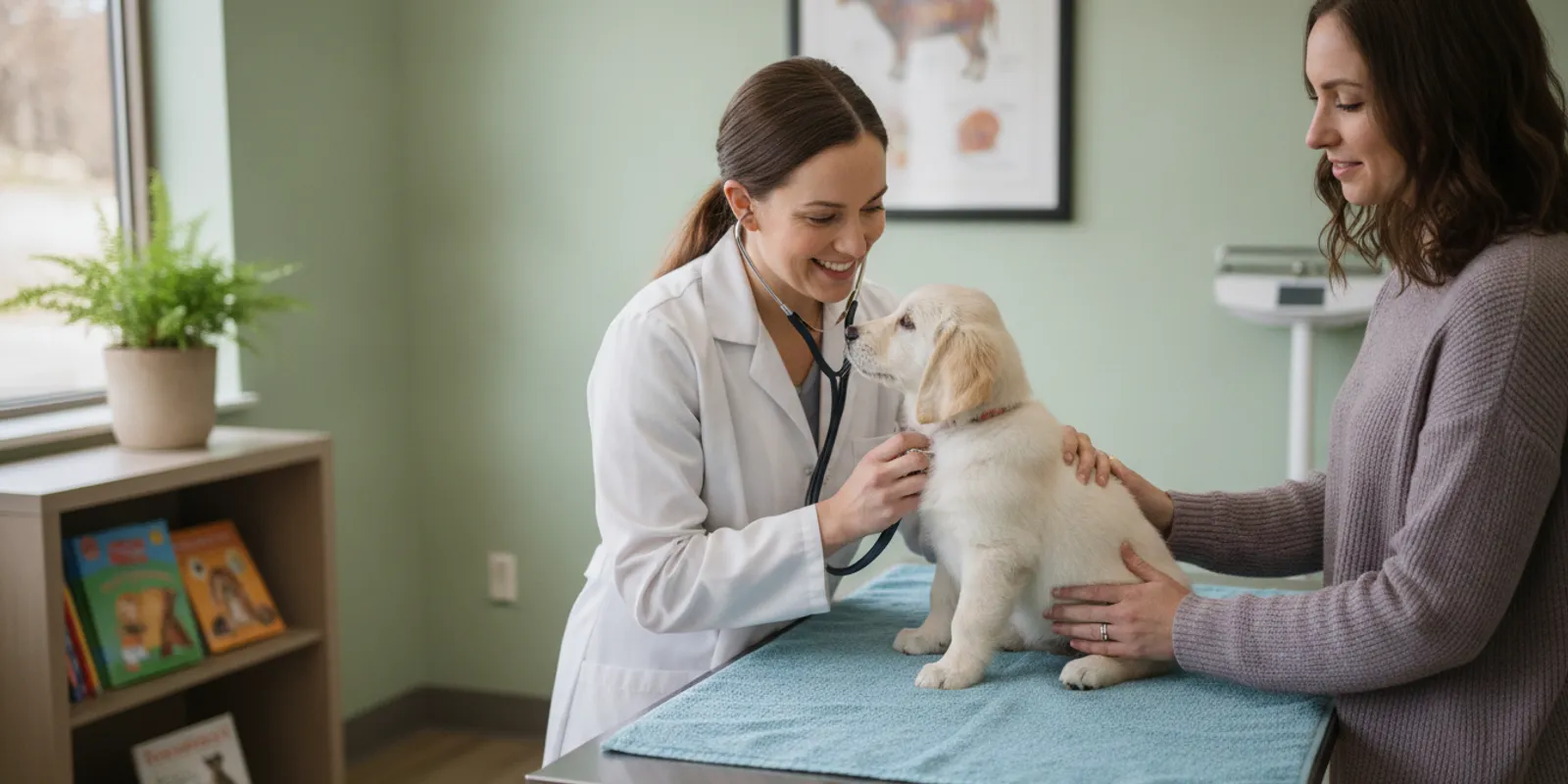
The veterinarian then performs an examination appropriate to your puppy’s age and situation. The American Kennel Club’s overview of what to expect at a puppy’s first vet visit describes elements such as weighing the puppy and listening to the heart and lungs. Your veterinarian may also look at the eyes, ears, mouth, skin, coat, and movement, and assess general condition. The exact examination can vary; an exam is not a guarantee that every possible health problem will be detected.
Expect the veterinarian to ask about vaccine and parasite-prevention history, if known. Bring records rather than relying on memory where possible. If the puppy has had medication, supplements, or a recent treatment, share the product name and timing. If you do not know an answer, say so. It is more useful to be clear about missing information than to guess.
What should you bring with you?
Gather the information that can help the team understand your puppy’s background and daily routine. A simple folder or phone album is enough. Useful items include:
- Adoption, breeder, rescue, or shelter paperwork, including any medical notes.
- Vaccine and deworming records, if available.
- A list or photos of medications, supplements, and parasite-control products.
- The name and amount of your puppy’s food, plus a typical feeding schedule.
- Notes about symptoms, when they began, how often they occur, and whether they are changing.
- Questions about behavior, sleep, training, grooming, or adjusting to home life.
If you have a stool concern or your veterinary team has asked for a sample, call ahead to ask what is useful and how to bring it. Do not delay contacting the hospital about urgent symptoms while trying to collect paperwork or a sample.
Use a secure carrier or leash appropriate to your puppy’s size and comfort. Keep your puppy close and avoid letting them greet unfamiliar animals without checking with their owners and the veterinary team first. If your puppy is nervous, tell the staff when you arrive. A calm, patient approach can help the team make the visit more comfortable.
Which topics should you discuss with the veterinarian?
A first visit can cover more than vaccines. Use the appointment to ask what matters most for your individual puppy, and ask the veterinarian to explain any recommendation you do not understand. Topics may include:
- Vaccines: Which vaccines are due, what records are missing, and when to return. Recommendations are based on factors such as age, prior doses, health, and likely exposure.
- Parasite prevention: Which risks are relevant to your puppy and what prevention or testing the veterinarian recommends. Do not start or combine products without checking that they are suitable for your pet.
- Food and growth: Whether the current diet and feeding routine are appropriate, and how to monitor body condition as your puppy grows.
- Dental and grooming care: How to introduce tooth brushing, nail care, ear handling, and coat care gradually and safely.
- Behavior and social experiences: Questions about settling in, sleep, handling, and positive ways to introduce new situations.
- Identification and records: How to keep medical documents organized and what identification options may be appropriate.
Try writing down your top three questions before the appointment. If the visit feels busy, you can make sure the most important concerns are addressed. You can also ask what changes should prompt a call and what follow-up is planned.
It can help to sort questions into “today” and “later.” Health concerns, current medication, and time-sensitive preventive care are useful to raise first. Questions about routine grooming or training can be discussed as time allows, or saved for a follow-up. If a topic is important to your household, tell the veterinarian; care guidance works best when it fits the puppy and the people caring for them.
For example, if you are unsure whether a vaccine is due, show the team the record and ask them to explain how they reached their recommendation. If you want to know whether your puppy’s food is suitable, bring the package or a clear photo of its label. If you have a concern about a product used before adoption, bring its name or packaging rather than trying to remember the ingredients. These small details can make the conversation more specific.
You can ask for written instructions, especially if the visit includes several recommendations. Before leaving, confirm any follow-up date, how to reach the hospital with a question, and what symptoms merit a call sooner. If more than one person cares for the puppy, share the plan with everyone at home so the instructions are followed consistently.
Some owners also find it useful to keep a simple health record at home. Note appointment dates, medications or products discussed, changes in appetite or stool, and questions that come up between visits. This record is not a substitute for an examination, but it can help you describe a pattern clearly when you contact the veterinary team.
If you would like to understand the hospital’s general approach to vaccination care or veterinary medicine, review those pages and bring any remaining questions to the appointment. The veterinarian can explain which guidance applies to your puppy’s individual history.
How do vaccines and follow-up care fit in?
Vaccination is not always a single appointment. The veterinarian will review the puppy’s age and documented vaccine history to discuss what is appropriate and when additional doses or a recheck may be needed. A puppy with incomplete or uncertain records may need a different plan from one with a documented history. Avoid assuming that a record marked “vaccinated” tells the whole story; bring the actual document for review.
Other preventive recommendations are individualized, too. Your veterinarian may discuss parasite risks, nutrition, or an examination of a concern noticed during the visit. Ask which actions are needed now, which can wait, and when the team wants to see your puppy again. If you are unclear about a product or instruction once you get home, contact the hospital to confirm rather than guessing.
Before the appointment ends, make sure you understand the practical next steps. If a vaccine or other preventive measure is planned, ask whether it will happen at this visit or at a later one. If the veterinarian recommends monitoring something at home, clarify what to observe and when to call. You do not need to remember every clinical detail; focus on the instructions that affect what you will do next.
It may also help to ask how your puppy’s care plan will change as they mature. The first visit is a starting point, not a promise that every future need can be predicted in advance. A veterinarian can revisit recommendations as your puppy’s health, environment, and routine become clearer. Keep copies of records and share updates at later visits, especially if your puppy has seen another veterinary provider or received care elsewhere.
The table below is a conversation guide, not a fixed schedule. Your puppy’s veterinarian can adapt the plan after reviewing health records and examining them.
| Visit topic | What the team may review | What you can bring or ask |
|---|---|---|
| Health history | Previous care, symptoms, appetite, energy, and daily routine | Medical records and a brief symptom timeline |
| Physical examination | General condition and an age-appropriate examination | Ask what the veterinarian noticed and whether anything needs follow-up |
| Vaccines | Age, documented doses, and likely exposure | Bring vaccine records; ask what is due and when to return |
| Parasite prevention | Relevant risks, prevention options, and any testing to consider | Bring product names; ask which products are suitable for your puppy |
| Home care | Food, growth, grooming, handling, and behavior questions | Write down your routine and your most important questions |
How can you help your puppy feel more comfortable?
Keep the trip as calm and predictable as you can. Leave enough time to travel without rushing, and bring a familiar blanket or small comfort item if it is safe and practical. If your puppy is already comfortable with a carrier, use it for secure transport. Avoid forcing an interaction when your puppy seems worried; let the veterinary team guide handling.
At the appointment, tell the team what your puppy finds difficult. For example, your puppy may be uneasy around unfamiliar people, sensitive about having paws touched, or unsettled by new sounds. Staff can use that information to plan a gentler approach when possible. If you are concerned about stress during visits, you can also ask about ways to build positive associations over time.
After the visit, follow the veterinarian’s instructions and keep the next appointment or follow-up date in your calendar. Note any change that concerns you and contact the hospital for guidance. Do not change a prescribed plan or give human medication unless a veterinarian has specifically instructed you to do so.
What should you clarify before you leave?
Before wrapping up, take a moment to make sure the plan feels clear. You can ask the veterinary team to summarize the most important recommendations and repeat any instructions that are easy to mix up. A few practical questions can help you leave knowing what happens next:
- Which recommendations should I act on now, and which are for a future visit?
- When should my puppy return, and what will the team review at that appointment?
- What changes at home should lead me to call the hospital?
- Who should I contact if I have a question about the instructions or a product?
- Are there records or observations I should bring to the next visit?
Write down the answers or ask whether the team can provide written guidance. This can be especially useful when several family members share puppy care or when you are balancing new routines. If you have a follow-up question after you get home, contact the hospital rather than relying on an online discussion to interpret advice intended for your puppy.
If the veterinarian discusses a choice between reasonable next steps, ask what each option involves and what factors matter in your puppy’s case. You can ask for time to consider non-urgent decisions and confirm how to follow up. For a time-sensitive health concern, however, follow the veterinary team’s guidance promptly. Clear questions support a more informed conversation and help keep the care plan practical.
How do you choose a veterinary hospital for ongoing puppy care?
Look for a veterinary team that will explain recommendations, review your puppy’s history, and help you understand what to watch for between appointments. It can be useful to ask how to contact the hospital about a new concern, what records to bring, and how preventive care is tailored to a pet’s needs. A dependable relationship develops over time, through clear communication and regular examinations.
Animal Hospital of Rolling Meadows provides veterinary care for dogs and cats in Rolling Meadows and nearby northwest Chicago suburbs. Pet owners can review the hospital’s veterinary services, learn more about the veterinary team, and contact the hospital with questions about arranging care. For a puppy’s first visit, bring any available records so the team can discuss the next steps with you.
Frequently Asked Questions
What if I do not have my puppy’s vaccine records?
Bring any adoption or breeder paperwork you do have and tell the veterinary team that the vaccine history is incomplete or unavailable. The veterinarian can review the information, examine your puppy, and discuss an appropriate plan. Do not guess at dates or doses.
Should my puppy eat before the first appointment?
For a routine visit, follow the instructions given when you book. If no special instructions were provided, contact the hospital to ask whether your puppy should eat normally. Do not withhold food or water based on a general online recommendation, especially for a young puppy or one with a health concern.
What if my puppy seems sick before the appointment?
Call the veterinary hospital and describe what you are seeing, when it began, and whether it is worsening. The team can help direct you to an appropriate next step. If your puppy appears seriously ill or has trouble breathing, seek urgent veterinary guidance rather than waiting for a routine visit.
How often will my puppy need to see a veterinarian?
There is no single schedule that fits every puppy. The timing depends on age, health, vaccine history, and the care plan your veterinarian recommends. Before you leave the first appointment, ask when the next visit should be and what should happen in between.
A first veterinary visit is a chance to establish a health history, ask questions, and make a practical plan for your puppy’s care. If you are unsure what your puppy needs, arrange an examination and bring the information you have.