Dog corneal ulcer symptoms and treatment can be worrying to navigate because eye pain may appear suddenly, and several eye problems can look similar at home. A corneal ulcer is damage to the clear surface at the front of the eye. Only a veterinary examination can determine what is causing your dog’s signs and what care is appropriate.
Book Appointment or call 847-873-8996
What is a corneal ulcer?
The cornea is the transparent outer layer that helps protect the eye and focus light. An ulcer is an area where its surface has been damaged. A small scratch, rubbing, foreign material, an eyelid or eyelash problem, or other irritation may contribute to corneal injury. The reason is not always obvious from appearance alone.
Corneal injuries vary in depth and severity. A shallow surface defect and a deeper injury do not have the same risks or care needs. A veterinarian may use magnification and special drops to assess the surface. Avoid trying to judge depth or severity by how red the eye looks; a small-looking problem can still need attention, while redness can have causes other than an ulcer.
It also helps to distinguish a corneal ulcer from a general description such as “red eye” or “cloudy eye.” Those terms describe what an owner sees, not a diagnosis. Conditions affecting different parts of the eye can produce overlapping signs. For more context on another common eye change, read about cloudy eyes in dogs, but do not use an online description to decide what is wrong with your pet.
Which dog corneal ulcer symptoms should you watch for?
Common signs of eye pain or irritation can include:
- Squinting, holding the eye partly or fully closed, or blinking more than usual.
- Watery discharge or increased tearing.
- Redness in the white part of the eye or around the eyelids.
- Rubbing the face on furniture or pawing at the eye.
- Cloudiness, a visible spot, or a change in the surface of the eye.
- Sensitivity to light, turning the head away from bright areas, or reluctance to open the eye.
- Changes in behavior, such as withdrawing, resisting face handling, or seeming unsettled.
These signs are not specific to ulcers. Infection, inflammation, a foreign object, and other eye conditions may cause similar changes. A dog may also have an injury that is difficult to see without an appropriate examination. Some pets hide discomfort, so a subtle change in blinking or willingness to play can be worth noting when it is new.
Look at the overall pattern rather than trying to inspect the eye by force. Note whether one or both eyes seem affected, whether your dog is keeping the eye closed, and if the signs are getting worse. If your dog is squinting or persistently rubbing an eye, contact a veterinary hospital promptly rather than waiting to see whether it clears on its own.
How quickly should you contact a veterinarian?
Arrange veterinary advice promptly for persistent squinting, eye redness, discharge, cloudiness, visible damage, or repeated rubbing. Contact a veterinarian urgently if the eye looks severely injured, suddenly changes appearance, or your dog seems very painful or cannot open it. A suspected eye injury should not be left for several days simply to see what happens.
Do not delay because symptoms seem to improve briefly. A dog may stop rubbing when distracted, or the eye may look different under varying light, but neither change confirms that the surface has healed. If you are unsure how quickly your dog needs care, call and describe what you see. For urgent concerns, route the question to a veterinary team rather than relying on a photo or online advice.
Animal Hospital of Rolling Meadows provides veterinary care for dogs and cats in Rolling Meadows and nearby northwest Chicago suburbs. Call 847-873-8996 for guidance on seeking care. The hospital’s urgent care information can also help owners understand how to contact the practice about time-sensitive concerns; it does not replace calling when your pet’s eye appears seriously injured.
What should you do while arranging care?
Keep your dog calm and reduce opportunities to rub or scratch the eye. If you already have a properly fitted protective collar and your dog tolerates it, it may help prevent pawing while you arrange veterinary advice. Do not force equipment on a distressed pet, and do not allow attempts to protect the eye to delay seeking care.
Avoid touching, pressing, or trying to open the eyelids for a closer look. Do not try to remove an object that appears embedded. If something is on the surface, attempting to wipe it away may cause additional injury or make it harder for a veterinarian to assess. Keep your dog away from rough play and brush or debris if that can be done without handling the affected area.
For general information about veterinary eye conditions, the American College of Veterinary Ophthalmologists is a professional organization. Its general resources are not a substitute for an examination of your dog. When an eye is painful or changing, a veterinarian can assess the particular situation and recommend the next step.
What should you avoid doing at home?
- Do not use human eye drops or leftover pet medication. Different products are intended for different problems. Some medications can be inappropriate when the cornea is injured, so use only products recommended by a veterinarian for this episode.
- Do not rinse with household solutions or apply ointments. Products not directed by a veterinarian may irritate the eye or interfere with an examination.
- Do not try to remove an embedded object. Handling the eye can cause additional injury. Seek veterinary care instead.
- Do not let your dog keep rubbing. Scratching can worsen surface damage. Ask the veterinary team whether a cone or other protection is suitable.
- Do not rely on appearance alone. A photo or quick glance cannot confirm whether an ulcer is present or how deep it is.
- Do not borrow another pet’s prescription. A medication prescribed for a different animal or earlier problem may not be suitable for the current eye concern.
If you have already used a product, do not panic or try to counteract it with another treatment. Make a note of the product name, when it was used, and how much was applied, then tell the veterinary team. Keep the container available if possible. That information can help the team make a safe plan.
How might a veterinarian evaluate a suspected ulcer?
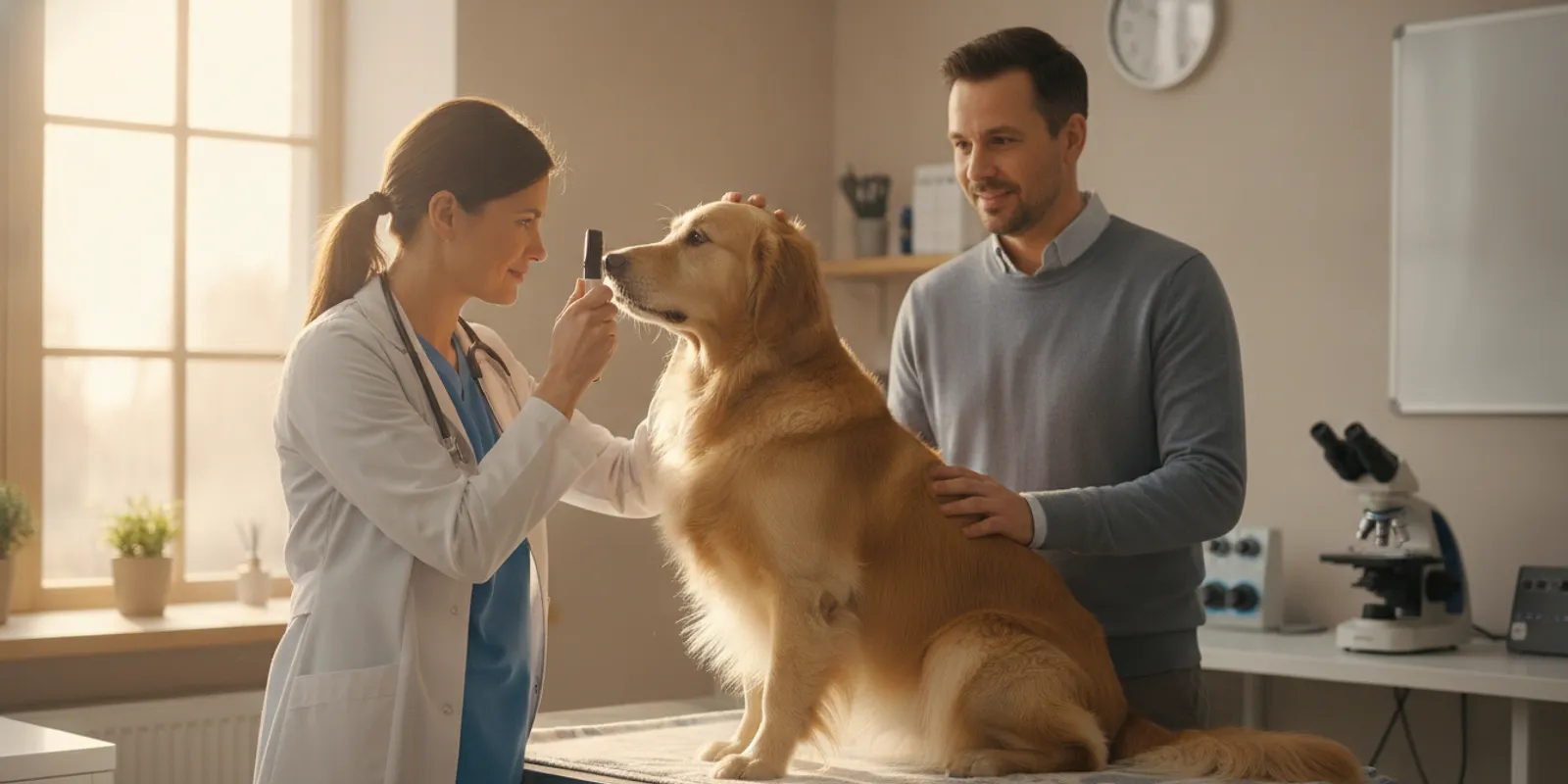
The veterinarian will ask when the signs began, whether they are changing, and whether there was a possible scratch, outdoor exposure, or episode of rubbing. They may examine the eyelids and the eye’s surface and use a fluorescein stain, which can highlight a defect in the cornea. The examination helps assess the injury and whether additional evaluation or follow-up is needed.
The visit is also a chance to discuss factors that may matter for your dog, such as previous eye problems, medicines, and the circumstances around the first sign. A clear timeline is useful: for example, “squinting began after a walk yesterday, and tearing increased this morning” is more helpful than an estimate such as “the eye has looked odd for a while.” If you are not sure of the time, say so; an approximate account is still useful.
Share any medicines or eye products you have used, including the name and timing. Mention if one or both eyes are affected, and whether your dog is eating and behaving normally. A photo showing how the eye looked earlier may help explain how signs changed, but it cannot replace an in-person assessment.
Depending on the findings, the veterinarian may discuss examination or diagnostic options available through the hospital’s veterinary medicine services. If surgery or a procedure is being considered for a particular injury, the team can explain the relevant surgical care and next steps. Those possibilities depend on the individual examination; they are not the expected outcome for every eye concern.
What can treatment and follow-up involve?
Treatment depends on the cause, depth, and location of the injury, as well as the dog’s overall eye health. It may involve prescribed topical medication, pain control, measures to protect the eye, or a procedure for injuries that need more than medication. The veterinarian will explain how and when to give any prescribed treatment and whether a recheck is needed.
When medication is prescribed, ask for a demonstration if you are uncertain how to apply it. Wash your hands first, position your dog in a way that feels secure, and avoid touching the eye with the container tip. Follow the labeled dose and schedule. If more than one product is prescribed, ask whether they should be given in a particular order or separated by a certain interval rather than assuming they can be combined.
If your dog turns away, struggles, or you miss a dose, contact the hospital for guidance. Do not double a later dose or change the plan yourself. Tell the veterinary team if applying medicine is consistently difficult; they may be able to explain a safer technique or discuss what to do next. Clear instructions matter because inconsistent application can make it harder to follow the intended care plan.
Healing and follow-up vary. Some corneal injuries need repeated checks because the veterinarian must confirm that the surface is improving. A dog appearing more comfortable is encouraging, but it does not establish that the cornea is healed. Do not stop medication early or skip a recommended recheck for that reason. At the visit, ask what progress the veterinarian wants to see and which changes should prompt an earlier call.
It can help to keep a simple care record at home: medication times, whether each dose went in, changes in squinting or discharge, and any questions that come up. This record need not be elaborate. A few notes can make a recheck conversation more specific and help distinguish a steady improvement from a symptom that returns between doses.
How do possible next steps compare?
| What you notice or know | Useful next step | What to avoid |
|---|---|---|
| New or persistent squinting, tearing, redness, or rubbing | Contact a veterinarian promptly and arrange an examination. | Waiting several days or using old drops without advice. |
| Cloudiness, visible surface change, or worsening discomfort | Call for prompt veterinary guidance and describe how quickly it changed. | Pressing on the eye or trying to inspect it by force. |
| Severe pain, inability to open the eye, or an apparent serious injury | Seek urgent veterinary care and call the hospital for direction. | Attempting home treatment or delaying to monitor. |
| A product or medication has already been used | Tell the veterinarian its name, amount if known, and when it was applied. | Adding another product to counteract it without instruction. |
| Medication and a recheck plan have been prescribed | Follow the instructions and call about changes or difficulties giving treatment. | Stopping, substituting, or changing the dose without veterinary advice. |
How can you prepare for the visit?
A few clear details can help the veterinary team understand the timeline and decide what questions to ask. Before calling or coming in, note:
- When you first noticed the signs and whether they are getting better, worse, or staying the same.
- Which eye is affected and whether both eyes seem involved.
- What you see: squinting, discharge, redness, cloudiness, rubbing, or a visible change.
- Whether your dog has been rubbing, running through brush, playing with another animal, or exposed to anything that might have irritated the eye.
- Any medication, drops, rinses, or ointments already used, and approximately when.
- Changes in appetite, activity, behavior, or comfort.
- Relevant history, including prior eye problems or current medications.
Transport your dog calmly and prevent rubbing as much as possible. If handling the face increases distress, do not force an inspection. Bring medication containers or a written list, and tell the team if you think your dog may be difficult to handle because the eye hurts. You can contact the Animal Hospital of Rolling Meadows team for direction.
Owners who want to understand the hospital’s broader care options can review its veterinary services and learn more about the veterinary team. These pages provide practice information; the specific plan for an eye problem is based on an examination and discussion with the veterinarian.
What should you ask about the care plan?
Eye treatment can involve several instructions at once, so it is reasonable to ask the team to review the plan before you leave. Useful questions include:
- What signs should improve first, and what changes should lead me to call sooner?
- How often should each prescribed product be used, and what should I do if a dose is missed?
- Does my dog need a protective collar, and when should it be worn?
- When is the recheck, and what will the veterinarian assess at that visit?
- Should normal walks, play, or other activities be limited while the eye heals?
- Who should I contact if the eye worsens or I cannot give the medication?
Having the answers written down can reduce uncertainty at home. If instructions are unclear after you return, call the hospital to confirm them instead of guessing. Avoid changing treatment based on a search result or another pet owner’s experience, since eye conditions that look similar may need different care.
Book Appointment or call 847-873-8996.
Frequently Asked Questions
Can a corneal ulcer heal without treatment?
Some surface injuries may improve, but an owner cannot reliably determine the cause or depth at home. An examination helps identify the problem and whether treatment or follow-up is needed. Contact a veterinarian for persistent eye signs instead of assuming they will resolve.
Is a dog corneal ulcer an emergency?
Eye pain and surface damage deserve prompt veterinary attention. Severe pain, an eye your dog cannot open, a sudden major change, or an apparent serious injury should be treated as urgent. Call a veterinary hospital for direction rather than waiting to see what happens.
Can I use human eye drops for my dog?
Do not use human drops or leftover medication unless a veterinarian specifically directs you to use that product for this problem. Products vary, and the wrong medication may be unsuitable for an injured cornea. Tell the veterinarian about anything you have already applied.
How long does recovery take?
Recovery depends on the type and severity of the injury and the dog’s response to care. The veterinarian can recommend a recheck schedule and explain which changes to monitor. Follow those instructions even if the eye looks more comfortable.
When should you contact Animal Hospital of Rolling Meadows?
If your dog is squinting, rubbing an eye, has discharge or cloudiness, or seems uncomfortable, contact a veterinarian for advice. The Animal Hospital of Rolling Meadows team can help you determine an appropriate next step; call 847-873-8996 for urgent concerns or arrange an appointment. A timely examination is the safest way to understand what is affecting your dog’s eye.