If you are searching for cat eye injury what to do, the safest first step is to prevent further rubbing and contact a veterinarian promptly. Eye problems can worsen quickly, and redness or squinting can have several causes that look alike at home. Do not try to diagnose the injury or treat it with human medication. Keep your cat calm, avoid touching the eye, and describe what you see when you call.
Book Appointment or call 847-873-8996
Which signs mean a cat may have an eye injury?
Look for a change in how the eye appears or how your cat behaves. A cat may hold one eye partly closed, blink more than usual, paw at the face, or rub its head against furniture. The eye may look red, watery, swollen, cloudy, or different in size from the other eye. You may also notice discharge, a visible scratch or object, bleeding, or a change in how the pupil looks.
These signs do not identify the cause by themselves. A scratch, a foreign object, a blow, irritation, infection, or another eye condition can produce overlapping symptoms. Cats may also hide discomfort, so a small change in behavior can be useful information. If you are uncertain whether the eye is injured, call a veterinary team and explain what has changed rather than waiting for the signs to become more obvious.
Some changes deserve immediate attention. Seek urgent veterinary help if the eye is protruding, there is a visible penetrating object, bleeding, a sudden change in vision or navigation, marked swelling, severe pain, or the eye is held firmly shut. A chemical splash or a significant impact to the head or face also warrants prompt guidance. If the situation seems severe, do not delay care to take photographs or try home treatment.
What should you do first?
- Keep your cat as still and comfortable as you can. Move other pets away and choose a quiet space. Speak softly and avoid chasing or restraining your cat more than necessary.
- Prevent rubbing if it is safe. Pawing can cause additional irritation or injury. If your cat already has a properly fitted protective cone and tolerates it, you may use it while arranging care. Do not force a cone onto a distressed cat or let an attempt to fit one delay a call.
- Call a veterinarian promptly. Explain when the change began, what you observed, and whether there was a known accident or exposure. Follow the veterinary team’s instructions about how soon your cat should be examined.
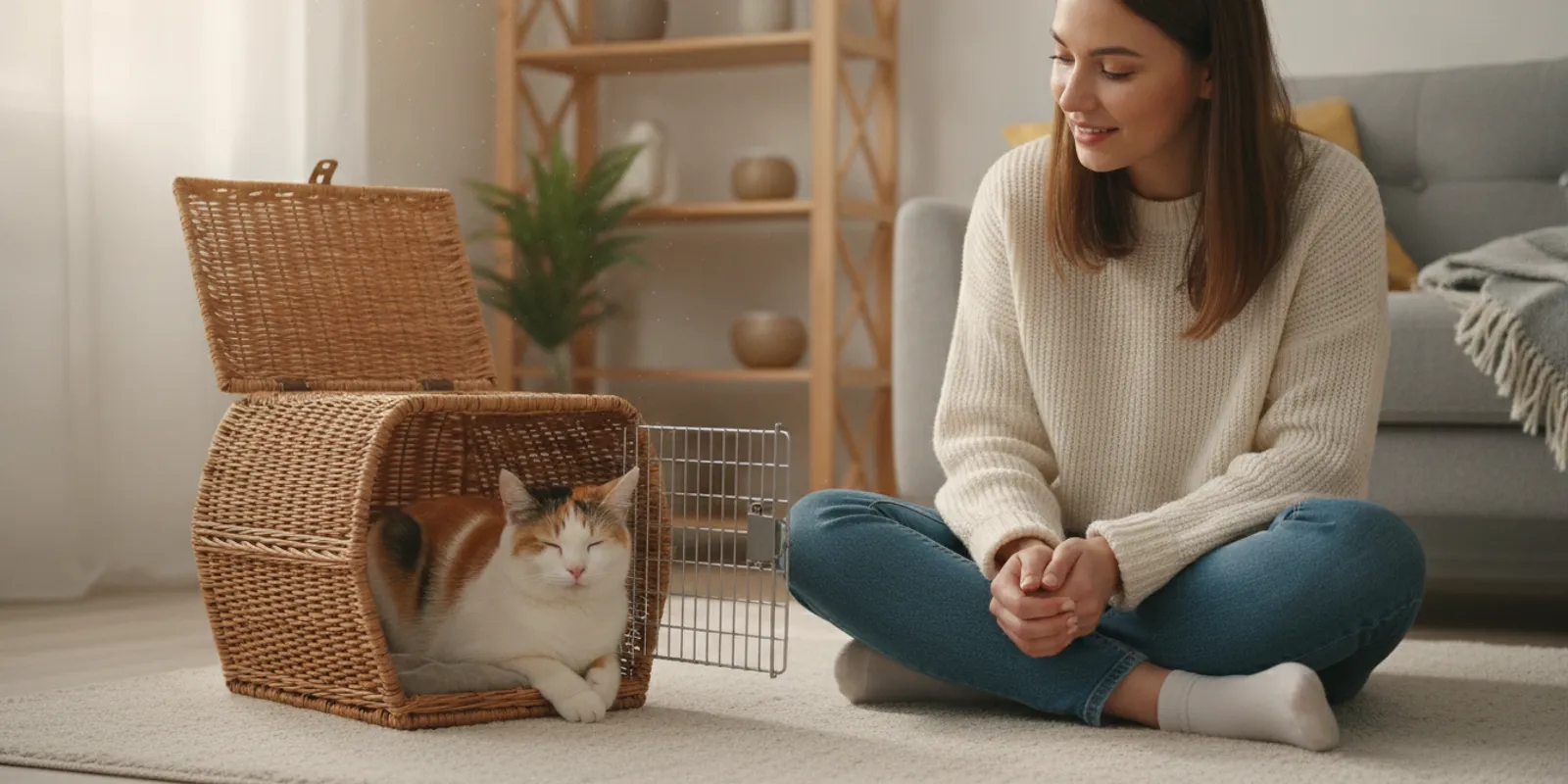
- Prepare for safe transport. Use a secure carrier with a familiar towel or blanket. Keep the carrier level, minimize handling around the head, and do not press on the eye while placing your cat inside.
If you cannot reach your regular veterinary team and your cat has a severe sign, seek an emergency veterinary hospital rather than waiting for the problem to resolve. For urgent concerns, contact Animal Hospital of Rolling Meadows at the hospital’s contact page or call 847-873-8996. If you are already on the way to a clinic, call ahead when possible so the team can advise you about arrival.
What should you avoid doing at home?
It is tempting to inspect closely or rinse an eye, but handling can make a painful cat struggle and may worsen an injury. Avoid actions that put pressure on the eye or introduce products that have not been recommended for your cat.
- Do not press, massage, or pry the eyelids open. Do not try to test whether the eye is painful by touching it.
- Do not pull out an object that appears stuck in or attached to the eye. Leave it in place and seek urgent veterinary care.
- Do not use human eye drops, leftover pet medication, ointments, or pain relievers unless a veterinarian directs you to do so. A product that was appropriate for a different problem may not be safe or suitable for this one.
- Do not use tweezers, cotton swabs, or tissues on the surface of the eye. These can cause more irritation or injury.
- Do not wait overnight simply to see if a new eye change disappears. Call for veterinary guidance, especially if your cat is squinting, rubbing, or the eye looks abnormal.
If a chemical or cleaning product got into the eye, call a veterinary team or an animal poison-control service promptly and have the product container available. Ask for instructions on whether and how to rinse; do not use another substance to neutralize it. If you have already begun rinsing with clean lukewarm water or sterile saline, tell the veterinarian what you used and for how long. Do not let gathering details delay urgent care.
How quickly should your cat be seen?
When an eye injury is possible, a same-day call is a prudent choice, even if the signs appear mild. The veterinary team can help decide whether your cat needs immediate assessment or a scheduled appointment based on the symptoms and history. A visible wound, embedded object, significant trauma, bleeding, sudden vision change, or severe pain should be treated as urgent. When in doubt, describe the signs over the phone rather than relying on a wait-and-see approach.
| What you notice | What to do | What to avoid |
|---|---|---|
| Squinting, tearing, or new redness | Call a veterinary team promptly and ask how soon an exam is needed. | Do not use drops or wait several days to see if it passes. |
| Repeated pawing or rubbing | Reduce opportunities to rub if safe, then arrange veterinary guidance. | Do not force restraint or press on the eye. |
| Visible object stuck in the eye, bleeding, or a protruding eye | Seek urgent veterinary care; call ahead if you can. | Do not remove the object or attempt to reposition the eye. |
| Possible chemical exposure | Call promptly with the product name and follow professional instructions. | Do not apply a neutralizing product or delay the call. |
| Cloudiness, marked swelling, or a sudden change in vision | Arrange urgent assessment and describe when the change began. | Do not assume the cause or use leftover medication. |
This table is a guide for deciding what to report, not a way to diagnose an eye problem. If your cat’s condition worsens while you are arranging care, call again and explain the change.
What if the eye looks normal again?
A symptom that comes and goes is still worth reporting. Your cat may stop squinting briefly or may hide signs of discomfort when resting, but that does not establish that the eye is healthy. Make a note of when you first saw the change, how long it lasted, and whether it returned. Call a veterinarian for guidance rather than deciding from a short period of improvement that no assessment is needed.
Likewise, a cat who is eating or playing may still have an eye problem. Behavior can help describe how your pet is feeling, but it cannot rule out injury. Focus on the eye’s appearance and any changes in blinking, rubbing, or navigation, then share the full picture with the veterinary team.
How should you keep your cat comfortable while arranging care?
Keep your cat indoors and in a quiet room until you have spoken with a veterinary professional. Avoid play that encourages running, climbing, or contact with other animals. If there are several pets at home, give the affected cat space so another animal cannot nuzzle or paw at the face. Keep children from handling the cat’s head, and explain that the eye should not be touched.
Do not repeatedly check the eye every few minutes. Each attempt can upset your cat and increase the chance of rubbing or struggling. Observe from a comfortable distance and write down changes instead. If you notice a new warning sign, or if your cat seems more uncomfortable, tell the veterinary team promptly. If transport is advised, a quiet, secure carrier is generally safer than carrying a cat loose in a vehicle.
What information should you share when you call?
A clear, brief description helps the veterinary team understand the situation and advise you about next steps. You do not need to know exactly what caused the problem. Share what you observed in your own words, and mention any change since you first noticed it.
- When you first noticed the change, and whether it began suddenly.
- Which eye seems affected and what you see: squinting, redness, discharge, swelling, cloudiness, bleeding, or a visible object.
- Whether your cat is rubbing the face, hiding, eating differently, or behaving unlike usual.
- Any possible incident, such as a scuffle, fall, outdoor activity, or contact with a plant or household product.
- Any medication or eye product already given or applied, including its name and when it was used.
A photo taken from a comfortable distance may help you describe a change, but do not delay a call to get one. Never hold the eyelids open or use a bright flash close to the eye just for a picture. If you are planning a visit, a secure carrier is important; the hospital’s practice website provides a place to learn more about the hospital.
What may happen during a veterinary examination?
The veterinarian will ask about the timing and possible cause, then assess your cat and the affected eye. Depending on what they find, they may check the eyelids and surrounding tissues, evaluate the eye’s surface and response, or recommend additional tests. The exact examination depends on your cat’s comfort and the concern being assessed. Some cats need gentle handling or other support to allow a safe, thorough evaluation.
Do not be surprised if the team asks about general health, recent medications, or whether both eyes look normal. Those details can help put the eye change in context. If your cat is too uncomfortable for a complete examination at first, the veterinarian will explain what can safely be done and whether further steps are appropriate.
Next steps depend on the findings. The veterinarian may recommend a treatment plan, monitoring instructions, recheck, or further assessment. Follow the directions for any prescribed medication exactly, including how often to give it and when to stop. Ask what changes should prompt a call back, how to prevent rubbing, and when a follow-up is needed. If a recommended step is difficult at home, tell the team so they can discuss a workable approach.
Before you leave, make sure you understand which eye needs care and what each instruction means. If medication is prescribed, ask the team to demonstrate how to give it without pressing on the eye, and check whether it should be stored or handled in a particular way. Clarify what to do if a dose is missed or your cat resists treatment; do not double a dose or change the plan without asking. Keep follow-up instructions where everyone caring for your cat can find them.
At home, follow the veterinarian’s directions for observation and recheck. Note whether the signs improve, stay the same, or become more noticeable, and contact the clinic if you see a change the team told you to watch for. If the eye appears suddenly worse or your cat develops severe discomfort, call promptly rather than waiting until a planned follow-up. A follow-up examination may be important even if the eye seems more comfortable, so do not cancel or change it without checking with the veterinary team.
For an overview of the hospital’s care, see available veterinary services or learn about its medicine services. These pages are general information; a veterinarian needs to examine your cat to advise on an individual eye concern.
How can you make transport and the visit easier?
A painful or frightened cat may react differently from usual. Move slowly, keep noise low, and avoid handling the head. If your cat is already comfortable entering a carrier, encourage it inside with familiar bedding. If lifting is needed, support the body without squeezing the chest or putting pressure near the face. Do not risk being bitten or scratched in an attempt to force your cat into a carrier; call the clinic for advice about safe transport.
Bring the product packaging if an exposure may be involved, and a list or photo of medications your cat uses. Tell the veterinary team about prior eye problems, other health conditions, and any medicines given today. If you have more than one cat, keep the affected cat separated for a calm trip and so you can monitor its behavior without interference.
Animal Hospital of Rolling Meadows serves pet owners in Rolling Meadows and nearby northwest Chicago suburbs. To discuss an eye concern or arrange a visit, use the Book Appointment page or call 847-873-8996. You can also review information about the hospital before your visit. The American Veterinary Medical Association offers general pet-owner information at avma.org; for an eye injury, contact a veterinarian for advice specific to your cat.
Book Appointment or call 847-873-8996
Frequently Asked Questions
Can I wait to see if my cat’s eye gets better on its own?
Call a veterinary team when you notice a new eye change, even if it seems mild. Squinting, rubbing, discharge, redness, or a cloudy appearance can have different causes, and a veterinarian can help determine how quickly an examination is needed. Severe pain, bleeding, a visible object, or sudden vision changes warrant urgent care.
Should I rinse my cat’s eye?
Do not rinse an eye routinely or attempt to remove an object without veterinary direction. If a chemical exposure occurred, call promptly, share the product name, and follow professional instructions on whether rinsing is appropriate. Do not use a neutralizer, drops, or medication unless directed.
Can I use my own eye drops for my cat?
No. Do not use human drops or medication left over from another pet unless a veterinarian specifically tells you to use that product for this cat and this problem. Some products may be inappropriate for a particular eye condition, so get veterinary guidance first.
What if my cat will not let me look at the eye?
Do not force the eyelids open or risk injury to yourself or your cat. Describe the behavior and visible signs to the veterinary team, then follow their advice about transport and timing. A veterinarian can assess the eye safely during an examination.
When should you contact a veterinarian?
Contact a veterinary team promptly for any new eye injury concern, and seek urgent care for severe pain, bleeding, an object stuck in the eye, a protruding eye, or sudden changes in vision. Avoid home medication and handling that puts pressure on the eye. Animal Hospital of Rolling Meadows can be reached at 847-873-8996; the veterinarian can advise you on an appropriate next step after hearing what is happening.