
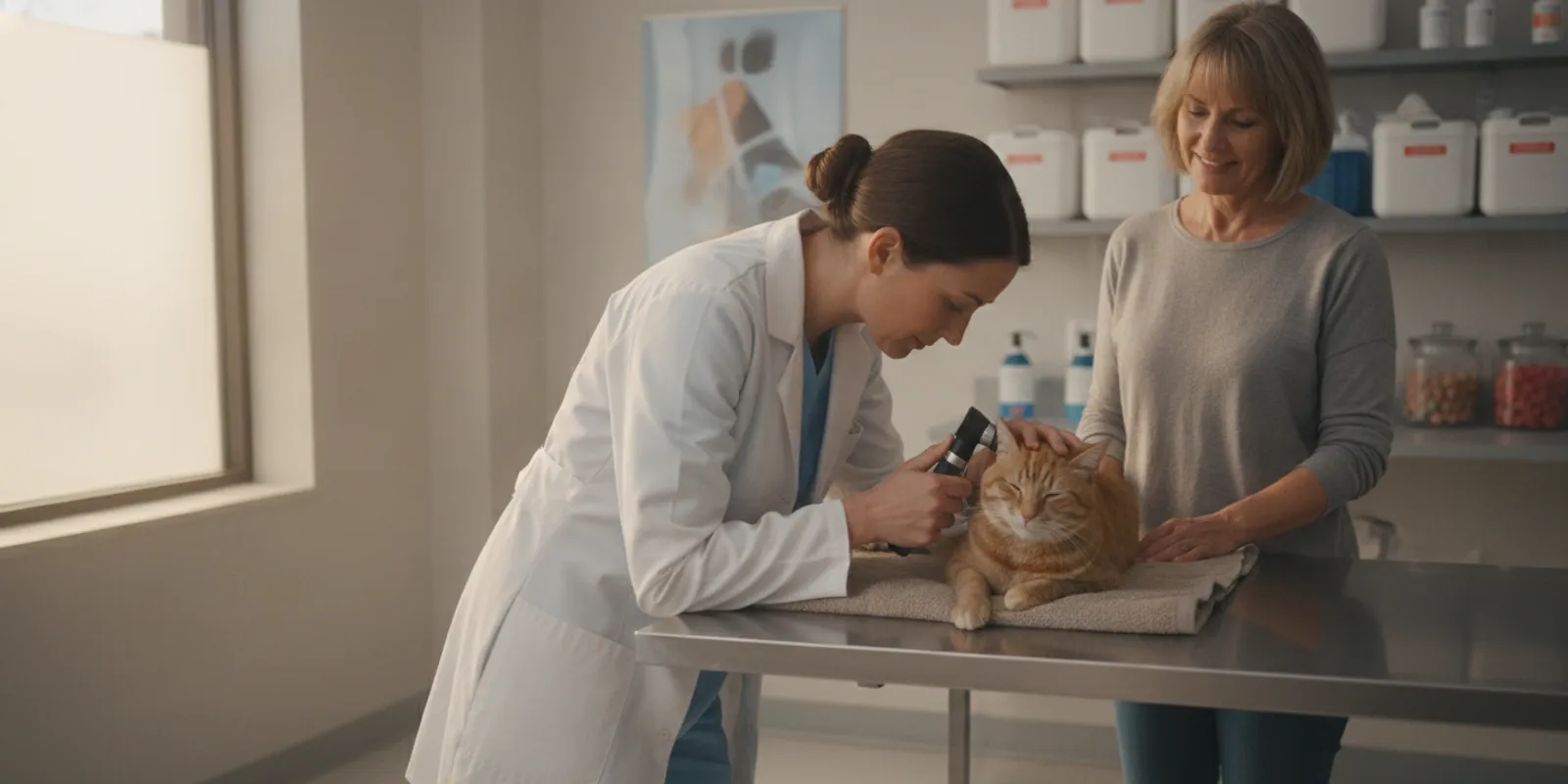
Cat ear infection symptoms and treatment can raise questions when a cat starts scratching, shaking its head, or resisting touch near the ears. These signs can have several causes, and an examination is needed to identify what is happening and choose appropriate care. Knowing what to observe, when to call, and what not to put in the ear can help you take a calm next step.
Book Appointment or call 847-873-8996
What signs can an ear infection cause in cats?
A cat with an ear problem may scratch repeatedly at one or both ears, shake the head, rub the side of the face against furniture, or hold an ear at an unusual angle. Some cats pull away, flinch, or vocalize when someone touches around the head. Others become quieter, hide more, or seem irritable because the area is uncomfortable.
Look for changes you can see without handling the ear: redness at the opening, swelling, discharge, crusting, or an unusual odor. The material may look dark, waxy, moist, or different from what is normal for your cat. Do not try to identify a disease by color or smell. Several different problems can produce similar-looking debris, and a cat may have discomfort even when little is visible from the outside.
Also note the pattern. Is your cat favoring one ear, or are both affected? Did the signs start suddenly or build over several days? Do they appear to improve and then return? Those details can help the veterinarian understand the problem, but they cannot establish a diagnosis at home.
When should you contact a veterinarian?
Call your veterinarian if scratching or head shaking persists, recurs, or comes with redness, discharge, odor, tenderness, or a change in behavior. If your cat will not allow you to look at the ear, do not force an inspection. A painful cat may react suddenly, and holding the head still can increase distress.
Seek prompt veterinary guidance for marked pain, bleeding, substantial swelling, a sudden head tilt, stumbling, loss of balance, unusual eye movements, or a sudden change in hearing or behavior. These signs may indicate a problem that needs more than routine home observation. If your cat seems very unwell or the signs are severe, call a veterinary hospital and explain what is happening rather than waiting to see whether it passes.
When you call, be ready to say when the signs began, whether one or both ears seem affected, and whether the problem is getting better or worse. Mention any discharge or odor, recent bathing, medications or ear products, and previous episodes. A short video of head shaking or a balance change may help show what you are seeing, provided recording does not delay care or put your cat at risk.
What else can cause signs that look like an infection?
Infection is only one possible explanation for ear discomfort. Parasites, skin inflammation, allergies, a scratch, moisture, a foreign object, or a growth can also cause irritation. In some cases, inflammation or an underlying skin problem can make the ear more vulnerable to repeated trouble. More than one issue may be present at the same time.
Symptoms alone cannot reliably distinguish these possibilities. Dark debris, for example, is not proof of one particular cause, and a strong odor does not tell you which treatment is needed. A cat with similar outward signs may need a different approach depending on what is found in the ear canal and whether the deeper structures can be safely assessed.
This is one reason to avoid using an old prescription or choosing a product based on a previous episode. A repeat episode may not have the same cause. Some medications or cleaners may also be unsuitable if the eardrum is injured or cannot be evaluated. If you have already applied a product, tell the veterinarian what it was and when it was used; do not conceal it or try to flush it out unless you are instructed to do so.
How does a veterinarian evaluate a cat’s ear?
The veterinarian will ask about the timing, signs, past ear problems, general health, and anything placed in the ear. The examination may include looking at the visible outer ear and using an otoscope to inspect the canal. Whether the canal can be examined comfortably depends on your cat’s pain, stress, and the amount of swelling or debris. The team can discuss a safe way to proceed if handling is difficult.
A sample of ear material may be collected for examination under a microscope. This can help identify clues such as parasites, yeast, or bacteria and guide treatment. A sample is not a substitute for the full examination: the veterinarian considers the findings alongside what the ear looks like, your cat’s history, and the rest of the physical assessment. In persistent or complicated cases, further testing or a follow-up assessment may be appropriate.
If the problem keeps returning, explain the full pattern rather than only describing the latest flare-up. Tell the veterinarian whether prior treatment helped, how long it was used, and when signs returned. A careful review can help determine whether the original cause remains, whether a new issue has developed, or whether the plan needs reassessment. You can learn more about the hospital’s veterinary medicine services and clinical team.
What might treatment involve?
Treatment depends on the cause and the condition of the ear. A veterinarian may prescribe an ear medication, recommend parasite treatment, address a related skin problem, or choose another plan based on the examination and any test results. The veterinarian also considers how inflamed or painful the canal is and whether the eardrum can be assessed before recommending products for use in the ear.
Ask what the medication is intended to treat, how much to use, how often to apply it, and how long to continue. Have the team demonstrate the technique if you are uncertain. Some products require a specific application method, and following the label or clinic directions matters. Do not change the dose, stop early because the ear looks better, or continue longer than directed unless the veterinarian advises you to.
If your cat struggles, pause rather than wrestling or repeatedly forcing the medication. Ask the clinic for help with a lower-stress approach or guidance on what to do next. Call if your cat seems more painful after treatment, develops a new sign, or you cannot give the medication safely. Do not substitute a product from home or reuse medication left over from a prior visit.
Cleaning may be part of a plan for some cats, but it is not appropriate in every situation. Use only a product and method the veterinarian recommends for your cat. Avoid human ear drops, peroxide, alcohol, essential oils, and cotton swabs or other tools inserted into the canal unless the veterinarian specifically directs otherwise. These can irritate tissue, push debris deeper, or make an injury harder to assess. For general pet-health information, the American Veterinary Medical Association is a professional veterinary organization; information online does not replace advice based on your cat’s examination.
How do possible next steps compare?
| What you notice | Useful next step | What to avoid |
|---|---|---|
| Mild, recent scratching or head shaking | Call for veterinary guidance if it persists, worsens, or returns; note when it began. | Assuming the cause or putting unapproved drops in the ear. |
| Odor, discharge, redness, tenderness, or repeat symptoms | Arrange an examination so the veterinarian can assess the canal and decide whether testing is needed. | Using leftover medicine or trying to clean away all visible material before the visit. |
| Severe pain, bleeding, significant swelling, head tilt, or balance changes | Contact a veterinary hospital promptly and describe the signs. | Waiting for serious symptoms to resolve or forcing an ear inspection. |
| Symptoms return during or after treatment | Contact the prescribing veterinarian and share the timeline and medication details. | Repeating an old plan without checking whether the cause is the same. |
What can you do safely while arranging care?
Keep your cat comfortable and avoid unnecessary handling of the sore area. You can observe the outside of the ear from a comfortable distance, but do not pry open the canal, scrape debris, or use a swab to investigate. If your cat is scratching hard enough to injure the skin, call the veterinarian for advice about what to do while you arrange an examination.
Keep a simple record of the signs. Write down when you first noticed them, which ear seems involved, whether there is odor or discharge, and what has changed since then. If you see a mark or change in the visible outer ear, a photo taken without restraint may help you describe it. Do not delay a call to collect photographs if your cat is in significant pain or has balance problems.
Set aside any packaging for products already used, including the name and instructions, and make a list of medications your cat takes. If another person in the household applied something, ask what and when. This prevents accidental repeat use and gives the veterinary team a clearer history. If you are unsure whether a product is safe, call before applying more.
How can you prepare for the appointment?
- Note the first day you noticed a change and whether it has been steady, intermittent, or worsening.
- Record whether one or both ears seem affected and describe visible signs without trying to label the cause.
- Bring medication names, product containers or photos, and the dates they were last used.
- Tell the team about earlier episodes, past test results if available, and how your cat responded to previous treatment.
- Ask whether to avoid cleaning the ear before the visit; a sample may be useful for evaluation.
- Use a secure carrier for transport, and let the clinic know if your cat becomes distressed or painful when the head is handled.
During the visit, ask what the examination showed, whether a sample was checked, what signs should improve, and when to call if they do not. If treatment is prescribed, confirm the schedule in your own words and ask what to do if a dose is missed or your cat will not tolerate the application. Before leaving, clarify whether a recheck is recommended and how to arrange it.
The urgent care team in Rolling Meadows can help direct you when symptoms cannot wait for a routine appointment. Animal Hospital of Rolling Meadows serves Rolling Meadows and nearby northwest Chicago suburbs, including Arlington Heights, Palatine, Schaumburg, Elk Grove Village, Mount Prospect, and Prospect Heights. The care services page provides more information about the hospital’s veterinary care.
How can you reduce the chance of repeat ear trouble?
Prevention depends on the cause, so ask the veterinarian what is relevant for your cat rather than starting a routine cleaning or treatment schedule on your own. Follow recommendations for managing parasites or an underlying skin condition, and keep any requested follow-up visits. During ordinary grooming, you can look at the visible outer ear for changes without inserting anything into the canal.
After treatment, follow the plan through the period specified by the veterinarian, even if your cat appears more comfortable earlier. Keep track of whether scratching, odor, or discharge resolves and whether it returns. If symptoms persist or come back, report the pattern rather than simply repeating a previous prescription. Recurrence may warrant another assessment, and the next episode may not have the same explanation as the last one.
At home, avoid sharing ear products between pets unless a veterinarian has directed it, and store prescriptions with their labels so they are not mistaken for another medication. If bathing or grooming seems to precede episodes, mention that detail at the next visit; it may help the veterinarian understand the timeline. These observations are useful clues, not proof of what caused the problem.
When should you contact Animal Hospital of Rolling Meadows?
Contact Animal Hospital of Rolling Meadows if your cat has ongoing ear scratching, head shaking, discharge, odor, or tenderness. For severe pain, bleeding, a head tilt, or balance problems, call promptly and explain what you are seeing so the team can guide you on the next step. The hospital offers neighborhood, family-oriented veterinary care for cats and dogs in Rolling Meadows and nearby communities.
For details about the hospital’s background, visit the About Us page. To arrange a visit, use the Book Appointment page or contact the hospital directly.
Book Appointment or call 847-873-8996
Frequently Asked Questions
Can I tell whether my cat has an ear infection by looking at the ear?
No. Scratching, odor, redness, and discharge can occur with several different conditions. A veterinarian may need to examine the canal and check a sample to work out what is causing the signs and choose appropriate care.
Should I clean my cat’s ear before the appointment?
Ask the clinic before cleaning it. Material in the ear may help the veterinarian evaluate the problem, and inserting swabs or tools into the canal can cause injury. If you have already cleaned the ear or used a product, simply tell the veterinarian what you used and when.
Can I use human ear drops or medicine left from a previous visit?
Do not use either unless the veterinarian approves that specific product for this episode. The cause may differ from a prior problem, and the condition of the eardrum can affect which products are appropriate. Call the clinic if you are unsure what to do.
What if my cat will not let me apply prescribed medication?
Do not force repeated applications if your cat is distressed or you cannot do it safely. Contact the clinic for a demonstration or advice about the next step. Tell the team whether your cat seems painful or whether the medication appears to worsen the signs.
Can ear symptoms come back after treatment?
Yes, signs can return or persist, and a new episode may need another assessment. Contact your veterinarian rather than restarting an old medication on your own, especially if the symptoms have changed or include pain, discharge, or balance problems.
Ear symptoms can be uncomfortable, but careful observation and a veterinary examination can help clarify the cause and guide appropriate care. If you are uncertain how quickly your cat needs attention, call the hospital and describe the signs you have noticed.