If you are researching pet ultrasound cost, you may be trying to plan for a test your veterinarian has recommended and understand what the scan can contribute to your pet’s care. There is no single fee that applies to every animal or every ultrasound. The estimate depends on the question being investigated, the type and extent of imaging, and what services are included. Asking for an itemized explanation can help you understand the plan before the appointment.
Why does pet ultrasound cost vary?
“Ultrasound” can refer to several kinds of examinations. A focused scan used to investigate a particular concern may have a different scope from a detailed abdominal study. An echocardiogram is an ultrasound examination of the heart. The staff time, image acquisition, and interpretation needed for each exam can differ, so it is important to ask what kind of study your veterinarian has recommended.
The estimate may also depend on your pet’s symptoms and exam findings. A veterinarian may recommend imaging to answer a specific clinical question, or may need to examine more than one area. An appointment can include steps beyond the scan itself, such as a consultation or review of earlier test results. If the images raise a question that needs more investigation, another test or a follow-up discussion may be recommended. Those possible next steps are not automatically part of the ultrasound estimate, so ask what is included and what would be discussed separately.
Some exams involve a specialist’s interpretation, depending on the type of scan and the hospital’s care plan. If a sample collection is being considered, clarify whether it is a separate procedure, what it is intended to learn, and whether you will be asked for consent before proceeding. Do not assume a quoted amount covers every possible service simply because the recommendation uses the word “ultrasound.”
What should you ask about an estimate?
When you speak with the veterinary team, ask them to describe the proposed exam in everyday language. These questions can make an estimate easier to understand and help you make a plan with the team:
- Which body area or organ system will be examined?
- Is the recommendation for a focused scan, a full abdominal ultrasound, or an echocardiogram?
- What clinical question is the scan intended to help answer?
- Does the estimate include the appointment or examination, image acquisition, and interpretation?
- Will a veterinarian at the hospital review the images, or will an outside specialist also interpret them?
- Could sampling or another procedure be considered, and would you discuss it with me before taking that step?
- Are there separate charges if my pet needs medication, additional imaging, or follow-up testing?
- What preparation is needed, and who should I call if I am not sure how to follow the instructions?
- When and how will someone explain the findings and recommended next steps?
One practical way to review the estimate is to work through it in order. First, identify the scan named in the recommendation. Next, check whether interpretation and the appointment or examination are listed. Then mark any conditional item, such as a possible sample collection, so you know it is not automatically part of the initial scan. Finally, ask when the team would pause to explain a new recommendation and provide information about any additional charge. This turns a list of line items into a clearer sequence of decisions.
For example, an abdominal scan recommended to investigate a concern is not the same plan as an echocardiogram recommended to assess the heart. If a sample might be considered after the images are reviewed, ask whether that is only a possibility or part of the current plan. You can also ask what would happen if you choose to proceed with imaging but defer a separate step until you have discussed its purpose. The team can explain which choices are medically appropriate and what the estimate covers, without assuming that every possible step will be needed.
Ask whether the estimate is written and which items are optional, conditional, or recommended for the current visit. If you are comparing estimates from different providers, make sure they describe the same type and scope of examination and clarify whether interpretation and related services are included. A lower or higher total by itself does not tell you whether the plans cover the same work. The goal is to understand what your pet’s veterinarian recommends and what the estimate represents.
If the amount or plan is not clear, it is reasonable to ask the team to go through it with you before the appointment. You can also explain any constraints that affect your decision and ask which parts are most time-sensitive. The veterinary team can discuss appropriate options based on your pet’s situation; do not postpone a potentially urgent assessment just to continue comparing estimates. Call and describe what is happening if you are uncertain about timing.
What kinds of ultrasound may be included in an estimate?
Different ultrasound studies answer different questions. This overview is a starting point for a conversation, not a recommendation for a particular pet. The veterinarian selects an exam based on the history, physical examination, and clinical concern.
| Study or service | General purpose | What to clarify in the estimate |
|---|---|---|
| Abdominal ultrasound | Imaging of organs and structures in the abdomen | Which areas are included, whether interpretation is included, and whether preparation is needed |
| Echocardiogram | Ultrasound assessment of the heart and its movement | Who will perform or interpret the study and how results will be reviewed with you |
| Focused assessment | A targeted scan to help investigate a specific question, including some urgent assessments | What question the scan addresses and whether a more complete study could be recommended |
| Ultrasound-guided sampling | Imaging may help guide a veterinarian to a selected area for fluid or tissue sampling | Whether sampling is recommended, what it involves, and which charges or consent steps are separate |
A table cannot determine which scan is appropriate or predict what an individual estimate will include. Ask the veterinarian to connect the recommended study to your pet’s signs and explain what the images may and may not show. Animal Hospital of Rolling Meadows offers in-house ultrasound, including abdominal imaging, echocardiography, ultrasound-guided biopsies, pregnancy scans, and focused assessment for trauma. You can read more about the hospital’s ultrasound services.
How does ultrasound fit into the diagnostic process?
Ultrasound uses sound waves to create images of internal structures. It can show soft tissues and movement in real time, and may provide information that complements a physical examination, laboratory tests, or radiographs. The U.S. National Institute of Biomedical Imaging and Bioengineering offers general background on biomedical imaging technologies. The appropriate diagnostic tool depends on the clinical question; one imaging method does not replace every other test.
An ultrasound finding is interpreted in context. The veterinarian considers the images alongside your pet’s history, examination, and other available results. Sometimes the scan helps clarify what to do next. Sometimes it identifies an area that needs closer evaluation, or it does not provide a complete answer. A normal-looking result in one area also may not explain every symptom. Ask what the scan can reasonably help assess in your pet’s case and what uncertainty may remain afterward.
Imaging is one part of veterinary care, not a diagnosis made from a price quote or a picture alone. For additional information about the hospital’s diagnostic and medical care, see its medicine services and full range of services. Your veterinarian can explain how imaging relates to other recommended steps.
Will my pet need sedation?
Many pets can have an ultrasound without sedation, but this is not something to assume for every animal or every exam. The plan depends on the kind of imaging needed, your pet’s comfort, and whether the animal can remain in a position that allows the team to obtain useful images. Anxiety, pain, age, or difficulty staying still may affect how the team approaches the visit.
Ask whether sedation or another medication is anticipated, why it might be useful, and whether that would change the estimate or preparation instructions. The team can explain the potential benefits and considerations for your pet. Never give a human medicine, leftover prescription, or sedative before the appointment unless your veterinarian has specifically instructed you to do so. If your pet has previously had a medication reaction or has a condition that affects medication choices, mention it when you call.
How should you prepare for the appointment?
Preparation depends on the type of scan and the reason for it. For some abdominal studies, the hospital may ask you to withhold food for a specific period; another exam may have different instructions. Follow the instructions from the veterinary team rather than using a general rule from the internet. Do not fast a pet, withhold water, stop a prescribed medicine, or change a medication schedule unless the team tells you to.
Before the visit, write down what you have observed and when it began. Include changes in appetite, drinking, vomiting, urination, breathing, energy, mobility, or comfort, as relevant. Note whether signs are constant or come and go, and whether anything seems to make them better or worse. A short timeline can be more useful than trying to remember every detail during a busy appointment.
Bring a current list of medicines and supplements, information about known health conditions, and prior test results or imaging reports if they are available. If another veterinary hospital has already performed tests, ask how to share those records. Tell the team if your pet becomes distressed during travel or handling, or has difficulty lying in a particular position. These details help the team plan a practical visit and interpret the findings in context.
What happens during and after an ultrasound?
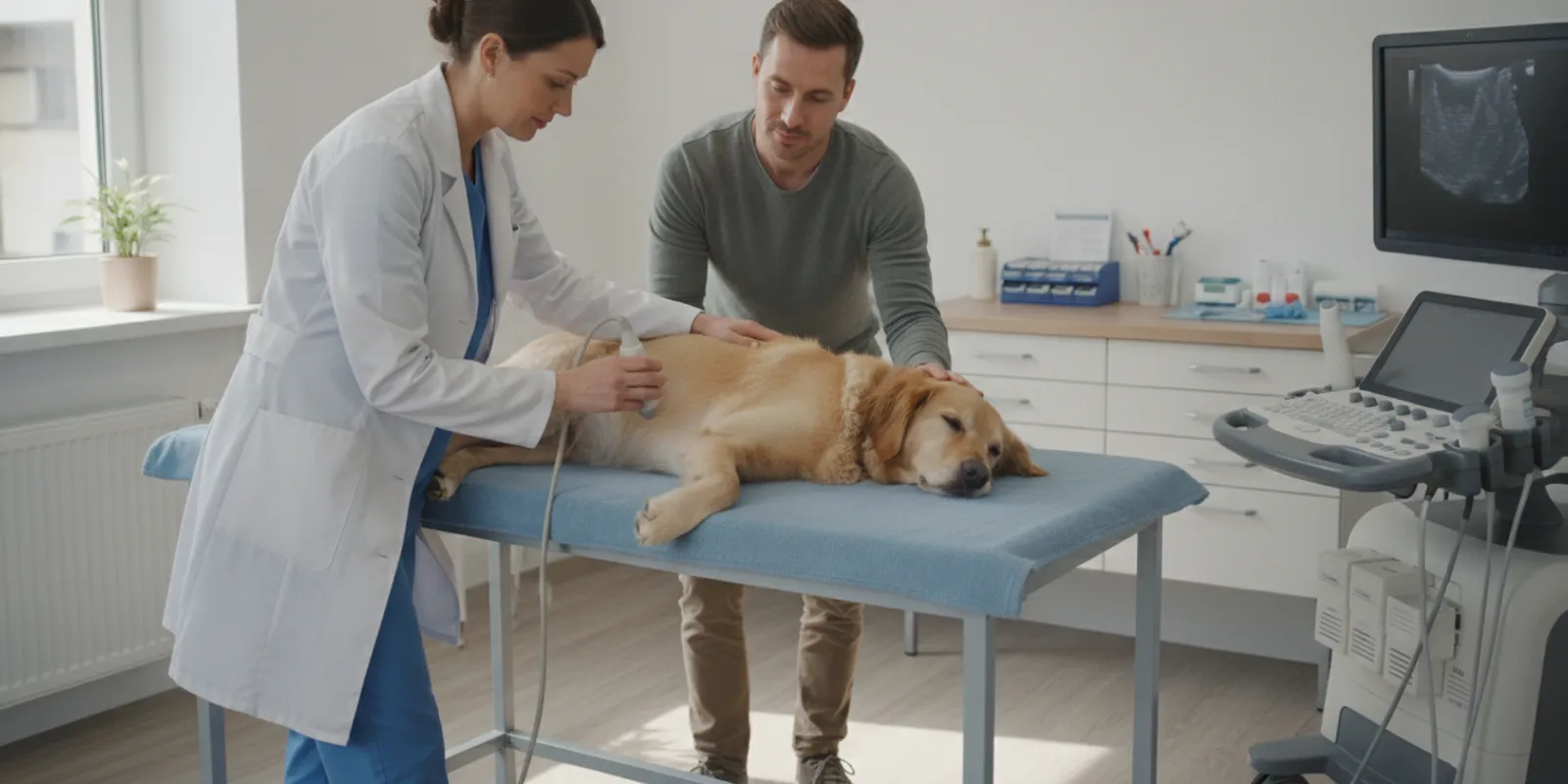
The veterinary team can explain how your pet will be positioned and what to expect in the room. In many cases, the area being scanned is prepared so the probe can make contact with the skin; ask the team whether this is expected for your pet’s exam. You can ask whether you may remain with your pet and how long the visit may take, while understanding that timing can vary with the examination and your pet’s needs.
After the scan, ask who will review the images and when you should expect a conversation about the results. The outcome may lead to monitoring, treatment, additional testing, or a referral for further evaluation. If a sample or follow-up test is suggested, ask what question it would address, how it differs from the scan, what it involves, and whether another estimate will be provided. You should have a chance to understand proposed next steps before deciding how to proceed.
It can help to repeat the plan back in your own words: what the scan showed, what remains uncertain, what the next action is, and when to check in again. Ask whom to contact if you have questions after going home. If your pet’s condition changes while you are waiting for results or a scheduled follow-up, contact a veterinary team rather than assuming the original plan still applies.
When should you call a veterinarian?
Contact a veterinary team about new or worsening signs, especially when they affect breathing, eating, drinking, comfort, or normal activity. Severe weakness, collapse, difficulty breathing, repeated vomiting, or sudden significant distress call for prompt veterinary guidance. This is not a complete list, and a pet may need assessment for reasons that are not listed here. If you are unsure whether a change can wait for a planned ultrasound, call and describe what you see.
Animal Hospital of Rolling Meadows serves dogs and cats in Rolling Meadows and nearby northwest Chicago suburbs. The hospital provides in-house diagnostic services as part of a broader range of veterinary care. If you are trying to understand a recommendation or estimate, the team can explain the available information and discuss what may be appropriate for your pet. For urgent concerns, use the hospital’s urgent care information and contact the hospital directly. You can also find its location and contact details on the contact page.
For a visit involving other health needs, the hospital also provides vaccination care and surgical services. The appropriate plan depends on your pet’s individual needs; a veterinarian can help prioritize the questions that need attention.
Frequently Asked Questions
Can I get an exact pet ultrasound cost before the visit?
You can ask the hospital for an estimate and explain what type of scan your veterinarian has discussed. The team may need details about the proposed study and related services to describe the expected charges. Ask which items are included, which could be separate, and whether any additional test would require a new discussion. The final plan can depend on the examination and your pet’s needs.
Is an ultrasound the same as an X-ray?
No. Ultrasound uses sound waves to create images, while radiographs use X-rays. The methods show different information and may be chosen for different clinical questions. Your veterinarian can explain why one or more imaging approaches may be useful for your pet.
Does every ultrasound include a biopsy?
No. A scan and a sample collection are distinct steps. Ultrasound may be used to help guide sampling when a veterinarian considers it appropriate, but sampling is not automatically included in every imaging appointment. Ask whether it is being considered, what it would help investigate, and what consent and estimate process applies.
Will an ultrasound always find the cause of my pet’s symptoms?
No test answers every question in every case. An ultrasound may offer useful information, but the veterinarian interprets the images with the history, examination, and other results. If the findings do not fully explain the concern, additional testing or another plan may be discussed.
Should I wait for an ultrasound appointment if my pet seems very unwell?
If your pet has severe, sudden, or rapidly worsening signs, contact a veterinary team promptly rather than waiting for a routine imaging appointment. Describe what is happening and ask where and when your pet should be assessed.
A conversation with your veterinarian can help you understand what the recommended scan includes, what it may help answer, and which next steps make sense for your pet.