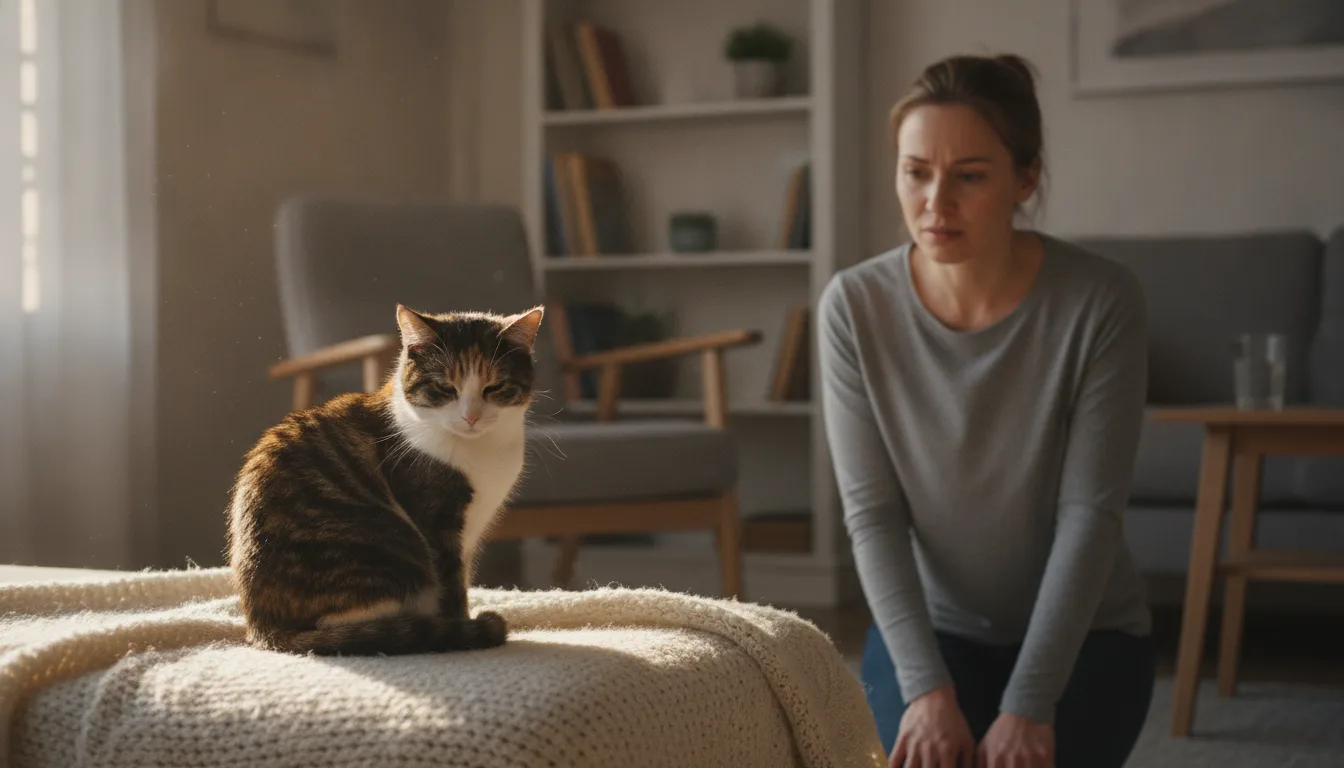
Signs your cat is sick may be easy to miss because cats often hide discomfort. A quieter routine, less grooming, appetite or litter box changes, unusual breathing, or hiding can be an early reason to contact a veterinarian, even when your cat does not look dramatically ill.
Book Appointment with Animal Hospital of Rolling Meadows, or call 847-873-8996 if you are concerned about a change in your cat.
Why cats are so good at hiding illness
Cats are skilled at maintaining familiar routines and may conceal weakness or pain. That behavior can make sense for an animal that depends on feeling secure in its environment, but it can also make illness difficult for a pet owner to recognize. A cat may continue eating some food, use the litter box, and come when called while still experiencing a problem that needs veterinary attention.
For this reason, compare your cat with their own normal behavior instead of waiting for a dramatic sign. You know how your cat usually greets you, sleeps, plays, eats, drinks, grooms, jumps, and uses the litter box. A small change that lasts, repeats, or occurs with several other changes deserves attention.
Age also matters, but a new change should not automatically be dismissed as aging. The Cornell Feline Health Center’s guidance for senior cats notes that changes in behavior or physical condition can signal a medical problem. Kittens, senior cats, and cats with known health conditions may need especially prompt advice when their routine changes.
How to Recognize Signs Your Cat Is Sick
The most useful early warning signs are changes from your cat’s baseline. Look for patterns over a day or two, and contact your veterinarian sooner if the change is pronounced or occurs with a red flag.
- More hiding or less social behavior: A cat that stops meeting you at the door, avoids touch, or spends much more time under furniture may be uncomfortable, fearful, or unwell.
- Lower energy: Sleeping more than usual, hesitating to climb, or losing interest in play can reflect pain, illness, weakness, or another problem.
- Changes in posture or movement: A hunched back, reluctance to jump, stiff walking, limping, or difficulty getting comfortable should not be ignored.
- Unusual vocalization: New yowling, growling, hissing when touched, or vocalizing in the litter box can be a sign that your cat needs an examination.
- Reduced grooming or a messy coat: Cats that feel unwell may stop grooming. Greasy fur, mats, dandruff, or a suddenly unkempt appearance can be meaningful changes.
- Overgrooming or focused licking: Repeatedly licking one area may point to pain, irritation, or a skin concern. Hair loss, redness, swelling, or sores make the need for an examination more important.
- Weight or body-condition change: Noticeable weight loss, a growing belly, or a change in muscle over the back and hips warrants veterinary advice, even if your cat is still eating.
- Eye, nose, or mouth changes: Discharge, squinting, cloudiness, bad breath that is new, drooling, or difficulty chewing can signal a problem.
A single quiet afternoon may not identify the cause, and many different conditions can look alike at home. The point is not to diagnose your cat from a checklist. It is to notice change early enough to ask a veterinary professional what to do next. For preventive context, see this guide to what a pet wellness exam includes.
Changes in eating, drinking, or litter box habits to watch for
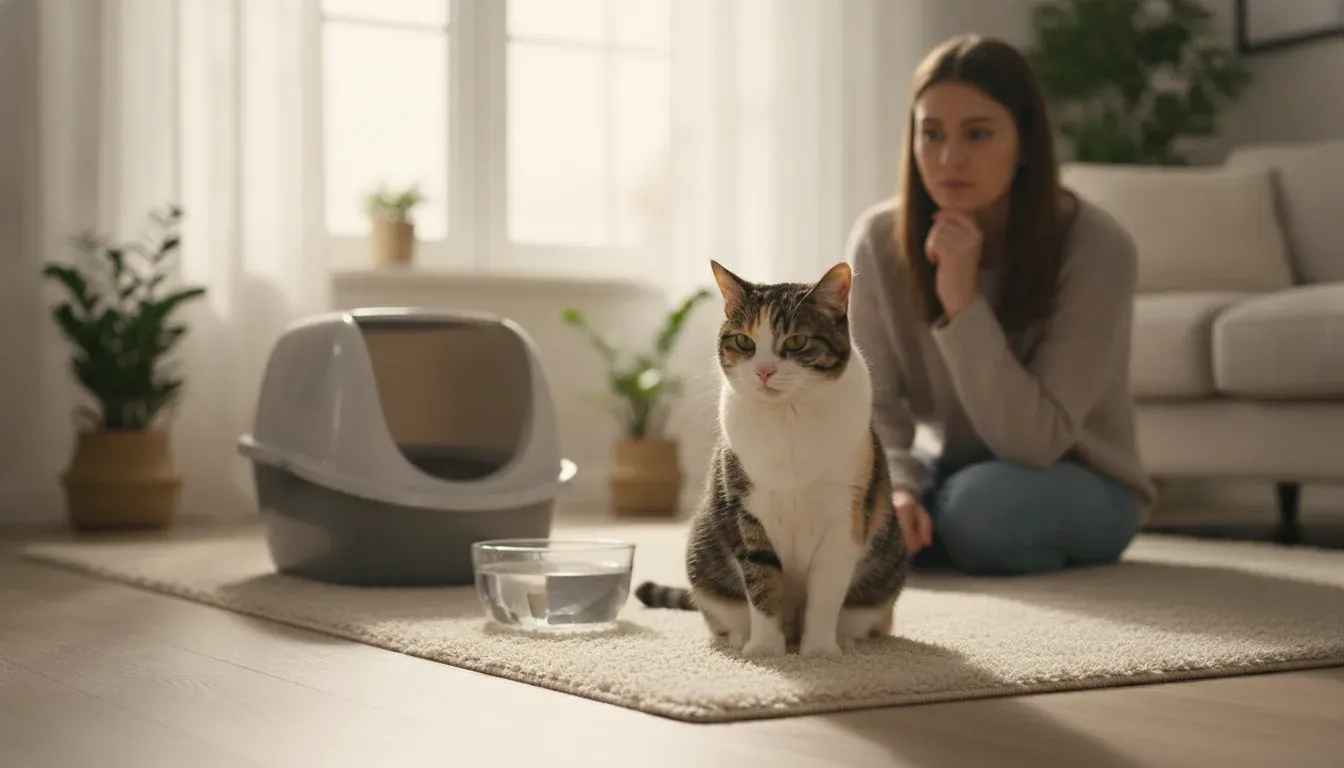
Daily habits can provide some of the clearest clues that a cat is not feeling well. If possible, note how much food and water your cat normally consumes and how often the litter box is used. In a multi-cat home, separate feeding areas or briefly observing each cat may help you tell whose routine has changed.
Appetite and eating
- Eating less, refusing favorite food, or walking away from the bowl can be significant.
- Dropping food, chewing on one side, pawing at the mouth, or approaching food and then stopping may suggest oral discomfort or nausea.
- Sudden increased hunger, especially with weight loss or increased thirst, also deserves a veterinary conversation.
- Vomiting, diarrhea, or repeated attempts to eat grass alongside appetite changes should not be treated as proof of a simple stomach upset.
A cat that has stopped eating should be discussed with a veterinarian promptly. Cats can become ill when they do not take in enough nutrition, and the urgency depends on the cat’s age, size, health history, and other symptoms.
Drinking and urination
- Refilling the water bowl more often, seeking unusual water sources, or urinating larger volumes can be important changes.
- Straining, frequent trips to the litter box, crying while urinating, blood in the urine, or urinating outside the box needs prompt veterinary guidance.
- Little or no urine, repeated straining, or signs of distress can be an emergency, particularly in male cats.
Lower urinary tract signs can have more than one underlying cause, so a home observation is not enough to identify the problem. The 2025 iCatCare consensus guidance summarized by the International Cat Care veterinary group emphasizes that diagnostic investigation is needed to determine the cause of urinary signs.
Stool and litter box changes
- Diarrhea, hard or dry stool, constipation, blood, mucus, or a sudden change in stool frequency should be reported.
- Accidents outside the box may reflect urinary discomfort, constipation, mobility trouble, stress, or a problem with the box setup.
- A cat that cannot pass urine or stool, is repeatedly straining, or becomes increasingly distressed needs urgent veterinary attention.
Subtle signs that may reflect pain or discomfort
Cats do not always cry or limp when they hurt. Pain may appear as a change in interaction, movement, or routine. Watch for signs such as:
- Resisting being picked up or touched in a normally comfortable area.
- Hiding after meals or avoiding stairs and favorite resting places.
- Restlessness, repeatedly changing position, or sleeping in an unusual posture.
- Flattened ears, tense facial expression, narrowed eyes, or a tucked-up body posture.
- Less jumping, difficulty entering a high-sided litter box, or missing a jump that was previously easy.
- New aggression or withdrawal that does not fit your cat’s normal personality.
Do not give human pain medication unless a veterinarian specifically directs you to do so. Some medications that are safe for people can be dangerous for cats. Instead, record what you noticed, prevent falls or extra activity if your cat seems painful, and ask for veterinary guidance.
When a sick cat needs to see the vet today
Call a veterinarian promptly when your cat has a new or worsening symptom, particularly when the symptom affects eating, drinking, urination, breathing, movement, or responsiveness. The hospital team can help determine whether your cat needs a routine appointment, a same-day evaluation, or emergency care.
| Change you notice | Recommended response |
|---|---|
| Not eating, repeated vomiting, or severe diarrhea | Call a veterinarian promptly for guidance, especially for kittens, seniors, or cats with other illnesses. |
| Straining to urinate, producing little or no urine, or crying in the litter box | Seek urgent veterinary attention. Do not wait to see if it resolves on its own. |
| Open-mouth breathing, obvious breathing effort, blue or pale gums, collapse, or a seizure | Treat as an emergency and seek immediate veterinary care. |
| Possible poisoning, trauma, severe pain, sudden weakness, or unresponsiveness | Contact a veterinarian or emergency veterinary facility immediately and follow their instructions. |
| Mild but persistent changes in appetite, grooming, energy, weight, or behavior | Arrange a veterinary examination rather than assuming the change is normal. |
If you are in Rolling Meadows or a nearby northwest Chicago suburb, the Rolling Meadows urgent care team can be a local starting point for questions about a concerning change. If your cat is in severe distress, do not delay care while trying to monitor symptoms at home.
Not sure whether a change is important? Learn about veterinary medicine services, then call 847-873-8996 to discuss the safest next step for your cat.
How your vet diagnoses illness in cats
A veterinary visit starts with your observations and your cat’s medical history. Be ready to describe when the change started and whether it is getting better or worse. Also note appetite and water intake, urination and stool, vomiting, medications or supplements, possible toxin exposure, and any change in the home environment.
The veterinarian will perform a physical examination and may recommend tests based on the findings. Depending on the situation, evaluation can include bloodwork, urinalysis, fecal testing, infectious-disease testing, blood pressure measurement, or diagnostic imaging. A veterinary ultrasound may help examine organs and soft tissues when a physical examination and initial tests do not provide enough information. Learn more about the hospital’s veterinary ultrasound services.
Testing is not a sign that the situation is necessarily severe. It is one way to distinguish between problems that can look similar at home. For example, reduced appetite can be associated with mouth discomfort, nausea, pain, stress, infection, or an internal medical condition. A cat’s examination and history help the veterinary team choose the most useful next step.
Bring a short symptom log if you can. A photo of vomit or stool, a video of unusual breathing or movement, and a note about litter box output may help the veterinarian understand what happened. Avoid delaying care to collect perfect information if your cat has an urgent warning sign.
What to do while you arrange veterinary advice
- Keep your cat indoors in a quiet, comfortable area and limit jumping if movement seems painful.
- Offer fresh water and the cat’s normal food, but do not force food or water into the mouth.
- Keep medications, cleaners, plants, string, and other possible hazards away from your cat.
- Do not give over-the-counter medication or leftover prescriptions unless the veterinary team tells you to.
- Note the timing and frequency of symptoms, food and water intake, litter box use, and changes in behavior.
- Use a secure carrier for travel. A familiar towel can help reduce stress during transport.
These steps do not replace an examination. They are meant to keep your cat safer while you contact the veterinary team.
If your cat’s appetite, behavior, breathing, urination, or energy has changed, Book Appointment or call 847-873-8996 to discuss the next step with Animal Hospital of Rolling Meadows.
Frequently Asked Questions About Signs Your Cat Is Sick
What are the first signs that a cat may be sick?
The first signs may be subtle changes in normal behavior, including more hiding, less grooming, reduced appetite, altered litter box habits, lower energy, unusual vocalization, or reluctance to jump. Because these changes can have many causes, a veterinarian should help interpret persistent or worsening symptoms.
How can I tell if my cat is sick or just tired?
Compare your cat’s behavior with their normal pattern. A cat that rests after play may be fine, while a cat that suddenly stops interacting, eating, grooming, or moving normally may need veterinary advice. Look for a pattern and consider whether more than one routine has changed.
Is not eating an emergency for a cat?
Not eating can become serious and should be discussed with a veterinarian promptly. The urgency depends on how long the cat has refused food, the cat’s age and health history, and whether vomiting, pain, weakness, or another warning sign is present. Do not wait when your cat appears severely ill.
Why is my cat going to the litter box but not urinating?
Repeated straining or trips to the litter box with little or no urine may indicate a urinary problem that requires urgent veterinary attention. Do not assume it is constipation or wait for it to pass, particularly if your cat is distressed, vomiting, weak, or crying.
Can a veterinarian diagnose my cat from symptoms alone?
Symptoms provide important clues, but many feline conditions share similar signs. A veterinarian may need a physical examination and tests such as bloodwork, urinalysis, or imaging to identify the cause and recommend appropriate care. A symptom checklist should guide a call, not replace an examination.
Sources for further reading
- Cornell Feline Health Center: The Special Needs of the Senior Cat.
- International Cat Care: 2025 consensus guidelines on lower urinary tract disease in cats.
This article provides general educational information and cannot diagnose an individual cat. If you are worried about your cat, contact a veterinarian for advice based on your cat’s examination and history.
2 thoughts on “Signs Your Cat Is Sick: Subtle Symptoms to Watch”