Patellar luxation is a condition in which a dog’s kneecap moves out of its normal groove, sometimes briefly and sometimes persistently. Whether patellar luxation surgery dog owners read about is appropriate depends on the dog’s symptoms, examination findings, anatomy, and overall health—not simply the diagnosis or breed. If your dog has started skipping on a back leg or has just been diagnosed, this guide explains what to discuss with your veterinarian. You can also read our broader guide to veterinary orthopedic care for context on evaluating joint and limb problems.
What is patellar luxation in dogs?
The patella is the small bone at the front of the knee, also called the stifle. It normally glides in a groove at the end of the thigh bone as the knee bends and straightens. With patellar luxation, the kneecap slips out of that groove. It may move toward the inside of the leg, which is called medial luxation, or toward the outside, called lateral luxation.
Some dogs have a kneecap that shifts only occasionally and returns to position on its own. In other dogs it stays out of the groove, or the dog cannot comfortably extend the leg. The effects vary: a dog may show no obvious difficulty, have intermittent skipping, or develop persistent lameness and discomfort. A physical examination is needed to determine what is happening; a brief video of an episode can also help your veterinarian understand what you see at home.
Patellar luxation is a structural knee problem, not a behavior issue. A dog that suddenly holds up a hind leg is not necessarily “just being fussy,” and an owner cannot confirm or rule out luxation by watching the gait alone. Other orthopedic problems can cause similar signs. For a broader explanation of surgical and orthopedic care, see our overview of veterinary orthopedics.
Which dog breeds are most commonly affected?
Patellar luxation is often seen in small and toy-breed dogs, including Chihuahuas, Yorkshire Terriers, Pomeranians, and Toy or Miniature Poodles. It can also occur in mixed-breed dogs and in larger dogs. Breed makes the condition worth considering, but it cannot establish a diagnosis, and a dog outside these groups can still have a luxating kneecap.
The underlying cause is often related to how the bones and soft tissues of the hind limb developed and align. A family history or breed tendency may contribute, but there is no single appearance or event that tells an owner exactly why an individual dog is affected. Some cases become apparent while a dog is young; others are noticed later, when a new limp or change in activity prompts an examination.
Owners should not assume every small dog that skips has patellar luxation, or that every dog with the diagnosis needs an operation. The important questions are whether the kneecap is actually unstable, how severe the instability is, whether the dog has clinical signs, and whether other problems are present. These points guide the next step more reliably than breed alone.
What signs might an owner notice?
The most recognizable sign can be a brief skip or hop on a hind leg. A dog may carry the leg for a few steps, then put it down and walk normally again when the kneecap returns to its usual position. Other dogs have a more continuous limp, an altered gait, or reluctance to jump, climb stairs, or play.
- Intermittently lifting or extending a back leg while walking.
- A short, skipping gait followed by an apparently normal stride.
- Stiffness, limping, or reduced willingness to run, jump, or use stairs.
- Difficulty straightening the knee or a persistent abnormal hind-leg posture.
- A gradual change in activity or comfort that is easy to mistake for aging or a minor strain.
These signs are not unique to patellar luxation. A cruciate ligament injury, hip problem, paw injury, or another condition can also cause limping. Contact a veterinarian if a gait change repeats, persists, worsens, or affects your dog’s normal activity. Seek prompt veterinary guidance for a sudden severe limp, marked pain, inability to use the leg, or an injury. Do not try to force the kneecap into place or give human pain medicine unless a veterinarian specifically directs you to do so.
If you are unsure what you are seeing, note when the episode happens, how long it lasts, and whether your dog returns to a normal gait. A short phone video, taken without making your dog repeat a painful movement, can be useful during the visit. Our article on signs of pain in dogs offers additional observations to share with a veterinary team.
How is patellar luxation graded and diagnosed?
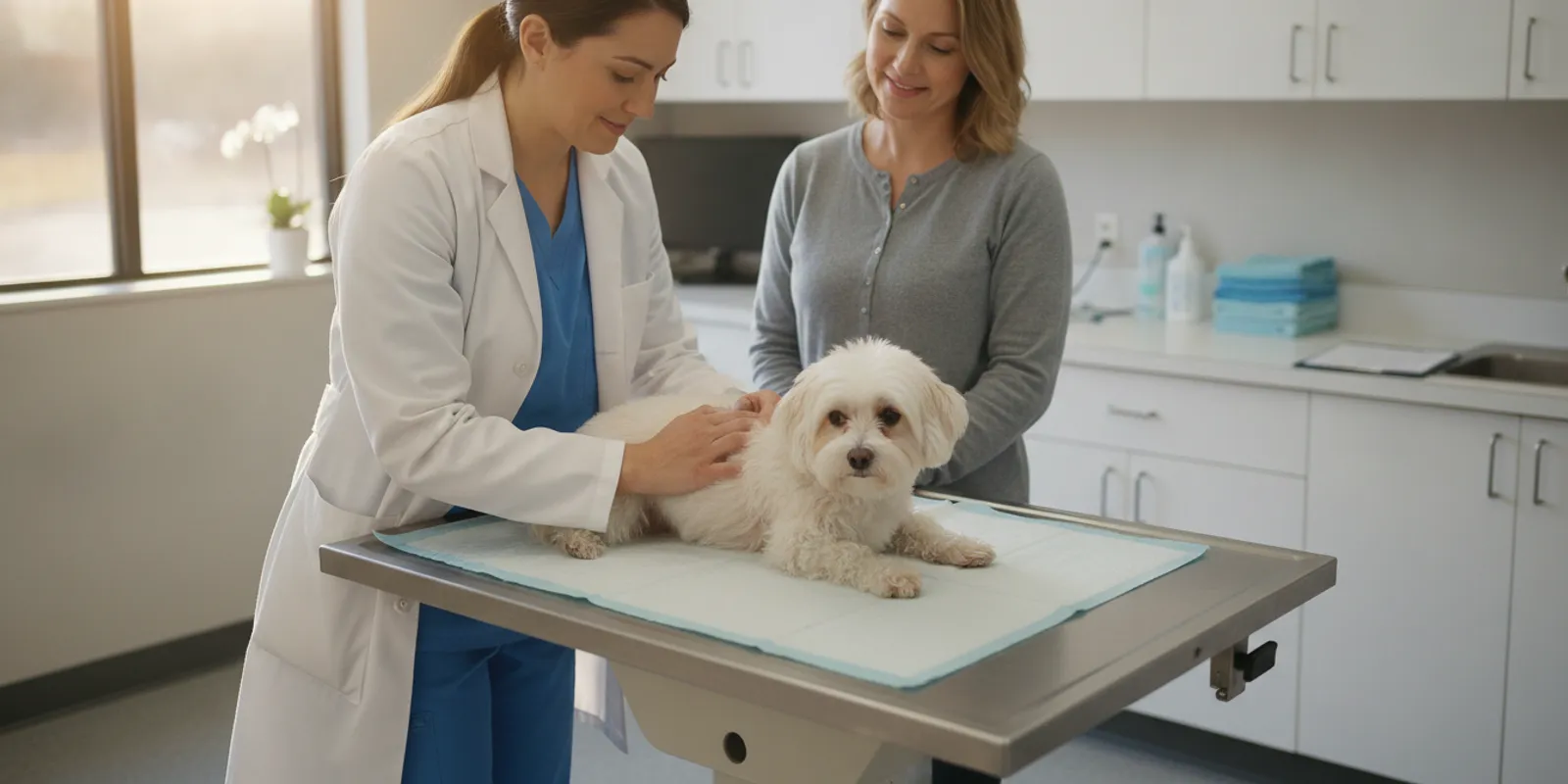
A veterinarian assesses patellar luxation by examining the dog’s gait and carefully feeling the knee. The examination helps determine whether the kneecap can be moved out of the groove, whether it returns on its own, and whether it remains displaced. The veterinarian also considers limb alignment, comfort, range of motion, and signs that another joint or injury may be involved.
Veterinarians commonly describe luxation using four grades. The grade records how easily the patella moves and whether it remains in or out of position. It is useful information, but it is not a stand-alone treatment decision: two dogs with the same grade can have different symptoms, needs, and overall findings.
| Grade | Typical examination finding | What it may mean for planning |
|---|---|---|
| I | The kneecap can be moved out of place during examination but returns to its normal position. | Often assessed alongside the dog’s comfort and any episodes at home; an operation is not automatic. |
| II | The kneecap may slip out intermittently and can often return to the groove, sometimes with movement or manipulation. | Clinical signs, frequency of displacement, and the rest of the orthopedic examination help determine whether to monitor or discuss repair. |
| III | The kneecap is out of position much of the time but may be returned to the groove manually; it can slip out again. | Persistent gait changes and the dog’s anatomy may prompt a closer discussion of corrective surgery. |
| IV | The kneecap is persistently displaced and cannot be returned to its normal position by manual manipulation. | More substantial limb changes may be present, so the veterinarian evaluates the individual case and possible treatment options carefully. |
This table is a general description, not a way to grade your dog at home. Only a veterinary examination can establish the grade and interpret what it means for that patient. The American College of Veterinary Surgeons explains the condition and its treatment considerations in its guide to patellar luxation in dogs.
Depending on the findings, the veterinarian may recommend imaging, such as X-rays, to assess bone alignment and look for other concerns. Images can contribute to planning, particularly when luxation is more severe or surgery is being considered. Your veterinarian can explain which tests are useful for your dog and what each one is intended to clarify.
The appointment is also a chance to describe the pattern, not just report that your dog limps. Tell the veterinarian when you first noticed the change, how often it happens, whether it follows exercise or rest, and how quickly your dog returns to a normal stride. Mention any fall or other injury, changes in willingness to jump or climb, and medications or supplements your dog takes. If you have a short video of a spontaneous episode, show it; do not try to provoke another episode for the camera.
Expect the veterinarian to consider both knees and the rest of the hind limb rather than focus only on the leg you noticed. The goal is to understand whether the kneecap is unstable and whether another source of discomfort could be contributing. If your dog is tense or painful during an examination, the veterinary team can explain how that affects what can be assessed comfortably and whether another evaluation or imaging step is useful. Ask the team to explain unfamiliar terms and how the examination findings connect to the suggested plan.
When does patellar luxation require surgery?
Patellar luxation does not always require surgery. A dog with mild luxation and little or no discomfort may be monitored rather than operated on, especially when the examination does not show a reason to intervene. Surgery becomes a more relevant discussion when the dog has repeated or persistent lameness, pain or functional limitation, a higher grade of luxation, or findings that indicate the kneecap is unlikely to remain stable without correction.
The decision is individualized. Your veterinarian weighs the dog’s day-to-day signs alongside the grade, limb development, physical examination, imaging if needed, age, general health, and expected demands on the leg. The goal is to decide whether the likely benefit of stabilizing the kneecap is worth the risks and recovery demands for that particular dog. A grade alone does not predict a guaranteed result or make a decision for the family.
Function matters too. Tell the veterinarian which ordinary activities have changed: for example, whether your dog now avoids stairs, stops during walks, or has episodes that interrupt play. A pattern of repeated discomfort may carry more weight than a single brief skip, while a dog that remains comfortable may have different options. The veterinarian can explain what they would monitor and what change in the pattern would lead them to revisit the recommendation.
Timing is another individual question. The team considers the dog’s overall health and whether the family can support a restricted recovery, not just the knee grade. If surgery is not recommended now, ask for a practical follow-up plan: when to check back, what signs to record, and whom to call if the limp becomes more frequent or persistent. This makes monitoring an active plan rather than a guess that the problem will or will not change.
When surgery is recommended, the approach depends on what is causing the kneecap to track incorrectly and the dog’s anatomy. Corrective procedures may address the groove or the alignment and supporting tissues around the knee. Rolling Meadows Animal Hospital lists patellar luxation repair among its surgical services; the veterinarian can explain which technique, if any, fits an individual case. A consultation is also a chance to ask whether additional imaging or referral is appropriate.
There is not one identical repair for every dog. The practice describes using wedge resection and lateral imbrication techniques for patellar luxation; the choice and combination depend on the examination and surgical plan. In broad terms, a surgeon aims to improve the kneecap’s tracking and stability by addressing the structures that contribute to displacement. Ask the veterinarian to describe the proposed steps in plain language, why those steps fit your dog, and whether anything in the imaging changes the plan. A technique name by itself does not tell you what an individual patient needs.
Owners also need a realistic picture of the commitment after the operation. Arrange in advance for a safe resting area, controlled bathroom breaks, and a way to limit jumping or stairs if the discharge instructions call for it. If your home layout makes that difficult, tell the veterinary team before surgery so you can discuss practical options. Understanding the expected follow-up and activity restrictions is part of deciding whether the timing is right for your household as well as your pet.
Medical care without surgery is not the same as ignoring the problem. Depending on the dog’s signs, the veterinary team may discuss activity adjustments, maintaining a healthy body condition, and a plan for monitoring comfort and mobility. These measures do not physically correct an unstable kneecap. Ask what changes to make, what signs should trigger a recheck, and whether a change in symptoms should lead to a new discussion of treatment.
Questions to ask before deciding
- What did you find on the examination, and what grade is the luxation?
- Could another knee, hip, or paw problem be contributing to the signs?
- What is the goal of surgery in this case, and what might happen if we monitor instead?
- Which procedure do you recommend, and why is it suited to my dog’s anatomy?
- What are the important risks, likely recovery restrictions, and follow-up needs?
- What changes at home should prompt a call or an earlier recheck?
What to expect during and after patellar luxation repair
Before an operation, the veterinary team reviews the diagnosis, the proposed plan, anesthesia and pain-control considerations, and the home-care commitment. The exact preparation depends on the dog and the procedure. Follow the clinic’s instructions about food, medication, arrival time, and transportation rather than relying on general advice from another case. Before the appointment, write down your questions and confirm who to contact if you are unsure about a preparation step. Tell the team about any new symptoms or changes in your dog’s health, and bring relevant records if requested. Clear instructions help the veterinary team plan safely and help you know what to expect when your dog comes home.
After surgery, a dog usually needs a controlled recovery period while the knee and surrounding tissues heal. The plan is specific to the procedure and patient, so the surgeon or veterinary team should tell you how to manage movement, toileting, stairs, furniture, and interactions with other pets. In the early period, keeping activity calm may mean using a leash for brief bathroom trips and preventing running, jumping, or rough play—but follow the instructions given for your dog.
Recovery is a sequence of rechecks and gradual progress, not an immediate return to unrestricted activity. Your veterinarian may assess comfort, incision healing, and limb use at follow-up visits and adjust the plan based on those findings. Do not increase exercise just because the dog seems eager or is using the leg more; ask the veterinary team when and how to progress activity. If a rehabilitation or home exercise plan is advised, use the specific instructions provided.
At-home recovery checklist
- Set up a quiet, comfortable resting area on a non-slip surface.
- Use the prescribed medication exactly as directed; call the clinic with concerns rather than changing a dose yourself.
- Restrict activity as instructed, and arrange barriers or assistance to prevent unsupervised stairs and jumping.
- Check the incision as directed and contact the clinic if you notice a concern described in your discharge instructions.
- Keep follow-up appointments and ask before resuming longer walks, play, or other exercise.
Call the veterinary team if your dog’s comfort or use of the leg worsens, the incision concerns you, or you are not sure whether a recovery change is expected. Difficulty keeping your dog rested is also worth discussing; the team may suggest practical adjustments. Follow the discharge plan rather than comparing your dog’s progress with another pet’s timeline.
Rolling Meadows Animal Hospital provides orthopedic care and can discuss whether an evaluation is appropriate for your pet. Learn more about the hospital’s orthopedic services or contact the team with questions about an examination.
Frequently asked questions
Can a dog have patellar luxation without limping?
Yes. Some dogs have a luxating kneecap without obvious signs at home. A veterinarian can assess the knee and advise whether monitoring or another step makes sense. A dog’s lack of limping does not tell an owner the grade.
Does every dog with a luxating kneecap need surgery?
No. Surgery is not automatic. The decision depends on the dog’s symptoms and examination, including the grade and other orthopedic findings. Mild cases without meaningful clinical signs may be monitored, while persistent signs or more severe instability can make surgical correction a reasonable option to discuss.
Can patellar luxation come back after surgery?
Results depend on the individual dog, the underlying anatomy, the procedure, and healing. No operation can be guaranteed to prevent every future problem. Ask the veterinarian to explain the expected outcome and risks for your dog, and follow the post-operative restrictions and recheck plan.
How can I tell whether my dog’s skipping is patellar luxation?
You cannot confirm the cause from a gait alone. Several orthopedic conditions can look similar, so a veterinary examination is the appropriate next step. If it is safe and does not distress your dog, a short video of a naturally occurring episode may help show the pattern.
Contact us to discuss an orthopedic evaluation
A new limp or diagnosis can be worrying, but a clear examination and a discussion of options can help you make a plan that fits your dog’s needs and your family’s ability to support recovery.