Lily poisoning in cats symptoms and what to do is an urgent concern if your cat may have chewed a flower, brushed against pollen, or drunk water from a vase. A cat can seem normal soon after possible contact, so do not wait for signs to appear before asking a veterinary professional what to do.
Book Appointment or call 847-873-8996 for guidance about a possible exposure.
Which lilies are dangerous to cats?
True lilies in the Lilium group and daylilies in the Hemerocallis group are the main concern. Easter, Asiatic, tiger, and Oriental lilies, along with daylilies, are examples. Flowers, leaves, stems, pollen, and water from a vase holding these plants may be involved. Do not assume that an exposure is harmless because only a small amount seems to be missing.
Common names can be confusing. Peace lilies and calla lilies are not true lilies and typically cause a different kind of irritation. Still, a mixed bouquet may contain several plants, and a label may be missing. If you are unsure what the plant is, tell the veterinary team that it is unidentified. A photo or florist’s label can help, but identifying it should not delay the first call.
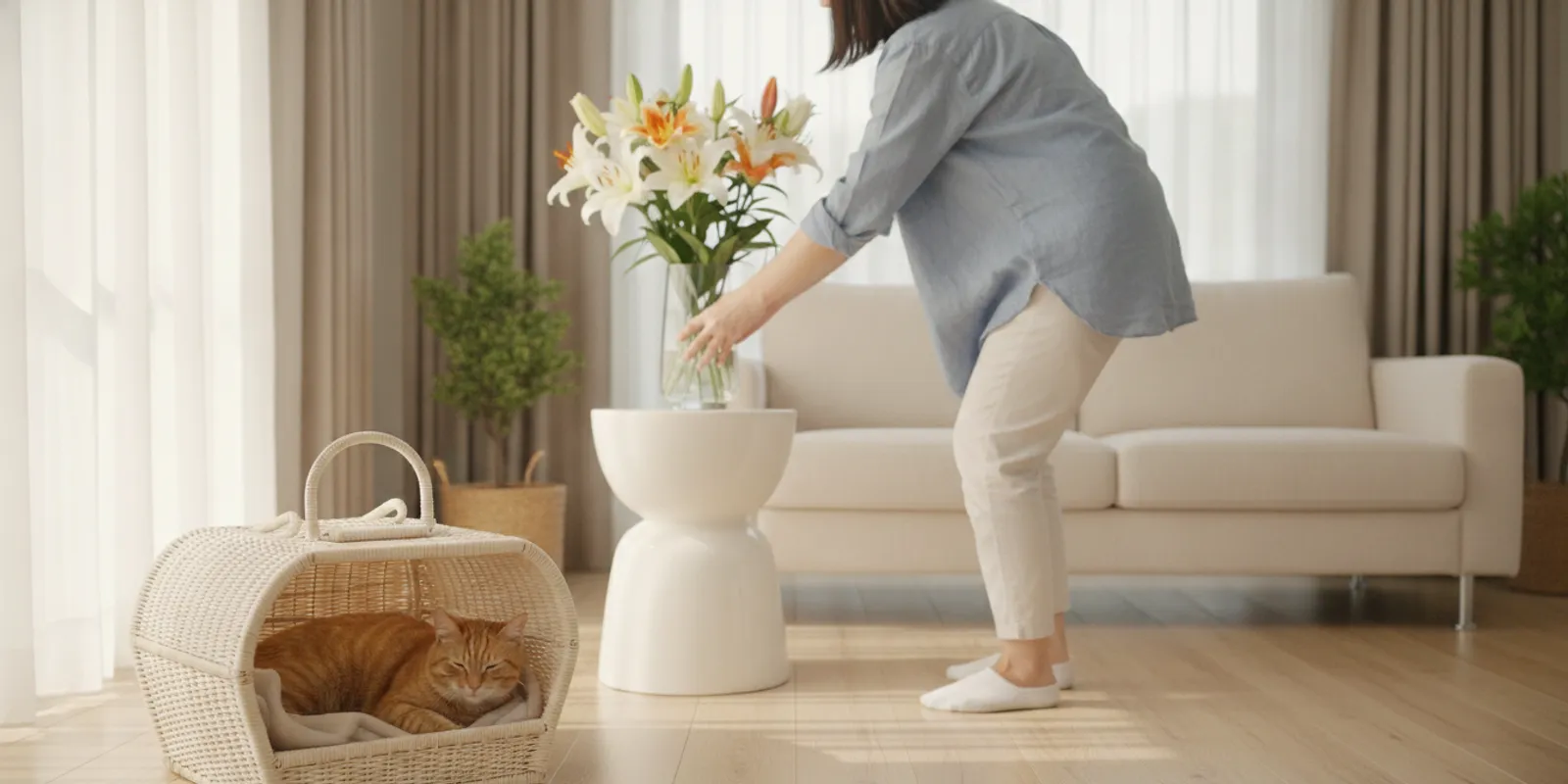
Think about more than a bite. A cat may brush against a flower, get pollen on its coat, and swallow some while grooming. It may drink from the vase, bat at a fallen petal, or investigate an arrangement while no one is watching. If access to a true lily or daylily is plausible, call promptly even if you did not see the contact happen.
What symptoms can lily poisoning cause in cats?
Early signs may include vomiting, reduced appetite, drooling, or unusual tiredness. Weakness and dehydration may follow. Drinking and urination can change; urination may increase at first and later become reduced or stop. These signs do not confirm lily poisoning, and their absence does not rule out a serious concern.
A cat may appear well shortly after possible contact. Do not wait for repeated vomiting, obvious weakness, or a litter-box change before seeking advice. The ASPCA, a nonprofit animal welfare organization, offers animal poison-related information and resources; its general website is not a substitute for case-specific veterinary guidance.
When noting symptoms, describe what you actually observed rather than trying to label the cause. For example, say that your cat vomited once after being near a bouquet, or that you noticed a change in water intake. If you have seen no signs, say that too. This helps the veterinary team distinguish known facts from uncertainty.
How urgent is a possible exposure? A quick comparison
| What you noticed | Why it matters | What to do |
|---|---|---|
| Chewed flower, leaf, or stem | Plant material from a true lily or daylily may be a concern even if little seems missing. | Call a veterinary team now and follow its instructions. |
| Pollen on fur or possible grooming | Pollen may be swallowed when a cat cleans its coat. | Call promptly; ask what to do before bathing or handling the coat. |
| Drank vase water | Water from a vase containing a true lily or daylily may be involved. | Call even if your cat seems normal. |
| Plant identity uncertain | Common names and mixed arrangements can be difficult to assess. | Take a photo or save the label if handy, but do not postpone the call. |
| Vomiting, weakness, or changed urination after possible contact | These signs need professional assessment and cannot be evaluated safely at home. | Seek urgent veterinary guidance and explain the possible exposure. |
Use this table to organize what you know, not to diagnose your cat or decide an exposure is safe. A veterinarian can advise based on the history and the individual animal. If you are unsure which row fits, explain the situation over the phone rather than waiting to be certain.
What should you do if your cat may have contacted a lily?
- Separate your cat from the plant. Move the arrangement and fallen pieces out of reach, and keep other pets away. Avoid shaking or scattering pollen as you handle it. Do not put loose flowers in the carrier with your cat.
- Call a veterinary team promptly. State clearly that contact with a true lily or daylily is possible. Say whether your cat has symptoms, but do not wait for symptoms before calling. Animal Hospital of Rolling Meadows can be reached at 847-873-8996 or through its contact page. If you cannot reach a veterinary team promptly, seek an emergency veterinary service.
- Identify the plant if information is at hand. Take a picture of the whole arrangement, flowers, and leaves, or keep the original label. Do not spend time searching online or calling the florist before seeking veterinary advice.
- Describe the possible route and timing. Tell the team whether your cat may have chewed plant material, contacted pollen, groomed, or drunk vase water. Give your best estimate of when access began and ended, and be clear about which details are uncertain.
- Follow the directions you receive. Ask whether your cat should be assessed in person, what to bring, and how to handle pollen on the coat. If transport is recommended, use a secure carrier and bring a photo or label rather than plant material.
Do not induce vomiting, give medication, or try a home remedy unless a veterinary professional specifically directs you. If pollen is on the coat, ask what to do before bathing. A frightened or uncomfortable cat may be hard to handle, and scrubbing can add stress. If you cannot safely prevent grooming, tell the team and follow its advice.
What information should you share when you call?
You do not need a perfect account before reaching out. A short, clear timeline is more useful than delaying the call to investigate every detail. Separate what you saw from what you suspect. You can say, for example, “I found a chewed petal beside the vase at about noon, but I did not see my cat eat it.”
- The plant name, label, or a photo, if available.
- Whether a flower, leaf, stem, pollen, or vase water may have been involved.
- When your cat may first and last have had access.
- Any vomiting, drooling, appetite change, low energy, weakness, or change in drinking or urination.
- Your cat’s age, known health conditions, and medicines, if you know them.
- Whether another pet may also have reached the arrangement.
- What you have already done, such as moving the bouquet or cleaning a surface.
If two people are available, one can call while the other gets a carrier ready or takes a photo. If you are alone, make the call first and gather details as you safely follow instructions. You can review the hospital’s urgent care information, but do not delay a call to read website material.
What might happen during a veterinary assessment?
The veterinary team may ask about the possible exposure, timing, and your cat’s health, then examine your cat. Depending on the history, timing, and examination findings, a veterinarian may recommend tests to assess kidney function or monitor for changes. The appropriate plan depends on the individual case. An online symptom list cannot determine whether testing or treatment is needed.
Some cats may need close monitoring or care at a veterinary facility. The care plan and outcome vary; no general article can predict what an individual cat will need. Prompt assessment gives a veterinarian the opportunity to consider the available details and recommend next steps rather than leaving an owner to judge safety at home.
At a visit, share the same facts you gave by phone, including the estimated timeline and anything that has changed. If you have a plant label or clear photo, show it to the team. If the plant remains unidentified, say so plainly. Questions such as “What should I watch for next?” and “When should I contact you again?” can help clarify the instructions for your specific situation.
Animal Hospital of Rolling Meadows provides veterinary medicine and care for pets. You can learn more about its veterinary medicine and services. The website is informational; decisions about possible toxin contact should be made with a veterinary professional who can assess the individual animal.
How can you prepare for transport without increasing stress?
If the veterinary team advises a visit, use a secure carrier and keep the trip as calm as possible. If your cat is already in a room, close doors to prevent access to the plant and reduce opportunities to hide elsewhere. Avoid chasing your cat around the home. If you are unsure how to move your cat safely, ask the team for practical guidance.
Put the carrier on a stable surface and check that its door closes securely. Keep loose flowers and plant debris away from the carrier. Take a phone photo of the arrangement or its label instead. Tell the team if you saw pollen on the coat or noticed licking, even if no visible plant material appears to be missing.
Do not give human medicine, leftover pet medication, milk, supplements, or food as a treatment unless instructed. Do not assume that offering water or removing the bouquet resolves the concern. Follow professional guidance for your cat’s circumstances. If your cat vomits or becomes weaker while you are preparing, update the veterinary team rather than relying on the original description alone.
How can you reduce future exposure?
The simplest prevention is to avoid keeping true lilies and daylilies in a home where a cat may reach them. A high shelf may not be secure: cats can jump, pollen can fall, and vase water may remain accessible. When accepting or buying flowers, ask for the plant names and choose an arrangement without these lilies. If you cannot identify a plant, keep it away from pets while you find out what it is.
When a bouquet arrives, check the label before putting it in a shared room. If its contents are unclear, do not rely only on the color or shape of a flower to identify it. Ask the sender or florist for the names, or choose a different arrangement. Visitors can help by keeping bouquets and loose flowers out of reach as soon as they enter.
If a potentially risky arrangement has been in the home, keep the cat in another room while you remove it and check the surrounding area. Look for fallen petals and visible pollen on nearby surfaces. Dispose of flowers and vase water where pets cannot reach them, and clean the area carefully. If you think your cat may already have contacted the plant, call a veterinary team; cleanup alone does not establish that the animal is safe.
A household plan can make prevention easier. Tell family members and regular visitors that some lilies are a concern for cats. Before placing a gift bouquet on a table, identify its contents. If children help with flowers, give them a simple rule: do not bring an unknown plant near the cat, and ask an adult to check the label first.
When should you call Animal Hospital of Rolling Meadows?
Call Animal Hospital of Rolling Meadows when you suspect your cat may have contacted a true lily or daylily, even if the plant identity, amount, or timing is uncertain. The hospital serves Rolling Meadows and nearby northwest Chicago suburbs. For information about the practice and its team, visit About Us or Our Staff. For a possible exposure, prioritize direct veterinary guidance over trying to determine risk on your own.
Book Appointment or call 847-873-8996 to discuss your cat’s care.
Frequently Asked Questions
Can pollen on a cat’s fur be dangerous?
Pollen may be swallowed when a cat grooms. Call a veterinary team promptly and ask what to do before attempting a bath or other treatment.
Can vase water be a source of exposure?
Water from a vase that held a true lily or daylily may be involved. Call even if your cat drank only a small amount or currently appears well.
Are peace lilies the same as true lilies?
No. Peace lilies are not true lilies and generally cause a different type of irritation. Since common names and mixed arrangements can be confusing, ask a veterinary professional about a plant you cannot identify.
Should I wait for symptoms before calling?
No. A cat may initially appear normal after possible contact with a dangerous lily. Contact a veterinary team as soon as you suspect exposure.
What if I am not sure my cat touched the plant?
Explain what you observed and what remains uncertain, including a plant photo or label and the likely access time if available. You do not have to prove contact occurred before asking for guidance.
If lily exposure is possible, prompt veterinary guidance is the safest next step, even when your cat has no visible symptoms.