
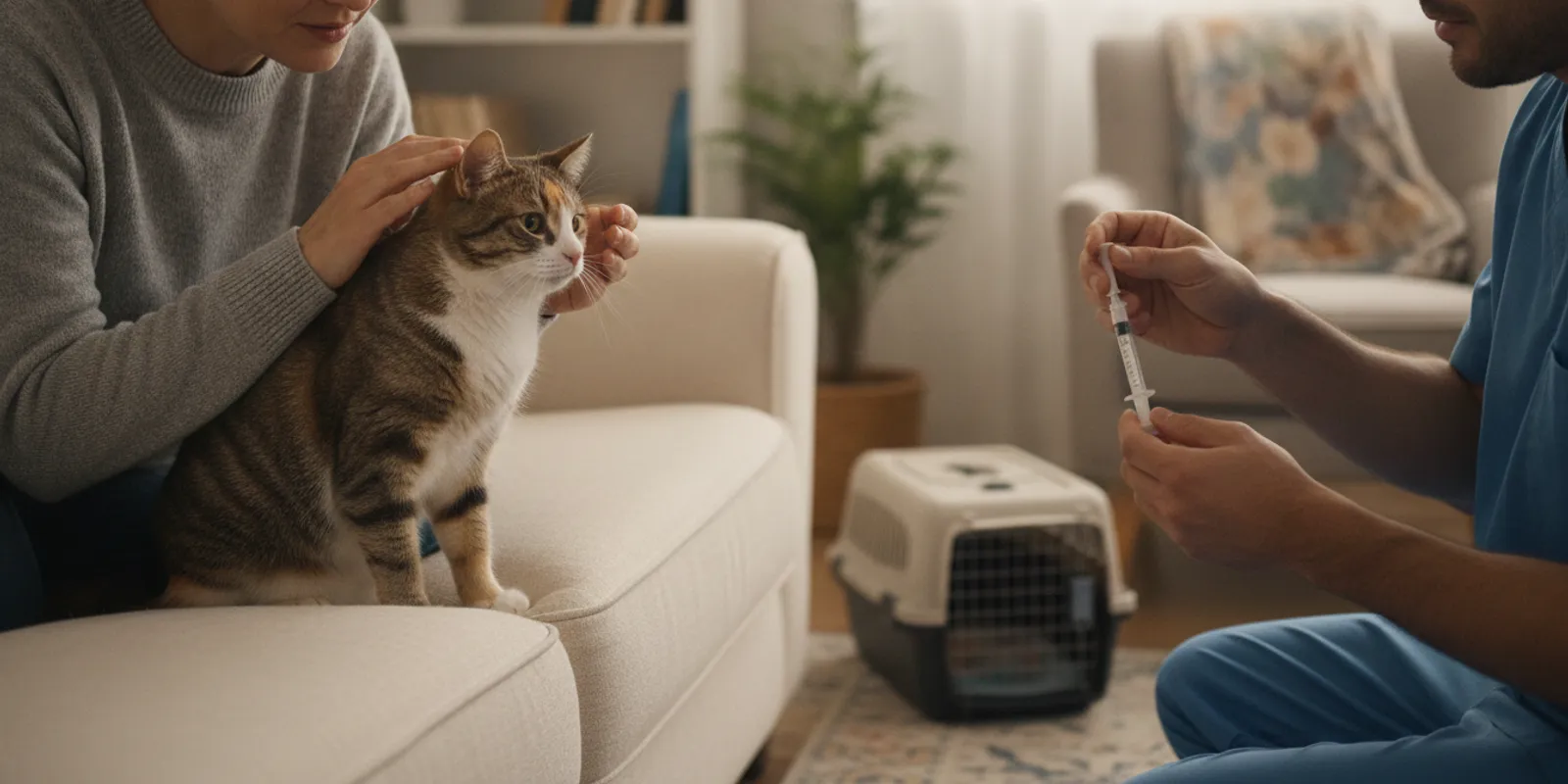
If you are searching for sudden blindness in cats what to do, treat a new loss of vision as a reason to contact a veterinarian promptly. Sudden changes can have several causes, and an examination is needed to understand what is happening. Keep your cat safe, avoid giving medication on your own, and arrange veterinary guidance without waiting to see whether the problem passes.
Call Animal Hospital of Rolling Meadows at 847-873-8996 for guidance.
What should you do first if your cat suddenly seems blind?
Call your veterinarian as soon as you notice a sudden change in your cat’s vision. Describe what changed, when you first saw it, and whether it came on over minutes, hours, or longer. Ask where your cat should be evaluated and how soon. Sudden vision loss deserves prompt attention even if your cat seems comfortable or is still moving around.
While you arrange care, focus on preventing injuries rather than testing your cat’s sight. A cat that cannot see normally may be frightened, disoriented, or hesitant in familiar surroundings. Cornell Feline Health Center notes that sudden blindness can follow different problems, including bleeding inside the eye or trauma to the head. Those possibilities are among the reasons a veterinarian should assess a sudden change rather than relying on observation alone (Cornell Feline Health Center: Sudden Blindness).
- Keep your cat indoors in a quiet, familiar room.
- Close doors and block access to stairs, balconies, open windows, and high furniture.
- Move hazards out of the way, but do not rearrange the room more than necessary.
- Keep food, water, litter, and a comfortable resting place close together and easy to reach.
- Speak softly before approaching or touching your cat so you do not startle them.
- Use a secure carrier for transport. If possible, let your cat enter it in a calm, controlled way rather than chasing them.
Make the room safer by checking the route between your cat’s resting place, water, food, and litter. Remove loose cords, bags, and objects that could shift underfoot. Keep other pets and young children from crowding or surprising your cat. If your cat has a favorite bed or hiding spot, leave it accessible if it is safe. Avoid carrying your cat around to show where things are; sudden handling can add stress, and your cat may feel more secure when familiar scents and landmarks stay in place.
If the change followed an accident, a blow to the head, or an eye injury, tell the clinic when you call. If your cat appears severely unwell, is in significant pain, has trouble breathing, collapses, or cannot be safely transported, tell the veterinary team immediately so they can advise you on the next step.
How can you tell that your cat may not be seeing normally?
Cats can compensate for vision changes with hearing, smell, memory, and sensitive whiskers. A cat that knows the layout of home may still walk to a familiar bed or food bowl. That does not rule out a serious change in sight. Look for a difference from your cat’s usual behavior, especially if the change started abruptly.
- Walking cautiously, bumping into objects, or misjudging jumps.
- Hesitating at doorways, stairs, or in unfamiliar rooms.
- Appearing confused, unusually clingy, withdrawn, or easily startled.
- Missing a toy or food offered in a place your cat normally recognizes.
- Having pupils that look unusually large or do not appear to respond normally to changes in light.
- Developing a cloudy, red, swollen, or otherwise changed-looking eye.
These signs do not tell you the cause by themselves. A cat may also behave differently because of pain, weakness, balance trouble, or another health problem. Note the details and share them with a veterinarian. Do not shine a bright light into the eyes or repeatedly wave objects near your cat to test vision; those checks can distress your pet and cannot replace an eye examination.
When is sudden vision loss an urgent concern?
Contact a veterinarian promptly for any sudden, noticeable loss of vision. Do not wait several days to see if your cat adjusts. Seek immediate veterinary guidance if vision changes occur with an eye that is painful, very red, swollen, bleeding, cloudy, or held shut; if there was a recent injury; or if your cat has other sudden signs such as weakness, disorientation, collapse, or difficulty walking.
Some causes of vision loss may be connected to conditions elsewhere in the body. For example, International Cat Care describes high blood pressure as a common cause of sudden-onset blindness in cats. This is not something an owner can confirm at home, and apparent vision loss can have other explanations as well. A veterinarian can decide whether blood pressure measurement and other testing are appropriate (International Cat Care: Blindness in cats).
When you call, explain the timing and all the signs you have noticed. If your regular veterinarian is unavailable, ask where to go for timely care. Do not assume that a cat who is quiet or not crying is comfortable; cats may hide signs of distress. For an overview of the hospital’s urgent veterinary care, contact the team directly about your cat’s situation.
What should you do while getting your cat to the veterinarian?
Make the trip as predictable and low-stress as you can. Keep your cat in a small, secure area and prevent access to places where a stumble could cause a fall. If your cat is hiding, do not pull them by a limb or forcefully handle a painful area. Use a carrier with a removable top if you have one, or ask the clinic how to transport your cat safely. A towel can help contain a frightened cat, but avoid covering the face or restricting breathing.
Bring any medication containers or a current medication list, and note any known medical conditions. If you saw an injury, write down what happened and when. Do not put drops, ointments, or other products into the eye unless a veterinarian specifically tells you to do so. Avoid human pain relievers and leftover pet medication; a drug that was prescribed for another pet or a prior problem may not be safe or appropriate now.
Share a concise timeline with the clinic:
- When did you first notice your cat was acting as if they could not see?
- Did the change happen suddenly, or did you notice it gradually?
- Does one eye or both eyes appear affected?
- Have you noticed redness, cloudiness, discharge, pupil changes, or signs of pain?
- Was there a fall, collision, possible toxin exposure, or other unusual event?
- Are there other changes in appetite, movement, balance, or behavior?
A short video of unusual behavior can be useful if you can record it without delaying care or putting your cat at risk. Do not stage tests or make your cat walk near stairs to capture a clip.
What might a veterinarian check?
The veterinary team will ask about the timing of the change and your cat’s health history, then examine your cat. Depending on the findings, the assessment may include an eye examination, evaluation of pupil responses, a check for pain or injury, blood pressure measurement, or other tests. Some cats may need additional diagnostics or referral for specialized eye care. Which steps are useful depends on the individual examination.
The vet may also ask about medications, recent illness, changes in thirst or urination, appetite, and possible exposure to chemicals or medications. Answer as accurately as you can, even if you are unsure. Do not try to decide the diagnosis based on a single sign, such as pupil size or a cloudy appearance. Several different problems can look similar to an owner, and treatment depends on the cause.
It may help to know why a veterinarian asks about the whole cat and not only the eyes. A vision concern can occur alongside changes in general health, and the history helps the team decide what areas need attention. The clinician may compare the appearance and responses of both eyes, check how your cat moves in the room, and look for signs of discomfort. These observations guide decisions about whether more tests are needed; they do not necessarily provide an answer from one finding alone.
If testing is recommended, ask what question each test is meant to answer and whether any preparation is needed. You can also ask when you should expect an update and what changes at home should prompt another call. If your cat is difficult to handle because of fear or pain, mention this before the examination so the team can discuss a careful approach. You do not need to arrive with a suspected diagnosis. A clear timeline, medication list, and description of what changed are useful starting points.
Animal Hospital of Rolling Meadows provides veterinary care for cats and dogs in Rolling Meadows and nearby northwest Chicago suburbs. If an evaluation is recommended, the team can explain what they find and discuss appropriate next steps. Learn more about the hospital’s veterinary medicine services, ultrasound, and veterinary team.
What is the difference between sudden and gradual vision loss?
Sudden change means you noticed a marked difference over a short period, even if you cannot identify the exact moment it began. Gradual loss may be easier to miss because a cat can adapt to familiar surroundings over time. In either case, a new concern deserves veterinary attention. The timeline helps the veterinarian decide what to investigate, but it cannot identify the cause on its own.
Do not use a simple home test to decide that your cat can see well enough to wait. A cat may navigate by memory and other senses, and lighting or stress can affect how they respond. If you are unsure whether your cat’s sight has changed, explain what you observed and ask for guidance instead of delaying a call.
| What you notice | What to do | What to tell the clinic |
|---|---|---|
| Sudden trouble navigating or seeming unable to see | Call a veterinarian promptly and arrange an evaluation | When it began, whether one or both eyes seem affected, and what changed |
| Vision change plus a red, painful, swollen, bleeding, or cloudy eye | Seek immediate veterinary guidance | Describe the eye’s appearance and any discharge, squinting, or injury |
| Vision change after a fall, blow, or other accident | Call promptly; explain the possible trauma and follow transport advice | What happened, when it happened, and any other new signs |
| Gradual difficulty navigating, even if your cat seems settled | Arrange a veterinary appointment to investigate the change | When you first noticed it and how the behavior has changed over time |
This table is general guidance, not a way to diagnose an eye or determine that it is safe to wait. If signs are severe or you are uncertain about urgency, call a veterinary clinic and describe what you see.
How can you help a cat adjust if vision loss continues?
First, follow the veterinarian’s care recommendations and keep follow-up appointments. Some cats adapt well to changes in vision, but the right care and outlook depend on the underlying problem. Texas A&M’s veterinary resource notes that pets losing vision may seem confused or hesitant as they adjust to a changed visual environment (Texas A&M: Helping Pets Adjust to Vision Loss).
At home, consistency can help your cat move around with greater confidence:
- Keep furniture, food, water, and litter in familiar locations.
- Keep pathways clear and block access to unsafe stairs or elevated areas.
- Use your voice before approaching, and let your cat initiate contact when possible.
- Keep indoor spaces calm and supervise new environments.
- Introduce changes slowly, and guide your cat gently rather than carrying them from place to place without warning.
- Tell visitors and children to approach quietly and avoid startling or chasing the cat.
These adjustments can support comfort, but they do not replace treatment or rechecks. Ask your veterinarian which changes make sense for your home and your cat’s specific needs. If your cat’s behavior worsens or new signs appear, call the clinic again.
Call Animal Hospital of Rolling Meadows at 847-873-8996 to arrange an appointment or discuss a sudden change.
Contact the hospital to discuss your cat’s care
Frequently Asked Questions
Can sudden blindness in a cat improve?
It depends on the cause and the individual cat. Some causes may be treatable, while other vision changes may be lasting. Only a veterinarian can assess your cat and discuss the possibilities after an examination. Prompt evaluation is important because waiting may delay identifying a problem that needs care.
Should I wait to see whether my cat adjusts?
No. A cat may compensate by using memory, hearing, and smell, so apparent adaptation does not establish that the eyes are healthy. Contact a veterinarian promptly about a sudden change, and follow the advice you receive.
Is a cloudy eye always the reason a cat cannot see?
No. A cloudy appearance is one observation, not a diagnosis, and vision changes can occur without an obvious change in how the eye looks. Do not try to identify the cause at home. A veterinary examination is the appropriate next step.
Can I use eye drops I already have at home?
Do not use leftover prescription drops, over-the-counter products, or medication intended for a person or another pet unless a veterinarian instructs you to. Some products may be inappropriate for the problem or could complicate care. Call the clinic before putting anything in the eye.
What information should I have ready when I call?
Share when the change began, what your cat is doing differently, whether one or both eyes seem affected, any visible eye changes, other symptoms, known medical conditions, medications, and any recent injury or possible exposure. You do not need to know the cause before calling.
A sudden change in your cat’s vision is unsettling, but keeping your cat safe and contacting a veterinarian promptly are practical first steps. For care in Rolling Meadows and nearby communities, reach out to Animal Hospital of Rolling Meadows to discuss what you are seeing.